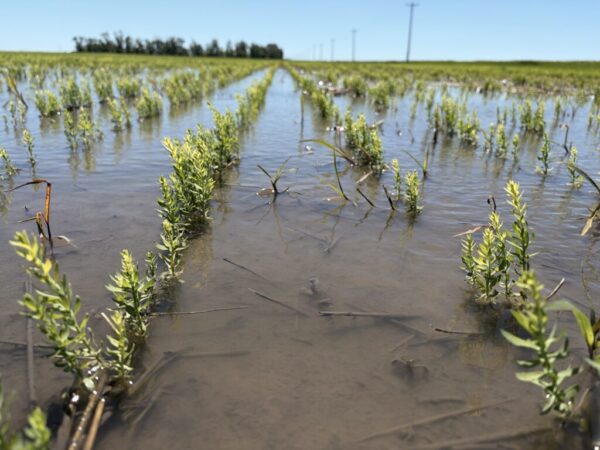
What exactly are corn, sunflowers and flax dealing with in this standing water and saturated soils?


By Morgan Cott, Agronomy Extension Specialist – Special Crops, Manitoba Crop Alliance
The crops we grow and work with in Manitoba do not generally do well in extended periods of flooding or saturated soils. Roots and growing points need oxygen to develop, so plant growth is delayed in these conditions. Disease development is also escalated in wet, hot, humid conditions, so that is another impending threat down the road.
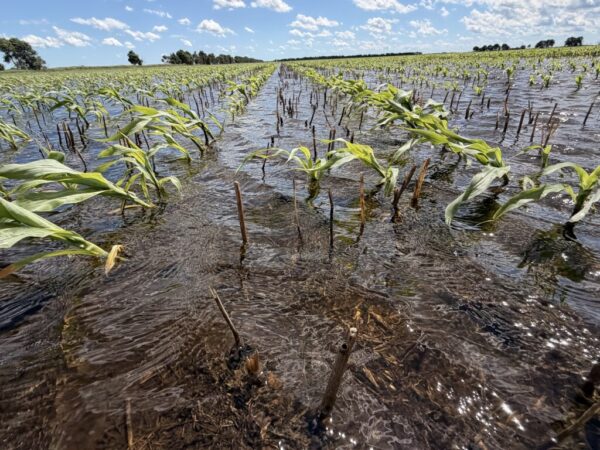
Timing has not been ideal for corn. If you have puddling or any degree of flooding or standing water, corn at V5 or smaller is at vulnerable staging for survival. The growing point remains below ground until V6 and I think most corn crops were moving into the V6 at the time of the June 23 heavy rainfalls. It can be very stressful for a crop to have excessive moisture arrive as the growing point emerges from underground. No matter where the growing point is in the plant, if it is below the waterline, conditions become anaerobic and it cannot “breathe.” While photosynthesis can still be occurring in parts of the plant above the waterline, root growth is restricted below the waterline and all nutrient and water intake is hindered.
At this point in the season, I want any standing water to recede quickly and I also want the air temperature to stay mild during that period so there is no rapid growth or additional stress. Already, a week after the heavy rains, there is very visible rapid growth in corn fields across southern Manitoba.
Sunflowers are equally stressed in anaerobic conditions. Even though their water use is very high, if the plant cannot breathe, it cannot grow. In these times of excess moisture, we don’t want the crop to be in standing water for longer than three days, and cloudy, mild temperatures are best to keep other stresses to a minimum. Unfortunately, sclerotinia development is a significant threat in these conditions, and as the fields dry out, humidity will be high and conditions will be favourable to development, so basal and stalk infections could become severe this year. Keep an eye on stressed sunflower fields to ensure new growth is still coming and plants are still photosynthesizing.
Effects of excess moisture in flax are exactly what we would guess: it has a low tolerance to severe stresses and will not survive long. The estimate for flax in standing water is about three days before the crop really starts to struggle and yield will be affected. Fortunately, stem root diseases are only a minor issue in flax crops and the wet soil conditions won’t affect this crop as much as it would others with regards to disease intolerance.
With all crops, check for new growth regularly to determine how efficiently the crop is still working and developing. Dig up a few plants to assess root growth. In saturated soils, roots don’t need to grow downward to find moisture, so the benefits of a strong root system later in the season might be diminished. Root health may suffer, which will be identifiable by the colour of the root. These are all good assessments to continue until the soil water subsides, the field starts to dry out and the crop can grow as intended.