Is fungicide actually effective on Sclerotinia head rot in sunflower?

By Morgan Cott, Agronomy Extension Specialist – Special Crops, Manitoba Crop Alliance

This is one of the most difficult questions to answer because there are many things to consider. I also don’t want to be outright negative because we do still have options for sclerotinia management in sunflowers. However, management is the operative word.

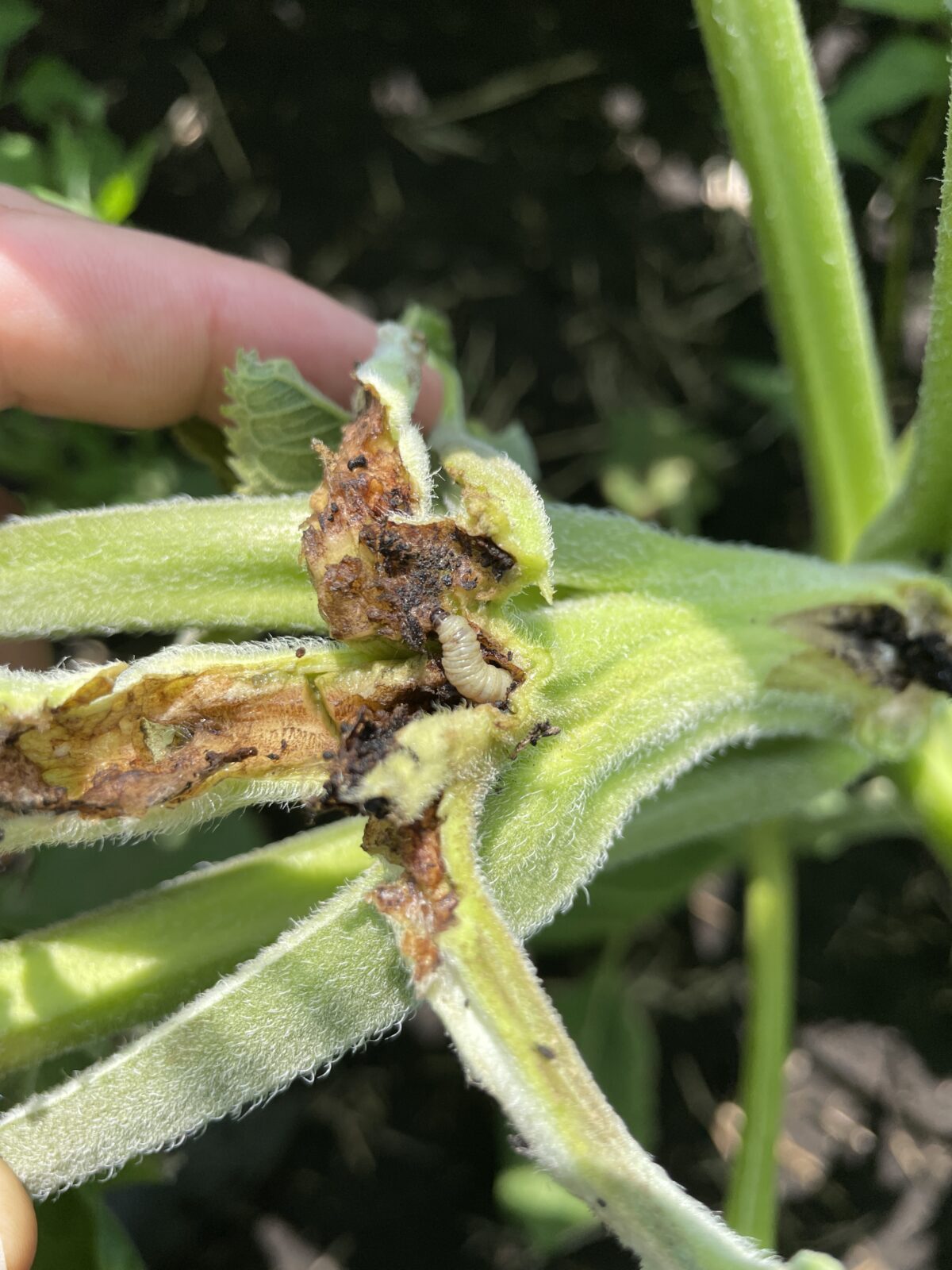
First of all, sclerotinia head rot infections have an interesting pathway. Spores use dead sunflower florets, plus pollen, as the base to infect a sunflower plant. The spores grow into the receptacle, infecting and decaying the entire head after a period of time. Sclerotinia wilt (basal stalk rot) and mid-stalk rot are also infected by the same sclerotinia species, but it will be via the mycelia that grow from the sclerotia bodies in the soil for basal stalk rot. Mid-stalk rot is also infected by ascospores, but this can be earlier in the season than head rot or at the same time.
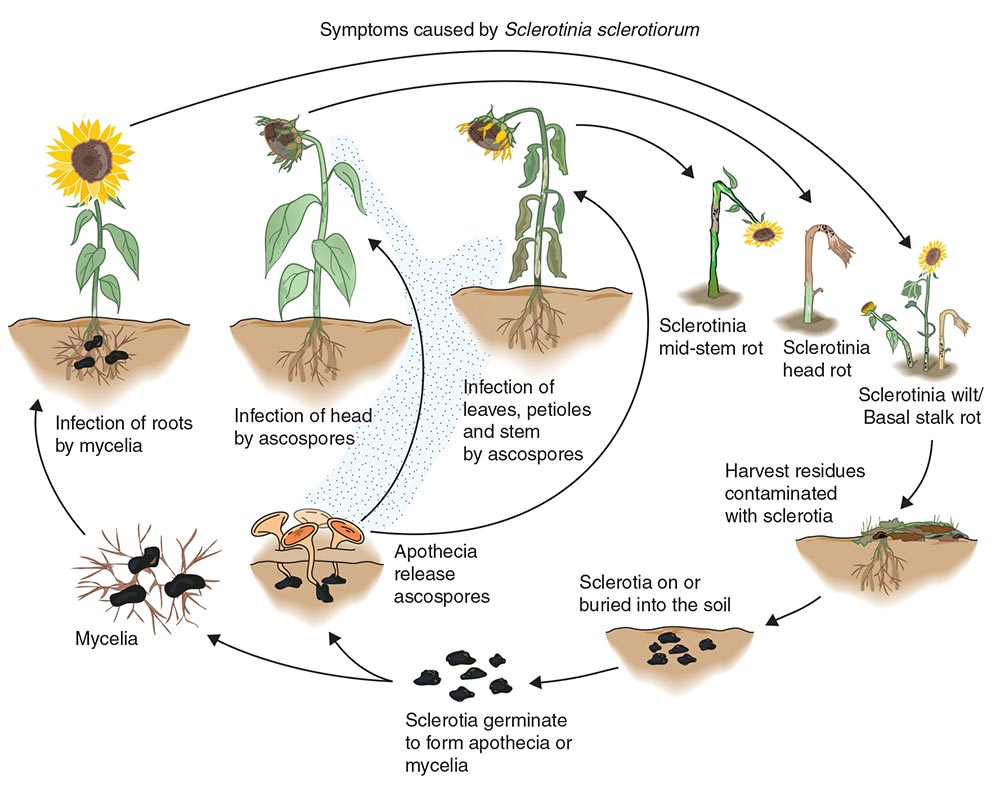
Sclerotinia sclerotiorum Diseases of Sunflower​ (White mold) – The American Phytopathology Society (APS)

So, management of sclerotinia does not start at flowering. Crop rotation is the most obvious management tool that we are familiar with in sunflowers, but it is not reliable. Yes, always put at least three years between sunflower crops and any other oilseed that is a host to sclerotinia, but sclerotia bodies have a long life in the soil and it feels impossible to get rid of them.

Here are some additional management tools that, if layered, will definitely help manage the potential of sclerotinia infections of any kind, in any crop:

Nitrogen – avoid excess nitrogen rates, as this will encourage dense vegetative growth and prime conditions in the lower canopy for sclerotia development.

Weed control – many broadleaf weeds and volunteers can be host to sclerotinia, which can multiply sclerotia in the soil after a season of successful weed infections.

Tillage – tillage will move sclerotia bodies around in the soil, burying them and then also bringing them to the surface in a cycle. No-till simply leaves the sclerotia on the soil surface, ready for germination at any moment. The best practice may be to rotate multiple years of no-till with non-host crops so the sclerotia germinate but do not have a proper host to multiply, thereby decreasing in population.

Genetics – unfortunately, this still does not seem like it will be an option in sunflowers as it cannot be perfected or reliable enough to build resistance, or even tolerance, to sclerotinia. It has been found in the past that some hybrids did appear to have partial resistance, though that degree of resistance is easily exhausted in high sclerotinia incidence.

Fungicides – let’s get into this and I will summarize some recent work done in the Dakotas.


Sunflower susceptibility to head rot increases as bloom stage progresses and then decreases at R6 staging, where conditions have to be ideal for infection. At R7 and beyond, infection will not occur. Interestingly, at early bloom if temperatures are high, that is when risk is lowest during all susceptible stages.

In 2017-18, North Dakota State University (NDSU) researchers conducted fungicide efficacy trials using Proline and Endura (Lance WDG equivalent) and different application methods on head rot (boom-mounted nozzles and drop nozzles). Summarizing a large project, these are the key takeaways from NDSU plant pathologist Michael Wunsch:

  • Proline displayed moderate reductions in Sclerotinia head rot when disease pressure was low to moderate (<30 per cent incidence) with both standard boom-mounted nozzles and drop nozzles
  • Residual activity may be limited to the first 1 – 3 days after bloom
  • Coverage to the front of the head is optimized in the first half of bloom using standard boom-mounted nozzles
  • Endura (Lance WDG equivalent) showed little or no efficacy against head rot irrespective of application method
  • A significant part of the yield gain associated with fungicide applications targeting Sclerotinia head rot was presented by management of other diseases (rust, Phoma, Phomopsis, etc.)

See full presentation document on “Are fungicides useful for managing Sclerotinia head rot in sunflowers?” by Michael Wunsch. Or Michael Wunsch explains it in this YouTube video.

Essentially, if relying on fungicide, application has to hit the front of every sunflower head and within one day of infection, which is next to impossible to predict. The direct application to the front of the sunflower head may be improved with drone applications, but that is just speculation at this point.

MCA is in the third year of a field-scale trial in our Research on the Farm program, allowing sunflower farmers to test their product(s) of choice and method of choice for the control of Sclerotinia head rot. In 2026, we have two participants that conducted the trial using their spray drones, so we are looking forward to those results and subsequent data collection. See full results from 2024 and 2025 trial years here.

In conclusion, manage your sunflowers very well! Shift focus from sclerotinia control to managing other sunflower diseases, such as rust and Phomopsis, and keeping the full plant healthy to better fight infection. Other management practices to follow are appropriate nitrogen fertilization to prevent excessive vegetative growth, crop rotation of at least four years, control of broadleaf weeds that may also be a host and no-till management where sclerotia bodies on the soil surface form apothecia and then ascospores but have no host to reproduce.

Other resources

What exactly are corn, sunflowers and flax dealing with in this standing water and saturated soils?

By Morgan Cott, Agronomy Extension Specialist – Special Crops, Manitoba Crop Alliance

The crops we grow and work with in Manitoba do not generally do well in extended periods of flooding or saturated soils. Roots and growing points need oxygen to develop, so plant growth is delayed in these conditions. Disease development is also escalated in wet, hot, humid conditions, so that is another impending threat down the road.

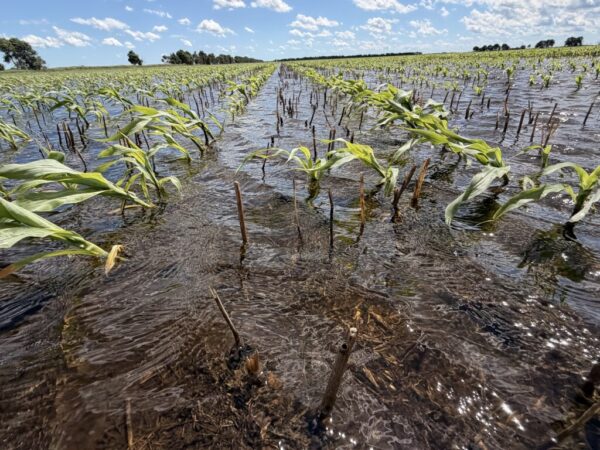
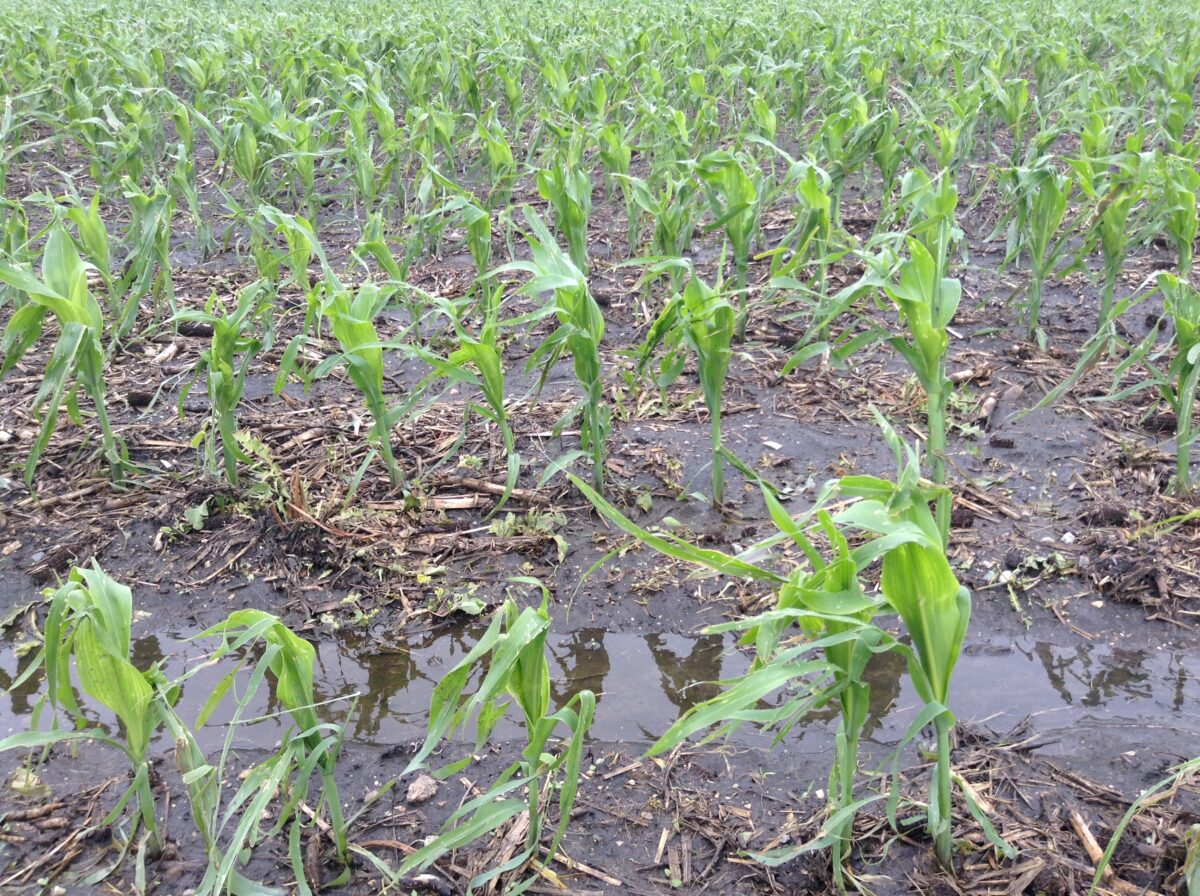
Timing has not been ideal for corn. If you have puddling or any degree of flooding or standing water, corn at V5 or smaller is at vulnerable staging for survival. The growing point remains below ground until V6 and I think most corn crops were moving into the V6 at the time of the June 23 heavy rainfalls. It can be very stressful for a crop to have excessive moisture arrive as the growing point emerges from underground. No matter where the growing point is in the plant, if it is below the waterline, conditions become anaerobic and it cannot “breathe.” While photosynthesis can still be occurring in parts of the plant above the waterline, root growth is restricted below the waterline and all nutrient and water intake is hindered.

At this point in the season, I want any standing water to recede quickly and I also want the air temperature to stay mild during that period so there is no rapid growth or additional stress. Already, a week after the heavy rains, there is very visible rapid growth in corn fields across southern Manitoba.

Partially flooded corn field. Photo by Eric Tyschinski, MCA summer student.

Sunflowers are equally stressed in anaerobic conditions. Even though their water use is very high, if the plant cannot breathe, it cannot grow. In these times of excess moisture, we don’t want the crop to be in standing water for longer than three days, and cloudy, mild temperatures are best to keep other stresses to a minimum. Unfortunately, sclerotinia development is a significant threat in these conditions, and as the fields dry out, humidity will be high and conditions will be favourable to development, so basal and stalk infections could become severe this year. Keep an eye on stressed sunflower fields to ensure new growth is still coming and plants are still photosynthesizing. 

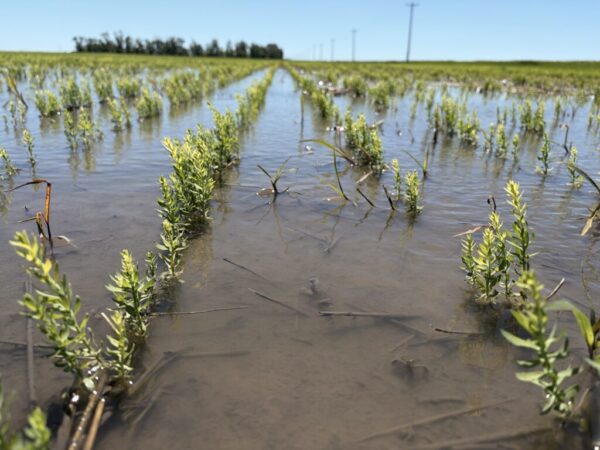
Effects of excess moisture in flax are exactly what we would guess: it has a low tolerance to severe stresses and will not survive long. The estimate for flax in standing water is about three days before the crop really starts to struggle and yield will be affected. Fortunately, stem root diseases are only a minor issue in flax crops and the wet soil conditions won’t affect this crop as much as it would others with regards to disease intolerance.

With all crops, check for new growth regularly to determine how efficiently the crop is still working and developing. Dig up a few plants to assess root growth. In saturated soils, roots don’t need to grow downward to find moisture, so the benefits of a strong root system later in the season might be diminished. Root health may suffer, which will be identifiable by the colour of the root. These are all good assessments to continue until the soil water subsides, the field starts to dry out and the crop can grow as intended.

Partially flooded flax field. Photo by Eric Tyschinski, MCA summer student.

2025 Sunflower Crop Survey Results

Emergency Use Registration: Avian Control For Use as Blackbird Deterrent in Sunflower

Manitoba Agriculture, Manitoba Crop Alliance and Avian Enterprises® are pleased to announce that Avian Control® Bird Repellent has been approved for use to deter blackbird feeding in sunflowers in Canada.

The need for a product used to deter blackbirds from feeding on sunflower crops has been identified as a need in Manitoba due to the significant losses recorded by farmers. Sunflower seeds are particularly vulnerable to predation by blackbirds due to the high nutritional value and easy accessibility.

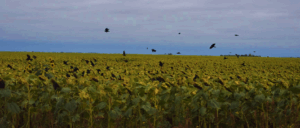
After nesting, blackbirds form large flocks and begin feeding in grain fields nearby. Feeding begins in sunflowers soon after petal drop and most of the damage occurs during the following three weeks. Peak concentrations of blackbirds occur in mid-September, coinciding with the crop reaching physiological maturity.

Farmers have alternative options to applying a deterrent, like Avian Control ®. Alternate practices include planting far away from roosting areas, like cattail marshes and woodlots, or planting at the same time as neighbours to spread feeding damage over more acres during seed maturity. Insect and weed control will reduce the pre-season food source for blackbirds before the crop reaches a susceptible stage for feeding. Delaying cultivation or harrowing of crop stubble in neighbouring fields increases alternate feeding area for hungry birdlife. Desiccation to advance harvest and getting the crop harvested as soon as possible also reduces exposure.

Another effective management practice is to control cattail production areas, which reduces nesting sites for blackbirds. Managing cattails does take a significant amount of time and should be a collective project for local farmers to deter blackbirds from roosting in a large geographic area, to be effective. Scare methods, like bangers or sound devices, to frighten birds away from the area have achieved different levels of success, but birds tend to start tolerating certain tactics after a period and return to host crops.

How does Avian Control work?

The active ingredient in Avian Control is methyl anthranilate. This active irritates a bird’s trigeminal nerves, which are sensitive to smell and taste, and causes a temporary, non-harmful, but unpleasant sensation to the affected bird’s eyes, beak and throat. The first birds to visit the treated field associate this discomfort with that location and communicate this information to the rest of their flock, instructing them not to feed there.

Methyl anthranilate is a food-grade additive, naturally derived from Concord grapes. It is a non-toxic, non-lethal and humane repellent, recognized as safe for humans and other animals. Due to the nature of this product, it does breakdown on surfaces much quicker than pesticides and will likely need to be applied more than once for continued efficacy.

Crop Specific Instructions for Avian Control

  • Apply Avian Control to ripening sunflowers before damage by blackbirds begins to occur
  • Do not apply when crop is wet or rain is expected
  • Repeat treatment at 6 – 8 day intervals if significant crop damage from blackbirds begins to occur
  • Avian Control may be applied up to the day of harvest
  • Use with non-ionic surfactant at 0.06 – 0.25% v/v
  • DO NOT exceed 5 applications per year

For full Avian Control label on sunflowers, click here.

Please contact Avian Enterprises for more information on Avian Control and product orders:

Jon Stone
President, Avian Enterprises
1 (888) 707-4355
https://aviancontrolinc.com/products/avian-control/ 

Sunflower Survey 2025

Lambda-cyhalothrin update – March 2025

Holcus Spot

What is holcus spot?

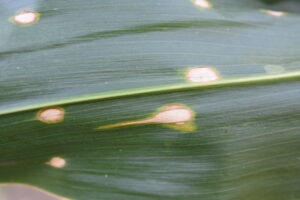
Holcus spot on corn leaf

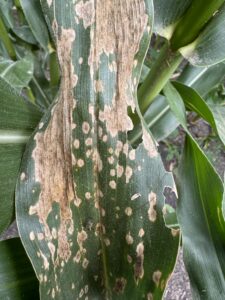
Holcus spot on corn leaf

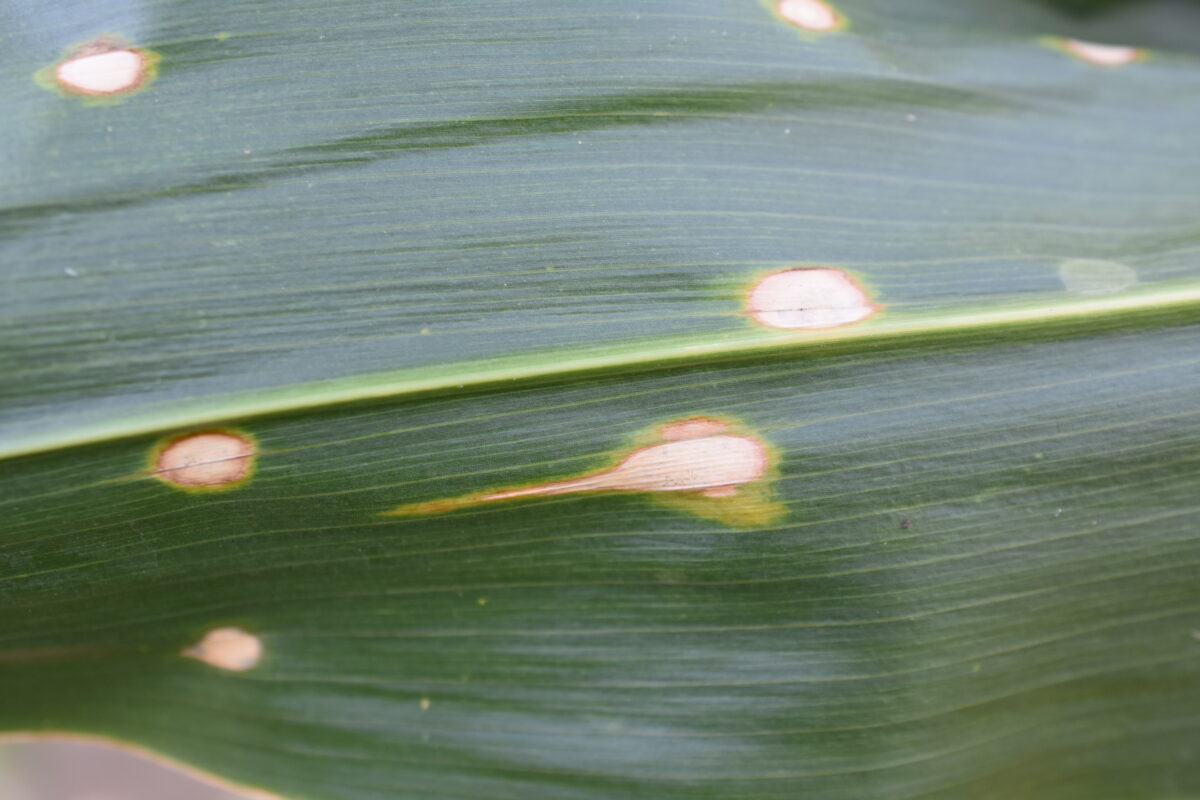
A bacterial leaf disease affecting mainly corn crops, though it can overwinter in both monocot and dicot species. Holcus spot begins as a water-soaked spot on lower leaves and develops into small (1/4 to 1/8 “ in diameter), circular to elliptical, white to tan lesions. Lesions commonly develop a brown margin and sometimes a light halo is visible around the lesions. In severe infections, holcus spot can cause significant lesions on plant leaves, though it is more common to have minor spotting, covering less than 5% of a single leaf’s surface.

Conditions for Development

Holcus infections follow typical Manitoba spring conditions. This includes high winds and heavy rains, followed by extended moisture and warm summer temperatures (24C – 30C). The bacteria is interesting because it infects the leaf via wounding, but it doesn’t need a wound for development. The pathogen also does not spread from an infected leaf to a healthy leaf, as in many other leaf diseases. 

Disease Management

The holcus spot pathogen lives and overwinters on crop residues. Best management practices to gain control of the pathogen are crop rotation and tillage. As a bacterial pathogen, fungicides will have no effect on the disease.

Fortunately, holcus spot affects a very small area of each infected leaf and photosynthesis of the green leaf material is still very effective. This is a concern in more disruptive leaf diseases or killing frosts that affect large areas of each leaf and photosynthesis is allocated to a small area or none at all. As a result of the small area affected, yield is not penalized and holcus spot is more of an aesthetic disease than a concern for farmers. 

Don’t get confused…

Holcus spot infections are relatively uncommon. It is easy to see them and be unsure of what it means because lesions are most often minute and don’t draw attention. 

In the rare occasion that the disease does grab attention, lesions can be confused with drift of a contact herbicide, like diquat (image below), or fertilizer burn. Key tips to determine if it could be fertilizer injury would be to ask the farmer or applicator if anything was applied recently or in the sprayer tank. If there is a possibility of herbicide drift, there will be a clear pattern in the area that would have gotten “hit”. The lesions would likely be worst along the outer rows and lessen the further into the field you look.  Early in the season, injury would not grow with the plant and new leaves would be injury-free. 

Diquat drift on corn leaf

Diquat drift on corn leaf

The Impact of Mid-Season Excess Moisture

It is well-known that spring weather in Manitoba is unpredictable. Farmers endure drought conditions one season and excess moisture the next, never knowing for sure what is ahead. These dubious conditions make crop planning particularly difficult because no one knows what extremes of moisture crops may or may not have to grow through that season.

Generally, crops should endure excess moisture fairly well in early summer, when they are actively growing vegetatively, and environmental conditions are usually conducive to evaporation. The growth curve is quite steep during this time, especially in the large-sized crops like corn and sunflower and their water uptake is generous if conditions are good. Flax is not going to be a crop that tolerates “wet feet,” and it will be evident if it is in standing water for extended periods.

Corn

Corn that is past V6 staging has the growing point above ground, so flooding at this stage isn’t quite as detrimental as it would be at earlier stages. Remember that where there is standing water, there is no oxygen exchange and living cells cannot survive without it for very long. Ideally, conditions do not get too hot (crop stress) and evaporation and/or water drainage can happen quickly. Depending on how many times the flooded areas have been flooded this season, this influences the ability of the crop to “bounce back.” Root death is possible in this scenario and warm, dry soils will be required to generate new root growth. New root growth is possible in corn in these situations, but the new growth will extend horizontally, which leads to a few implications with nutrient uptake and plant stability.

In younger plants, V5 or smaller, being waterlogged for four days would be a maximum time span to survive and recover. It is harder to determine what that is for larger plants that are growing much more quickly, especially if there have been multiple heavy precipitation events that have left fields saturated and/or puddled. It is also exceedingly difficult to determine what nitrogen losses may be, and even more so when top-dress applications have occurred recently. At this stage and in the days ahead, it would be very important to keep an eye out for nitrogen deficiency symptoms. Corn nitrogen uptake is about 60 per cent of total uptake from the V8 to silking stages, so losing access to nitrogen via leaching or denitrification could seriously impact yield.

Sunflower

Sunflowers are growing rapidly in July and moving quickly into the reproductive stages. At this time, the crop can be using up to 1/3 inch of water each day. It is hard to believe that with this excessive water use that the crop wouldn’t manage saturated soils very well, but the roots do still need to breathe. Photosynthesis also slows down while stomata remain open in wet conditions, which slows plant development. In flooded conditions, sunflowers may have a tolerance for about three-plus days in an anaerobic environment. During those conditions and following, crop recovery is better with cloudy and cool-warm weather rather than hot and sunny weather.

Sunflowers are also very susceptible to stalk diseases during this vegetative growth, including sclerotinia basal rot. Sclerotinia infections can occur anytime between early vegetative stages through to seed fill and generally need precipitation to spread their spores. It is an important consideration for farmers and agronomists and recommended to know the high risk of disease that the crop carries in wet environments.

Flax

Flax has the lowest tolerance to flooding of the three specified crops. It is a small, shallow-rooted crop that does not adapt well to extreme conditions, nor does it have a need for high amounts of water to grow. If it remains in standing water for longer than three days, flax will become stunted, yellow and there will be a high risk of yield loss.

Flax requires the bulk of its water during flowering and seed fill, at roughly 0.28 inches/day. It is also known that dirty (weedy) flax fields use water much less efficiently than clean flax fields. The one benefit to flax in wet fields is that it is not as susceptible to stem diseases as most other Manitoba oilseeds, therefore wet conditions are not a matter of concern with regards to yield or quality loss due to disease.

Top