
What is the difference between Fusarium and Gibberella in corn, and how do you identify them?


By Morgan Cott, Agronomy Extension Specialist – Special Crops, Manitoba Crop Alliance
This isn’t as much a common question, but I ask myself this every year for clarification. The two diseases are really tricky to differentiate as both stalk and ear rots, so it is a perfectly valid discussion to have annually.
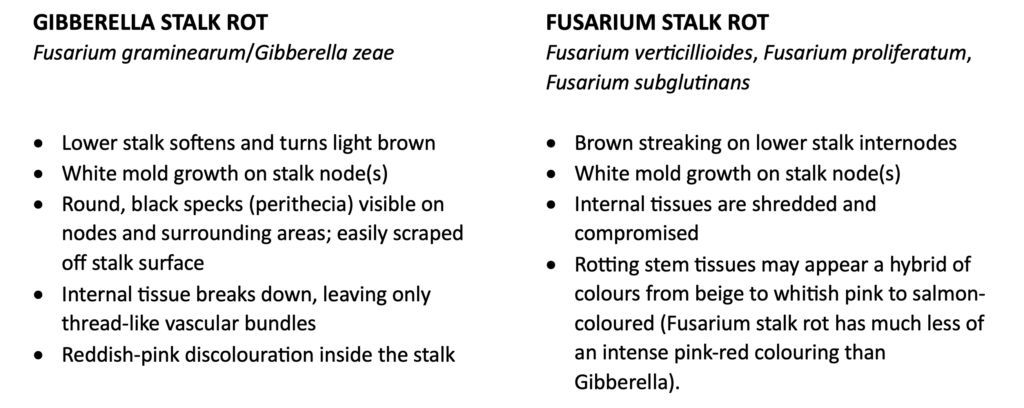
STALK ROTS
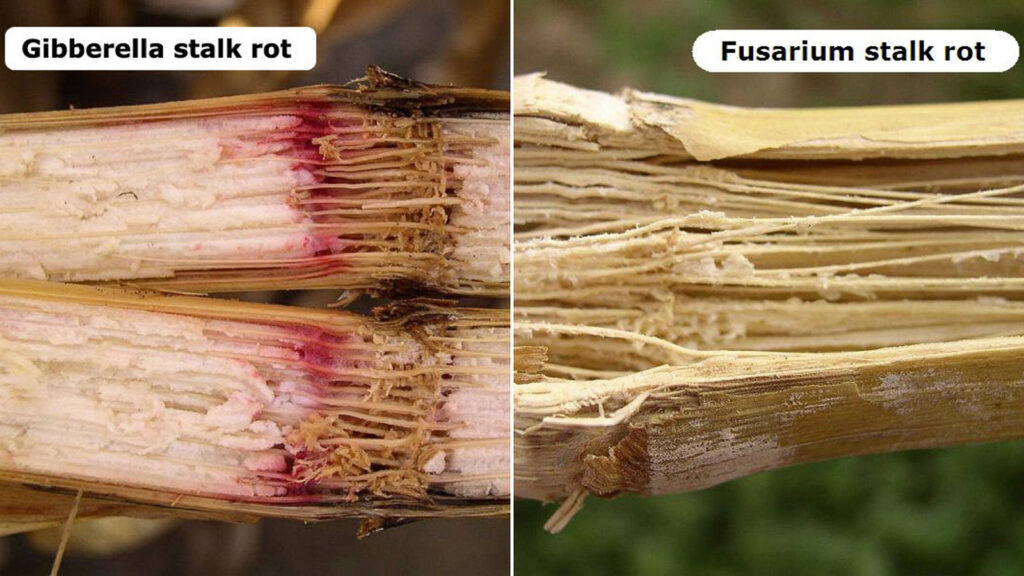
Gibberella stalk rot (L) and Fusarium stalk rot (R) symptoms at a stalk node. Photos courtesy of Pioneer ®.
Management of stalk rots
Gibberella stalk rot is caused by the same pathogen that causes Fusarium head blight. It is a seedling pathogen, and can survive on crop residues for many years. It thrives in warm, wet conditions.
Fusarium stalk rot can overwinter in infected seed, crop residues and in the soil. Prior to silking, Fusarium stalk rot prefers dry weather for infections, and following silking it functions best in wet weather. Ideal management practices may be hard to determine because they proliferation of the pathogen relies more on good soil moisture conditions rather than tillage or rotation. Selecting hybrids that have resistance to any other stalk rots can also provide some resistance to Fusarium stalk rot.
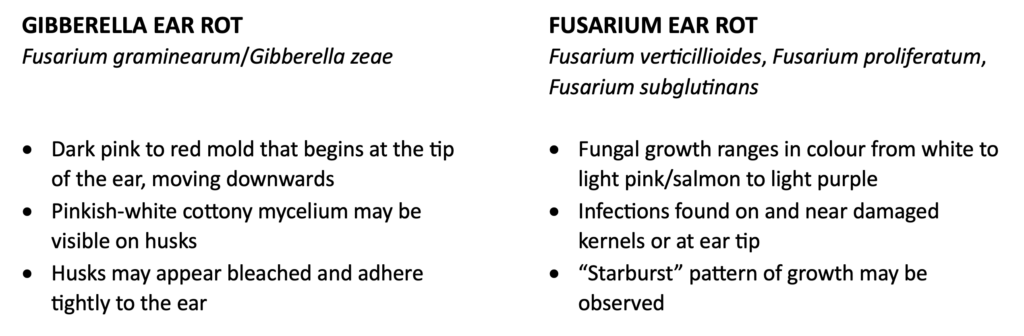
EAR ROTS
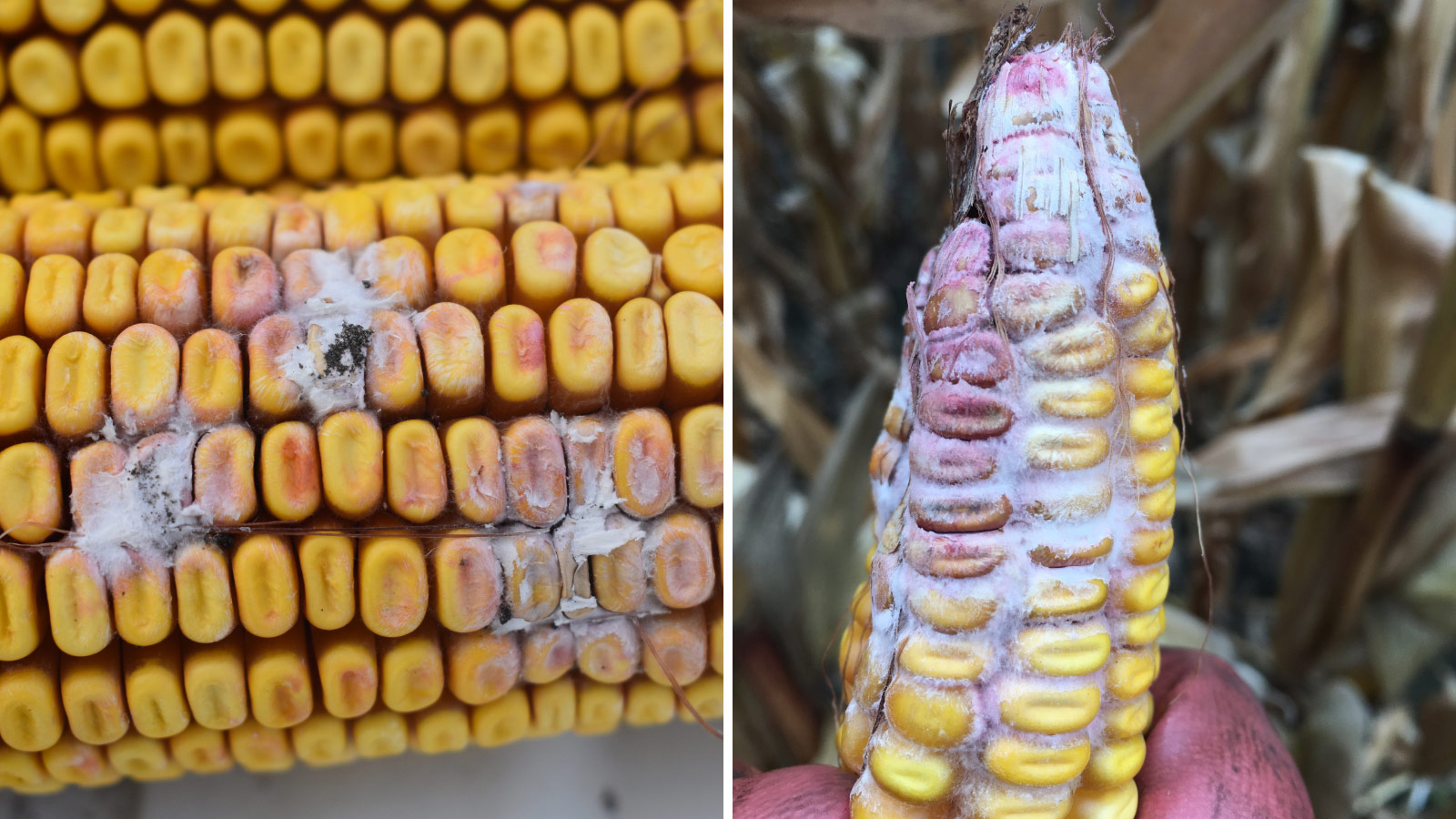
Fusarium ear rot (L) and Gibberella ear rot (R) symptoms on mature ears.
Management of ear rots
Gibberella ear rot can potentially be avoided by choosing hybrids that have loose husks, to encourage air movement around the ear. Due to the pathogen also causing FHB, rotation is very important, as well as residue management of any infected crops. Begin scouting following silking to identify Gibberella ear rot and note those fields with infections need to be harvested first and potentially early. Drying the grain as soon as possible decreases the development of vomitoxins and that will not stop until the grain is dry.
Fusarium ear rot will thrive in conditions with damaged kernels (insects, hail, etc.) and warm, wet conditions during grain development and fill. Storing grain in dry conditions is also vital to prevent further mycotoxin development.
As with many plant diseases, we can manage them all we want, but weather typically has the final say. The best advice I can give with Gibberella and Fusarium ear rots is to scout every corn field during reproductive stages and as physiological maturity occurs to identify infected fields. The last thing you want is infected grain destroying the quality of a large crop, so harvest early and dry grain as soon and as quickly as possible. If you notice infected cobs as you scout, I would break them off and discard them somewhere outside the field, just to eliminate further infections, if possible. Better to lose a few cobs than to have rejected grain.
If you have questions about identification or management, call or text me or you trusted agronomist!
Other resources
- Manitoba Crop Alliance – Disease Diagnosis: Ear & Stalk Rots
- Manitoba Agriculture – Diseases and Disorders of Corn