
Does applying a fungicide at herbicide timing to control cereal leaf spot diseases in wheat and barley provide a yield boost?


By Andrew Hector, Agronomy Extension Specialist – Cereal Crops, Manitoba Crop Alliance
This question comes up regularly which makes sense. Early season outbreaks of fungal leaf spot diseases like Tan Spot do occur in Manitoba, such as in 2024. To answer this question, we need to dig into the research.
There have been a few studies done in Western Canada over the last 15 years investigating this very practice in both wheat and barley.
- The impact of fungicide and herbicide timing on foliar disease severity, and barley productivity and quality
- Evaluation of disease, yield and economics associated with fungicide timing in Canadian Western Red Spring wheat
In both these studies fungicide application timings were evaluated on their impact on leaf spot disease severity, overall crop yield, and economic returns of the practice. In both studies, it was found that a foliar fungicide application at herbicide timing (2-3 leaf) did not lower upper canopy disease incidence and severity compared to the check (no treatment or herbicide only).
For barley, the western Canadian study found that the half rate foliar fungicide treatment at herbicide timing provided only a small increase in crop yield compared to the herbicide only check. The study examining spring wheat’s response to early season fungicide found that fungicide application at herbicide did not significantly improve crop yield compared to the untreated check. Across both studies, researchers concluded that fungicide timing for leaf diseases should focus on protecting the upper canopy, particularly the leaves that contribute most to yield.
There has also been some research on this topic out of North Dakota. Andrew Friskop from North Dakota State University recently compiled replicated foliar fungicide timing trial data from 2008-2024. He evaluated the yield response based on “disease risk” scenarios determined by previous crop, variety resistance, tillage, environmental conditions and disease onset.
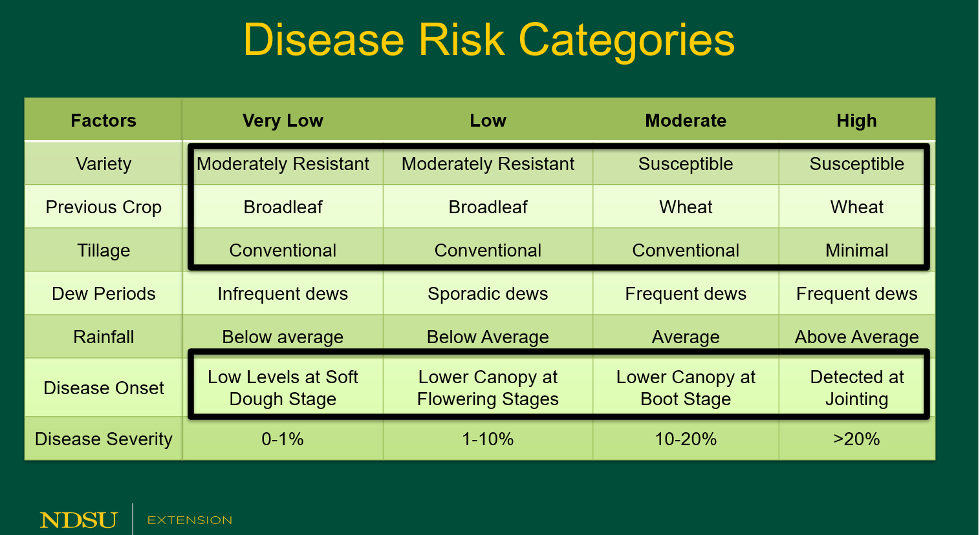
Figure 1. NDSU disease risk categories for development of residue-borne foliar diseases.
His finding suggests that under moderate and high-risk scenarios, (where wheat was grown on wheat stubble, a susceptible variety was planted and the disease [tan spot] was established early and firmly in the crop), a fungicide application at tillering could provide a small benefit of 2.2 – 3.7 bu/ac. In basically all other production scenarios he found that a foliar fungicide application at tillering would provide very little yield response.
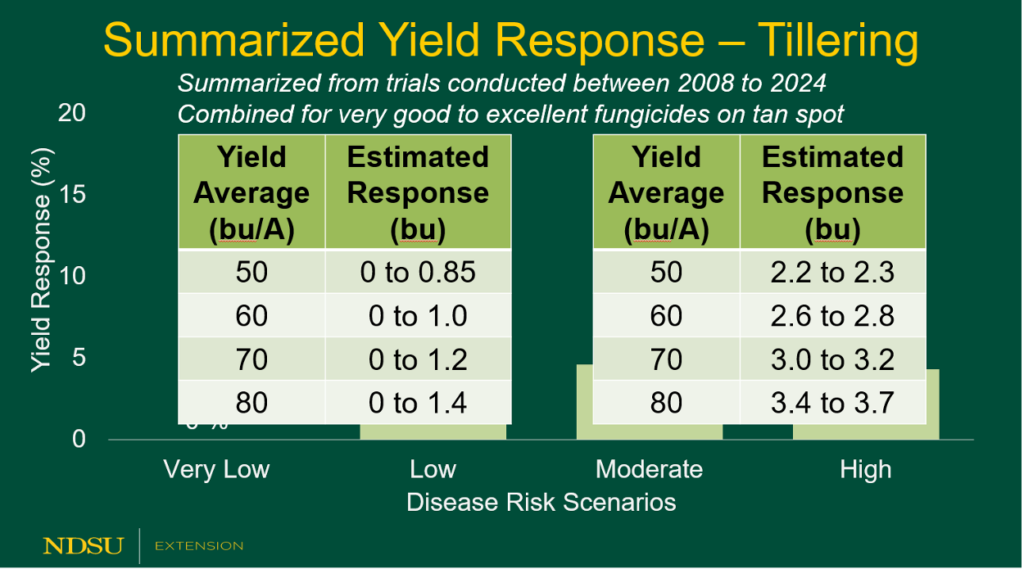
Figure 2. Summary of yield response by disease risk level for early season fungicide application.