Nandika Bandara, Associate Professor and Tier 2 Canada Research Chair in Food Proteins and Bioproducts, University of Manitoba

Born and raised in Sri Lanka, Nandika Bandara is an associate professor and Tier 2 Canada Research Chair in Food Proteins and Bioproducts in the Department of Food and Human Nutritional Sciences at the University of Manitoba (UM).

He completed his undergraduate degree in agriculture specializing in food science and technology at the University of Peradeniya, Sri Lanka. He then worked in the industry for four years before moving to Canada to do his master’s degree in food science and technology and his PhD at the University of Alberta.

Where did you work before UM?

After completing my PhD, I began a postdoctoral fellowship (PDF) position at the University of Guelph in the Department of Food Science, supported by the Natural Sciences and Engineering Research Council of Canada PDF scholarship. I stayed there five months before I got an assistant professor role at Dalhousie University.

What got you interested in this area of work?

When I was in middle school, there was a 50th anniversary of the Faculty of Agriculture at the University of Peradeniya, the oldest university in my country. A family friend was staying in our home, going to university, and he took me to that celebration exhibition. After seeing all the animals, equipment and different farming systems, I knew agriculture was something I would really like. I selected agriculture as my high school major and went directly to that same university for the agriculture degree program.

Tell us a bit about what you are working on at UM.

My research program focuses on improving the protein and bioproduct industries using biopolymers generated in agriculture and food processing. I have three main research themes:

  1. Sustainable technologies for protein processing and functionality improvement: Developing nonthermal processing, fermentation, and dry and wet protein fractionation technologies to produce functional protein ingredients.
  2. Advancing fundamental knowledge related to protein utilization: Using advanced analytical and material characterization techniques to understand protein functionality.
  3. Advancing circular bioeconomy in the alternative protein industry: Use byproducts and waste material from agriculture (oilseed meal, for example) to produce new food ingredients and develop biopolymers for use in sustainable packaging, wood adhesive and other polymer applications.

In a project funded in part by Manitoba Crop Alliance, we are working with sunflower meal from the commercial oil extraction process. One of the biggest challenges with sunflower meal is that it contains chlorogenic acid, which makes the meal green. This chlorogenic acid will co-extract during traditional protein extraction methods. If you bake something with the sunflower protein, it turns green due to a reaction between chlorogenic acid and amino acid.

In this project we developed two new protein extraction methods where we can get rid of those colour compounds and produce an off-white colour sunflower protein. This work focuses on developing protein ingredients and using the remaining material (cellulose and lignin) for value-added applications.

Then we will look at how sunflower protein can compete with other proteins. Right now, the plant protein market is dominated by soy and pea protein to a certain extent. The oil is still the main component, but if we can get a food commodity from the sunflower meal it will increase the value of the crop for farmers.

What can you say about the value of farmers providing funding and support to your organization?

Farmer based funding is huge. This is the second time I have received farmer-based funding for value-added research. To see that farmers are interested in value-added opportunities is encouraging. You can increase primary production to a certain level, but eventually you will hit a ceiling, right? When you cannot go beyond that, you must generate more income from the existing resources you have. That is how you advance the industry, not just by trying to increase yields, but by generating value for the other components.

How does that farmer funding and support directly benefit farmers?

If we can commercialize sunflower protein, farmers will get additional value for sunflowers, not just for the oil. If everything goes well for this project, we will get the sunflower protein as a protein ingredient. That is one revenue stream. If we can break down the lignin and cellulose and produce the other platform chemicals, that can be another revenue source. It is important to increase yields, and it is important to focus on agronomic practices, but at the same time, the future will be based on value-added opportunities.

How do you spend your time outside of work?

I play cricket. We have both competitive and recreational playing opportunities here in Winnipeg.

What gets you most excited about your work?

Working with trainees and seeing them become successful. I have 23 trainees, and they are extremely successful. For example, they have received national and international awards. American Oil Chemists’ Society, which is involved with the sunflower industry, has two major awards for students: the Thomas Smouse Memorial Fellowship and the Honored Student Award. For two consecutive years, one of my trainees won the Thomas Smouse Memorial Fellowship, and in 2025, another student won the Honored Student Award.

The Institute of Food Technologists, an international society, offers the Feeding Tomorrow Fund, a graduate scholarship program, and presents approximately 90-100 scholarships each year globally. Last year, Canadian students received 10, and my trainees got seven of them. For three consecutive years, my trainees have secured the grand prize in the graduate student competition at the Manitoba Materials Conference. I have also had trainees advance to lead international student societies (American Oil Che), which brings me great satisfaction to see them succeed.

What is your favourite food or meal to cook?

Authentic Sri Lankan food! I really enjoy cooking. I invited my entire research group for dinner recently and they really loved the authentic Sri Lankan foods we have.

Connect with Nandika on LinkedIn.

Follow the Food Protein and Bioproduct Lab on Instagram.

Introducing Year Two of MCA’s Strategic Plan

Introduction

Manitoba Crop Alliance (MCA) recently developed and released new Step Goals and tweaked Big Goals for year two of its strategic plan. The newly developed Step Goals establish a bright and bold direction for the next year, while the Big Goals tweaks focus and specify MCA’s overarching goals over the next two years. The MCA board of directors and staff worked collaboratively to make these updates. Below is the breakdown of year two of the strategic plan. For a look back on the activities, achievements and challenges from year one of the strategic plan, please click here.

Big Goal Tweaks

There were a few tweaks made to Big Goals, most notably the wording of Big Goal #2. The new wording is more descriptive, emphasizing the intent to build research capacity for the benefit of Manitoba farmers. This change has made the Big Goal more specific and will guide MCA choices towards realizing our strategic vision.

  • Big Goal #2: Strengthen research capacity for the benefit of Manitoba farmers.

New Step Goals

  • Eight new Step Goals were developed spanning all three Big Goals. Many (but not all) of the new Step Goals build on the results of last year’s.
  • The newly developed Step Goal #1 is a continuation of two Step Goals from last year that weren’t completed.

Below is MCA’s strategic plan for 2025-26. Stay tuned for more information regarding MCA’s strategic plan, which will be shared on our website and in our print and digital publications!

MCA Strategic Plan – Year One Wrap Up

It has been one full year since Manitoba Crop Alliance (MCA) released its 2024-27 strategic plan. Over this last year, MCA staff have worked hard to achieve the vision set out by the board of directors and crop committee delegates. Below is a recap of the wins and challenges from MCA’s efforts to execute year one of the strategic plan. If you are interested in what the future of MCA looks like, click here to view year two of our strategic plan.

This three-year plan was developed in 2024 to consciously guide MCA’s future. The plan consists of three Big Goals that will be achieved over the next three years. The plan also consists of nine sub-goals, known as Step Goals. Each Big Goal has three associated Step Goals, which are annual benchmarks and priorities that are to be achieved in a one-year timeframe.

Big Goal #1: Innovate our communications program to increase awareness and engagement with our farmer members.

Step Goal #1: Equip MCA staff to better understand the most effective ways to engage with our farmer members.

  • This Step Goal required staff to redefine how they approach communicating and engaging with farmers to ensure genuine programming impact. Step Goal #1 was completed and built a strong foundation for continued innovation of MCA’s communications program.
  • Major win: MCA staff members completed additional communication training to better understand the most effective way of communicating with our farmer members.

Step Goal #2: Conduct audience research and generate ideas for engagement and awareness that can be implemented through our communications frameworks.

  • Progress on Step Goal #2 has been meaningful but delayed. Due to the breadth of Step Goal #2, robust research is required to guarantee all audience inputs are folded into the development of the new communication framework.

Step Goal #3: Identify strategic communications initiatives informed by training and research that directly address the needs of our farmers members

  • No progress on Step Goal #3 occurred during 2024-25.

Big Goal #2: Discover and fund ground-breaking research.

Step Goal #4: Identify key priorities for investment to build Manitoba research capacity

  • MCA staff identified and met with research partners to understand Manitoba’s agricultural research capacity gaps. These meetings culminated in the identification of key gaps and potential solutions.
  • Major win: three priorities for support were identified and brought forward to the MCA board of directors.

Step Goal #5: Secure north/south partnerships to develop mutually beneficial research collaborations and investment opportunities.

  • Partnerships are key relationships that increase research capacity by leveraging talents and facilities to fulfill knowledge gaps. Corn and sunflowers were identified as the two crops with an absence of research partnerships and were prioritized in this Step Goal. Through in-person and online meetings, strong connections were established with funding organizations and research institutions.
  • Major win: MCA became a voting member of the National Sunflower Association and collaborator with the North Dakota Corn Council. Both partnerships have led to MCA research priorities being fulfilled.

Step Goal #6: Expand Research on the Farm (ROTF) program.

  • Over the last year, MCA’s ROTF program grew in the number of protocols offered and trials conducted. Additionally, a revamped website presentation has made it easier for ROTF trial data to be accessed and used by farmers.
  • Major win: MCA introduced five new protocols for the 2025 growing season, including MCA’s first whole farm protocol.

Big Goal #3: Explore areas for bold investment that unlocks hidden potential and fuels historic progress.

Step Goal #7: Conduct a study to identify value-added opportunities in Manitoba that would open new markets for MCA commodities.

  • MCA encountered several roadblocks in pursuit of Step Goal #7. As a result, this Step Goal was not completed.

Step Goal #8: Increase support to consumer outreach initiatives that educate and inspire the next generation.

  • MCA worked with Agriculture in the Classroom – Manitoba (AITC-M) to build upon their already strong programing to ensure young people gain an early understanding of farming and where their food comes from.
  • Major win: MCA made a historic investment of $195,000 in AITC-M’s classroom garden program. Read the full announcement here.

Step Goal #9: Conduct a “hopes and dreams” assessment with our partners in research and market development to highlight future opportunities for investment.

  • MCA staff reviewed and evaluated proposals from research and market development partners. All participating organizations had a shared vision and commitment to ensuring Manitoba farmers thrive.
  • Major win: MCA identified multiple new opportunities for bold investment to make historic changes for Manitoba farmers.

Rebecca Hallett, Interim Associate Vice President Research, University of Guelph

Follow @RHHallett on X.

Rebecca Hallett is the Interim Associate Vice President Research of the Agri-Food Partnership in the Office of Research at the University of Guelph (U of G). She holds a bachelor’s in biogeography from the University of Toronto, as well as a master’s in pest management and a PhD in entomology from Simon Fraser University (SFU). Following her PhD, she spent two years working as a postdoctoral researcher with Agriculture and Agri-Food Canada in Saskatoon. She lives in Guelph with her husband and has two adult children.

What was your previous role at the U of G?

I’ve been a professor in the School of Environmental Sciences since 1998. Before my current role, I was Associate Dean of Research and Graduate Studies for the Ontario Agricultural College, which includes six departments that focus on food, agriculture, communities and the environment.

What got you interested in entomology?

I must give some credit to my dad. He has always been very devoted and academic about his hobbies. When I was a tween, he began collecting insects. I went into botany because I always loved plants, but the insect connection was there.

When I got to SFU, there were exciting things happening in entomology and fewer opportunities in integrated pest management on the botanical side. I had done some travelling and volunteering in India and thought I might get into international agricultural development work. When I couldn’t use this experience as part of my master’s, I connected with a Canadian entomologist working on a development project in Indonesia. I went to work with him and my move into entomology happened. I knew I wanted to be a scientist from a young age, but I really wanted to do something that was going to solve problems. So, agriculture and entomology were ways for me to do that.

Tell us a bit about what you’re working on at U of G.

My current position oversees the university side of the Ontario Agri-Food Innovation Alliance, a collaboration between the Ontario Ministry of Agriculture, Food and Agribusiness (OMAFA); U of G; and Agricultural Research and Innovation Ontario, whose research stations we operate as part of our research activities.

My training was in chemical ecology using insect pheromones and host plant compounds to manipulate insect behavior for pest management, which has been a theme throughout my work. I work closely with OMAFA, various crop specialists and the provincial entomologists to look at invasive or emerging pest issues that affect Ontario agriculture.

I also collaborate with Jocelyn Smith on the “Mitigation and management of Cry1F resistance in European corn borer in Canada” project, of which Manitoba Crop Alliance is a funding partner. Jocelyn is the scientific lead and we co-advise graduate students.

Two aspects I’ve been most closely involved in are work by master’s students Emily Glasgow and Jenna Straughan. Emily looked at potential links between pheromone races and BT susceptibility, and the heritability and fitness implications of the field-evolved Cry1F resistance trait. Emily graduated a couple of years ago and we’re now co-advising Jenna on related work. Her focus is the phenology of European corn borer and its occurrence in Ontario, number of generations and use of degree-day modelling to predict adult flights. She’s also done work on isotope detection and the relationship between pheromone races and host plant types, testing whether they are as separated on distinct host plants as the literature indicates.

This work is key to understanding the pest’s life history and timing of occurrence, and has implications for integrated resistance management strategies.

What can you say about the value of farmers providing funding and support to your organization?

Support from farmers is extremely important, as they tell us what they need and what challenges they are facing. Today, so much research funding is reliant on leveraging funds provided by industry. I’ve only seen that trend increase through my career as a faculty member. Many of our funding programs are dependent upon showing that what we are doing is important to industry or to the agricultural sector. So, the funding provided by producer organizations is critical to making research – and solutions to the challenges growers are facing – happen.

How does that farmer funding and support directly benefit farmers?

Ideally, through these research projects we can return results to growers. We aim to get that research into practice to help to inform their management practices and decision-making.

Some of the most rewarding things I’ve done have been those that have resulted in changes and improvements for growers in terms of pest management and decision-making. We did one of the first insect-based apps, Aphid Advisor, for example. It considered the natural enemies (mainly lady beetles) that were being seen on soybean plants at the same times as aphids to adjust the decision as to whether an insecticide spray would be needed. In the end, we were able to deliver a service that they could use to improve their decision-making. This is one example of a research idea coming from growers – they saw the lady beetles in their soybean fields and wanted to know what contribution they were making to combatting the soybean aphid.

How do you spend your time outside of work?

My husband and I really enjoy travel. We spend a lot of time talking about where we might go next and what we might do there. We have a little “pandemic trailer” we bought to do some camping and we plan to do the west coast of Newfoundland this summer.

What gets you most excited about your work?

Trying to make a difference. In all the roles I hold as a professor and administrator I try to lead from a place of caring and I want to help solve problems. That motivates me.

Any favourite travel experiences you’d like to share?

I absolutely love Southeast Asia: the people, the food, the climate and the biodiversity is incredible. I learned to scuba dive last year. We went to Raja Ampat in eastern Indonesia, which is one of the most biodiverse marine environments in the world, and it was great. If you’ve been to the Caribbean, there are about 57 species of coral there. Raja Ampat is part of the Coral Triangle and there are over 600 coral species, so all the little ecological niches for all these different organisms to occupy is amazing. We saw such incredible things, from nearly microscopic creatures almost too hard to see to ocean manta rays with 15-foot wingspans floating over top of us. It was just mind blowing.

Follow @RHHallett on X.

Managing Bt Resistant European Corn Borer

European corn borer larvae

European corn borer (ECB) has long been a pest of Manitoba corn crops, but it is not only a nuisance to corn – crops like potatoes and hemp are affected as well. The larval stages of the insect are most economically significant due to their tunneling (boring) capabilities which disrupt the flow of nutrients and water, and the integrity of the stalk. Yields can certainly be affected by ECB presence, around 3-5% yield decrease being possible in standard incidences (5-9 bu/acre in a 175 bushel crop) and increasing in more significant infestations.

Until Bt (Bacillus thuringiensis) traits were introduced to corn in Canada and the United States in 1996, corn farmers would rely on cultural practices and insecticidal control when economic thresholds were met. Cultural practices include crop rotation, residue management – destroying stalks where larvae overwinter successfully, and tillage that buries residue deep enough that larvae cannot survive. Insecticidal control is difficult due to timing between egg hatch and the boring phase. Diligent scouting to monitor egg hatch progress is extremely important to time when most eggs have hatched and larvae have not begun entering the stalk tissue yet. Once larvae reach the 3rd instar stage (7-10 days following hatch), they begin to bore into the stalk, and rarely resurface, rendering insecticide applications ineffective.

The introduction of Bt hybrids allowed farmers to not rely so heavily on residue management and insecticide application. Farmers were able to choose a fitting Bt-traited hybrid for their farm and had to match that hybrid with a refuge, or non-Bt, hybrid in 20% (or more) of the field in a block, strip or perimeter method. In more recent years, seed companies have come out with a 5% refuge system, called refuge-in-a-bag, making the system a lot easier for farmers to adhere to.

Unfortunately, non-compliance with pesticide requirements weakens the system and creates an opening for resistance. While the Bt trait is very strong, there is a small portion of the ECB population that are naturally resistant to the trait that controls the rest of the population. If farmers were to plant 100% Bt hybrids, those resistant populations would thrive and reproduce, eventually being the only population remaining.

BT CORN 101 – Manage Resistance Now
HOW RESISTANCE DEVELOPS – Manage Resistance Now
HOW TO MANAGE INSECT RESISTANCE IN YOUR BT CORN – Manage Resistance Now
MANAGING INSECT RESISTANCE VIA REFUGE PLANTING – Manage Resistance Now

Managing resistance on-farm can feel daunting, but it is very straightforward. Best management practices to avoid European corn borer resistance to Bt traits include:

  • Scout for pests and damage
  • Rotate crops and traits
  • Plant a refuge
  • Manage with insecticides
  • Keep accurate records

If there is a suspected case of ECB resistance in a Bt corn field, the following should be monitored to identify the issue:

  • Scout – both Bt and non-Bt corn for damage
  • Field Investigation – verify trait(s) present, evaluate presence and damage caused by ECB, rule out external reasons for damage
  • Contact Seed Company – seed company representative must be informed if ECB damage is found in Bt-traited crop, where it is determined the pest is resistant
  • Best Management Practices
  • Collect Insects – the seed company will likely arrange for live ECB samples to be taken from affected field(s)
  • Resistance Mitigation – if resistance is confirmed, farmer will be notified of next steps (see Managing Resistance in your Bt Corn)

Resources have been developed to help farmers, agronomists and seed companies identify issues in Bt corn fields as resistance incidents have occurred in Canada. Canadian Corn Pest Coalition is a group of industry members that work to develop extension and support to Canadian farmers and industry as insect issues arise. The CCPC has extensive resources available on their website on this specific topic, as well as other insect pests in corn. It is important for members of the corn industry to be educated on pest pressures that could turn into serious resistance incidents. Together we can improve the longevity of Bt traits so farmers can continue to use them safely and effectively.

Act Now ECB Campaign – Canadian Corn Pest Coalition

Contact your provincial Extension Entomologist (John Gavloski, Manitoba Agriculture) or MCA’s Agronomy Extension Specialist – Special Crops (Morgan Cott) for further information on European corn borer resistance, what to do to avoid it, and how to determine if you see possible resistance.

Maria Antonia Henriquez, research scientist, Agriculture and Agri-Food Canada

WEB_Maria-Antonia

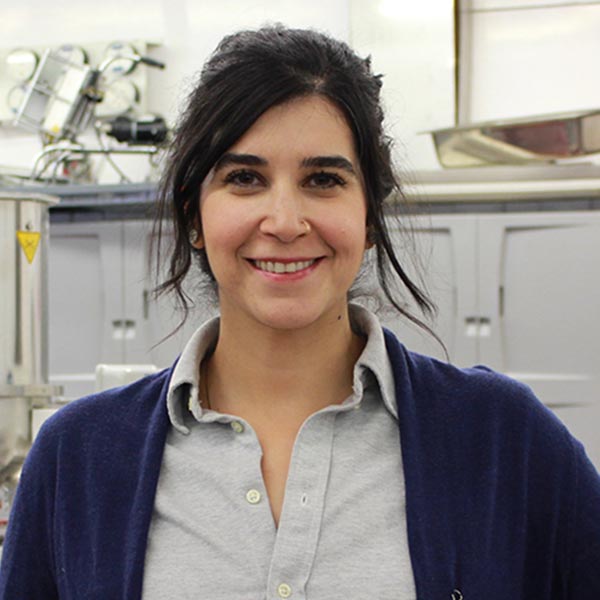
Maria Antonia Henriquez is a research scientist in wheat pathology at Agriculture and Agri-Food Canada’s (AAFC) Morden Research and Development Centre (RDC).

Born and raised in Colombia, she completed her bachelor’s degree in agronomy and master’s degree in plant breeding at the National University of Colombia. She moved to Canada and received her PhD in plant pathology at the University of Manitoba (U of M), which was followed by postdoctoral research at the Brandon RDC.

Henriquez is the president-elect of the Canadian Phytopathological Society. She lives in Morden with her husband Oscar Molina, who is also a research scientist at the Morden RDC, leading the Integrated Crop Production Systems Agronomy program.

Where did you work before AAFC?

Before moving to Canada, I worked as a research assistant at the International Center for Tropical Agriculture (CIAT) for five years. CIAT is part of CGIAR, formerly the Consultative Group for International Agricultural Research, a global research partnership that unites international organizations engaged in research about food security.

What got you interested in this area of work?

My father had a big impact on my decision to get into agriculture research. At home, he had a large library with books and encyclopedias covering a wide range of topics, including science, philosophy, medicine and history. When I was nine or 10 years old, he challenged me to find different topics to discuss with him. During my childhood and adolescence, reading those books became my hobby. I spent hours in the library every day, and science and genetics got my attention. I also got inspired to do research with plants. During my bachelor courses and when I did my thesis, I became passionate about plant pathology and plant-microbial interactions at the molecular level. That was my starting point – I will always remember those years.

Tell us a bit about what you’re working on at the Morden RDC.

In my research program, we are using cutting-edge technologies and bioinformatic tools to find innovative and sustainable technologies to enhance genetic resistance and management strategies for Fusarium head blight (FHB) and leaf spot diseases in wheat. I work closely with breeders, plant pathologists, geneticists and agronomists to incorporate disease resistance into Canadian wheat cultivars and conduct applied plant pathology work in terms of crop rotations, development of biopesticides, digital agriculture and disease surveillance.

Many of these projects are funded partially by Manitoba Crop Alliance (MCA). I am leading the project “TEN-TG: A tilling and genome resource for FHB improvement” along with Curtis Pozniak from the Crop Development Centre at the University of Saskatchewan. In this project, we are working with AAC Tenacious, the only FHB-resistant wheat cultivar registered in Canada. We have identified AAC Tenacious mutants that are susceptible to FHB. As we are sequencing the genome of AAC Tenacious, we are going to compare the DNA sequence of those susceptible mutants with the genome of AAC Tenacious to pinpoint the exact mutations resulting in the susceptible phenotype. This comparison will tell us with a reasonable degree of confidence that those genes are in fact involved in resistance. We anticipate this research and the genetic resources we are developing will have an impact in the future with variety development in Canada.

In a digital agriculture project, I am collaborating with Chris Henry from the U of M and Chris Bidinosti from the University of Winnipeg in developing automated systems for detecting and assessing FHB in wheat using machine learning and imaging technologies. By creating both indoor and outdoor automatic systems, the project seeks to expedite the breeding of FHB-resistant wheat cultivars, a model that could be easily adapted to other cereal crops.

I am also leading a project with Steve Robinson where we are evaluating RNA-based fungicides for controlling FHB in field trials. We are currently testing the best combination of RNA-based solutions in yield plots and comparing those biopesticides with traditional fungicides.

What can you say about the value of farmers providing funding and support to your organization?

Funding and support from farmers are essential to fostering innovation, supporting research and development, and leads to the creation of more efficient farming techniques, crop varieties and pest management solutions. This funding is very important. It allows us to explore sustainable agriculture practices that can reduce chemical inputs, enhance soil health and preserve biodiversity. I am grateful for the support from farmers to my research.

How does that farmer funding and support directly benefit farmers?

The funding and support we receive from growers is a step closer to finding solutions to problems that affect the sustainability of the farms. The economic and social impacts extend beyond the individual grower, affecting the entire agricultural sector. By backing different research initiatives, farmers help us ensure their voices are heard and their challenges are addressed.

How do you spend your time outside of work?

Cycling, reading, gardening and listening to music.

What is the best part of your job?

There are so many things, but I would say the opportunity to work towards solutions for problems affecting Canadian agriculture. Particularly, working with important cereal diseases, such as FHB, but the most important is working in collaboration with a diverse group of people from AAFC, government partners, the private sector and universities.

Who or what inspired you?

My father. He is the most intelligent person I have met in my life, and his deep knowledge and understanding across various subjects was exceptional. Endless conversations about the power of the mind, critical thinking and personal values, like integrity, compassion, forgiveness, resilience and strong work ethic, shape who I am as a person. He was always challenging me and telling me to look at things from a different perspective or look for the answer in a different way. That has really stuck with me.

Research on the Farm – Barley Seeding Rate Trial Summary

Manitoba Crop Alliance’s (MCA) Research on the Farm (ROTF) program conducts scientific research with farmer members using replicated strip trials on commercial fields. Farmer co-operators use their own equipment and management practices to conduct this research. Research projects are developed to investigate current and pressing agronomic questions and provide site-specific answers. More information about the ROTF program and all trial results can be found here.

Barley genetics for both malting and feed varieties have improved over the last decade. Evaluating current seeding rates for new barley varieties was necessary to understand if target plant stand densities are optimized for both grain yield and quality. The purpose of this trial was to investigate the economic and agronomic impact of farmers increasing and decreasing their target plant stands. This was done by having decreased and increased seeding rate treatments compared to the farmers’ normal.

Over the past three years (2022-24) MCA conducted 17 barley seeding rate trials. Throughout the trial period, seeding rates ranged from 78-225 lb/ac. Eleven sites planted feed barley and six sites planted malting barley. CDC Austenson (feed) and AAC Connect (malting) were the most planted varieties

At eight of 17 sites, the seeding rate had a significant impact on plant density. In all cases except one, the highest seeding rate resulted in the highest plant population.

Figure 1. Summary of average barley plant density by seeding rate for all trial sites from 2022 – 2024. Note: Letters indicate significant differences between treatments.

Higher plant densities have been linked to more uniform maturing crops, with increased crop protection product efficiency. Furthermore, increased plant density is an important cultural practice to improve crop weed competition.

Significant yield differences were found at two of the 17 sites (12 per cent). At site BP03-2023, the yields from the normal and high seeding rates were significantly higher than the low seeding rate treatment. At BP02-2024, the low seeding rate treatment was the highest yielding.

Figure 2. Summary of average barley yield by seeding rate for all trial sites from 2022 – 2024. Note: Letters indicate significant differences between treatments.

Overall, at most sites, grain yield was not affected by a change in seeding rate from normal practices. The data from these trials suggests that these farmer participants have a good understanding of the optimal seeding rate for their farm. No statistical analysis was conducted on grain quality.

One last piece of the research puzzle is to understand the impact on profit from changing your seeding rate. The results of a simple profit analysis can be found in Table 1. At 11 of the 17 sites (65 per cent), the lowest seeding rate was most profitable. The higher seeding rates were found to be economical at only two sites. This analysis is looking at the cost of seed only; no other parameters, such as inputs and equipment costs, were included in these calculations.

Table 1. Economic analysis of all trial sites from 2022-2024.

Note: Seed costs are based on Manitoba Agriculture 2024 Cost of Production Guidelines ($12/bu). Barley prices based on Manitoba Agriculture’s Grain and Oilseed price report ($4.63/bu). Net profit calculated based on seeding costs only.

Tone Ag Consulting carries out MCA’s ROTF trials in all six of our crop-types. They assist the farmer with plot planting and harvesting. They also capture and collect key information throughout the growing season, including soil samples, growth stage notes and precipitation data.

MCA-funded research at the 2024 Manitoba Agronomists’ Conference

On Dec. 11 and 12, 2024, Manitoba agronomists met to discuss the latest developments in pest, crop and soil management. This year, the conference theme was “Strategies for Winning Agronomic Battles: A Case Study on Herbicide Resistant Weeds.” Much of the research shared at the Manitoba Agronomists’ Conference was funded in part by Manitoba Crop Alliance (MCA). Below is a summary of the posters shared that feature MCA-funded research.

Crop Management

Climate and Fall Shoulder Cover Crops: Where Do They Intersect?  
Emmanuel Agyapong, Afua Mante, Yvonne Lawley, Francis Zvomuya, University of Manitoba

            (Abstract) (Poster PDF)

Response of lodging-related morphological traits of wheat to nitrogen fertilization and plant growth regulator 
Gurnoor Kaur, Ginelle Grenier, Douglas J. Cattani, Pham Anh Tuan, Belay T. Ayele, University of Manitoba

            (Abstract) (Poster PDF

Genomic analysis of preharvest sprouting associated alpha amylase activity in barley  
Rui Wang, Gurkamal Kaur, Belay T Ayele, University of Manitoba, Marta S Izydorczyk, Canadian Grain Commission, Dean Spaner, University of Alberta, Aaron D Beattie, University of Saskatchewan, Ana Badea, Agriculture and Agri-Food Canada

            (Abstract) (Poster PDF)

Identification of genetic loci for lodging resistance in spring wheat (Triticum aestivum L.) 
Ginelle Grenier, Curt McCartney, Belay T. Ayele, University of Manitoba, Muhammad Iqbal, Dean Spaner, University of Alberta, Gavin Humphreys, Agriculture and Agri-Food Canada

            (Abstract) (Poster PDF)

Optimizing Pea Production in Manitoba Rotations: Yield and Quality  
Ramona Mohr, Mohammad Khakbazan, Yong Min Kim, Maria Antonia Henriquez, Monika Gorzelak, Agriculture and Agri-Food Canada

            (Abstract) (Poster PDF)

On-Farm Understandings: Assessing the Impact of Seeding Rates on Wheat and Sunflower Grain Yield and Quality through On-Farm Trials  
Andrew Hector, Morgan Cott, Manitoba Crop Alliance

            (Abstract) (Poster PDF)

Are Intercropped Cover Crops Compatible with Canola Weed Management?  
Janelle Gawiak, Yvonne Lawley, University of Manitoba, Maryse Bourgault, University of Saskatchewan, Linda Gorim, University of Alberta

            (Abstract) (Poster PDF)

Pest Management

Effect of integrated crop management strategies on weed control and crop yield in wheat  
Uthpala Ekanayake, Rob Gulden, Jonathan Rosset, Dilshan Benaragama, University of Manitoba, Chris Willenborg, University of Saskatchewan

            (Abstract) (Poster PDF)

Fusarium Head Blight Risk Mapping Tool – 2024 Summary  
Paul Bullock, Timi Ojo, Manasah Mkhabela, Jamie Wan, Taurai Matengu, Henrique Carvalho Dept of Soil Science, University of MB, MB Agriculture

            (Abstract) (Poster PDF)

Assessing crop and weed management impacts on wheat crop and weeds through drone-based remote sensing 
Shirmith Nirmal, Rob Gulden, Dilshan Benaragama, University of Manitoba, Steve Shirtliffe, Christian Willenborg, University of Saskatchewan

            (Abstract) (Poster PDF)

Soil Management

Effects of Tile Drainage on Soil Salinity in Southwestern Manitoba Soils  
David Whetter, AgriEarth Consulting Ltd, Bruce Shewfelt, PBS Water Engineering Ltd

            (Abstract) (Poster PDF)

Co-Composting with Struvite: Enhancing Phosphorus Availability in Low-P Prairie Soils  
Amanda Desrochers, Inoka Amarakoon, Joanne Thiessen Martens, University of Manitoba

            (Abstract) (Poster PDF)

Linking Optimal Nitrogen Management Practices to Soil Moisture Conditions
Carlie Johnston, Xiaopeng Gao, Rotimi Ojo, University of Manitoba, Ramona Mohr, Agriculture and Agri-Food Canada

            (Abstract) (Poster PDF)

During the soil management session, MCA whole farm specialist Ashley Ammeter also presented on the topic of crop residue management. A recording of that presentation is available on the University of Manitoba Faculty of Agricultural and Food Sciences YouTube Channel.

For a full list of poster presentations and speakers from the 2024 conference, visit the Manitoba Agronomists’ Conference website. Recordings of all presentations from the conference are available on the University of Manitoba Faculty of Agricultural and Food Sciences YouTube Channel.

Thank you to the conference partners, University of Manitoba, Manitoba Agriculture and the Prairie Certified Crop Advisor Board, for hosting an excellent conference!

New, promising flax varieties for Manitobans

Manitoba flax farmers (and upcoming flax farmers) will soon have full access to a new flax variety, CDC Esme. As of spring 2025, CDC Esme is available to seed producers across the province, as long as they have been able to access it from seed dealers. 

As stated in the Secan Technical Bulletin for the variety, CDC Esme is a large seeded, high yielding brown seeded flax variety with good lodging resistance and late maturity. Esme proves to be a strong yielder in MCVET trials across several site years, with oil content similar to check varieties. Statistics show an average of 2 cm shorter than CDC Glas, which is a beneficial trend in Manitoba, where farmers are trying to reduce flax straw and residue. 

Dr. Bunyamin Tar’an and his team at the Crop Development Centre in Saskatoon developed CDC Esme and have several more flax lines that have strong potential for registration on the Canadian Prairies. Most recently, Tar’an had an experimental flax line that has been recommended for registration via Canadian Food Inspection Agency. This line, currently named FP 2608, will undergo a registration process and could likely be available for seed production in the next two years. 

FP 2608 has been a promising yielder in the Flax Co-op trials performed in Manitoba and is a consistently strong yielder. It appears to be quite tolerant of pasmo infections in past reports, and oil content and yield has been ranked very high amongst other varieties and lines. Tar’an has noted that FP 2608 had considerably strong performance in the more northern Co-op trials in Manitoba, which perhaps displays its ability to thrive in less diverse rotations.

MCA is very proud of our relationship with Dr. Tar’an and are very excited about his future work in flax breeding. Some new work that he is working on includes “Accelerated Breeding Strategy for Flax Improvement” which looks at developing inbred populations in a shorter term than is current reality. This would mean that future varieties could potentially be brought to the market more quickly and readily than they have in the past. Another highlight of Dr. Tar’an’s work is that he is committed to reducing straw content while increasing seed production in future varieties. He has had to delve back in time and use flax’s wild ancestor, Linum bienne. By using historial genetics, Tar’an can benefit by breeding their old, shorter varieties with new modern varieties that have bushier plant structure, therefore, higher yielding qualities and improved harvestability.

Flax can have a strong future on the Prairies and Manitoba Crop Alliance is supporting that possibility for our farmers. It is a crop that requires patience and consideration, which we believe Manitoba farmers are great at and can help us solidify the flax industry on the Prairies. Discussions with farmers that have been growing flax successfully for several years tell us that it is one of the top most profitable crops on their farms because they are willing to put an extra effort in to the crop. In this case, it doesn’t mean inputs, directly. These farmers are treating flax like the special crop that it is; slowing down and using precision and sustainable practices to support the germination of a tiny seed into a beautiful and profitable crop.

Please contact the MCA’s Agronomy Extension Specialist for Special Crops if you are considering growing flax or currently work with flax and are interested in more agronomic information

Lambda-cyhalothrin update – March 2025

Lambda-cyhalothrin insecticide – a fast-acting stomach and contact insecticide that provides control of several foliar pest in various crops. It is a synthetic pyrethroid and group 3A insecticide.

In April 2021, the PMRA published and announced that lambda-cyhalothrin and all associated end-use products underwent a re-evaluation decision. As is well-known, the final decision at the time was to cease all sales of lambda-cyhalothrin products in Canada. Another re-evaluation in 2023 determined that the insecticide could only be used on crops not being used, in any form, for human or animal feed consumption.

Health Canada’s PMRA made the most recent update on February 3, 2025, which appears to be a generous re-evaluation of lambda-cyhalothrin to reinstate certain feed uses of the product. Several livestock feed uses have been re-instated, which are generally grain, meal and by products. Feed uses not re-instated are several silages, stover, forage, hay and straw products, plus some others. The full list can be found in the latest publication here.

Unfortunately for confection sunflower farmers, lambda-cyhalothrin has not been re-instated for the control of lygus bugs. Products for direct human consumption do not appear to have potential for reinstatement on the insecticide’s label. Oilseed sunflowers are not affected as readily by lygus bug damage because their impact to the oil content of the seed is not as detrimental as quality is to confection sunflowers.

Lygus nymph and adult.

Manitoba Crop Alliance has worked together with Manitoba Agriculture and FMC Canada in 2023 and 2024 to ensure confection farmers have Carbine (R) insecticide available for use on confection sunflowers to control lygus bug. This occurred via a 12-month Emergency Use Registration. The current EUR is valid until July 2025, so the three groups are working on another 12-month EUR and FMC Canada is making efforts toward a permanent registration of the product via the PMRA.

Carbine (R) Insecticide is a group 29 insecticide that is an “ideal partner in integrated pest management (IPM) – has minimal impact on beneficial insects and pollinators when applied according to the label,” and “has no known cross-resistance to other active ingredients,”  according to FMC Canada.

Additional Information: Lygus bugs are a major pest of sunflowers because they can cause kernel brown spot, which is a small brown to black spot on the blunt end of the seed. The industry standard allows for a maximum of 0.5% kernel brown spot in confection sunflowers marketed for human consumption. The economic threshold for lygus but in confection sunflowers is one bug per 9 sunflower heads. Each adult lygus bug is capable of damaging as many as 35 seeds per head.

Control of lygus bug is very limited and insecticides (lambda-cyhalothrin) are the most effective option in sunflowers. Cultural options are even more limited. When planning sunflower acres, it is recommended to avoid planting near adjacent canola fields since they are both favourable host crops to lygus bug. Canola does have limited insecticide options available for lygus bug, so in canola-lygus infestation and insecticide application scenarios, those neighbouring lygus bugs will attempt to move out and find another host crop, like sunflowers.

Some environmental and biological control factors from Manitoba Agriculture include:

  • Weather: Heavy rainfall may reduce levels of early-instar nymphs of lygus bugs. A study in alfalfa found heavy rainfall reduced first generation nymphs of Lygus lineolaris by 50%.
  • Biological Control: Nymphs of Lygus bugs may be killed by parasitic wasps in the genus Peristenus (Hymenoptera: Braconidae); with parasitism being common in weedy alfalfa stands or uncultivated weedy sites but very low in canola. Damsel bugs, assassin bugs, lacewing larvae, big-eyed bugs and crab spiders can prey on lygus bugs. Protecting these natural enemies by avoiding unnecessary insecticide applications may also help to reduce the impact of lygus bugs.
Top