MCA Strategic Plan – Year One Wrap Up

It has been one full year since Manitoba Crop Alliance (MCA) released its 2024-27 strategic plan. Over this last year, MCA staff have worked hard to achieve the vision set out by the board of directors and crop committee delegates. Below is a recap of the wins and challenges from MCA’s efforts to execute year one of the strategic plan. If you are interested in what the future of MCA looks like, click here to view year two of our strategic plan.

This three-year plan was developed in 2024 to consciously guide MCA’s future. The plan consists of three Big Goals that will be achieved over the next three years. The plan also consists of nine sub-goals, known as Step Goals. Each Big Goal has three associated Step Goals, which are annual benchmarks and priorities that are to be achieved in a one-year timeframe.

Big Goal #1: Innovate our communications program to increase awareness and engagement with our farmer members.

Step Goal #1: Equip MCA staff to better understand the most effective ways to engage with our farmer members.

  • This Step Goal required staff to redefine how they approach communicating and engaging with farmers to ensure genuine programming impact. Step Goal #1 was completed and built a strong foundation for continued innovation of MCA’s communications program.
  • Major win: MCA staff members completed additional communication training to better understand the most effective way of communicating with our farmer members.

Step Goal #2: Conduct audience research and generate ideas for engagement and awareness that can be implemented through our communications frameworks.

  • Progress on Step Goal #2 has been meaningful but delayed. Due to the breadth of Step Goal #2, robust research is required to guarantee all audience inputs are folded into the development of the new communication framework.

Step Goal #3: Identify strategic communications initiatives informed by training and research that directly address the needs of our farmers members

  • No progress on Step Goal #3 occurred during 2024-25.

Big Goal #2: Discover and fund ground-breaking research.

Step Goal #4: Identify key priorities for investment to build Manitoba research capacity

  • MCA staff identified and met with research partners to understand Manitoba’s agricultural research capacity gaps. These meetings culminated in the identification of key gaps and potential solutions.
  • Major win: three priorities for support were identified and brought forward to the MCA board of directors.

Step Goal #5: Secure north/south partnerships to develop mutually beneficial research collaborations and investment opportunities.

  • Partnerships are key relationships that increase research capacity by leveraging talents and facilities to fulfill knowledge gaps. Corn and sunflowers were identified as the two crops with an absence of research partnerships and were prioritized in this Step Goal. Through in-person and online meetings, strong connections were established with funding organizations and research institutions.
  • Major win: MCA became a voting member of the National Sunflower Association and collaborator with the North Dakota Corn Council. Both partnerships have led to MCA research priorities being fulfilled.

Step Goal #6: Expand Research on the Farm (ROTF) program.

  • Over the last year, MCA’s ROTF program grew in the number of protocols offered and trials conducted. Additionally, a revamped website presentation has made it easier for ROTF trial data to be accessed and used by farmers.
  • Major win: MCA introduced five new protocols for the 2025 growing season, including MCA’s first whole farm protocol.

Big Goal #3: Explore areas for bold investment that unlocks hidden potential and fuels historic progress.

Step Goal #7: Conduct a study to identify value-added opportunities in Manitoba that would open new markets for MCA commodities.

  • MCA encountered several roadblocks in pursuit of Step Goal #7. As a result, this Step Goal was not completed.

Step Goal #8: Increase support to consumer outreach initiatives that educate and inspire the next generation.

  • MCA worked with Agriculture in the Classroom – Manitoba (AITC-M) to build upon their already strong programing to ensure young people gain an early understanding of farming and where their food comes from.
  • Major win: MCA made a historic investment of $195,000 in AITC-M’s classroom garden program. Read the full announcement here.

Step Goal #9: Conduct a “hopes and dreams” assessment with our partners in research and market development to highlight future opportunities for investment.

  • MCA staff reviewed and evaluated proposals from research and market development partners. All participating organizations had a shared vision and commitment to ensuring Manitoba farmers thrive.
  • Major win: MCA identified multiple new opportunities for bold investment to make historic changes for Manitoba farmers.


Rebecca Hallett, Interim Associate Vice President Research, University of Guelph

The Fence Post: Spring/Summer 2025

Manitoba Crop Alliance makes historic investment in Agriculture in the Classroom – Manitoba to grow future ag leaders

April 25, 2025 (Winnipeg, MB) – Manitoba Crop Alliance (MCA) has announced a historic investment of $195,000 in Agriculture in the Classroom – Manitoba (AITC-M), an initiative set to expand classroom garden programs across the province. This bold funding will enable students to explore agriculture from seed to harvest through hands-on learning, deepening their connection with where their food comes from and the people who produce it.

At the heart of this initiative is MCA’s belief that agriculture is the greatest story never fully told. This investment is not merely about providing garden kits or curriculum enhancements, but rather about fostering public trust, advancing food literacy, and inspiring future leaders in agriculture.

MCA chair Jonothan Hodson reinforces the importance of early agriculture education by noting that “as fewer people grow up in rural areas, it has become especially important that young people gain an early understanding of farming and where their food comes from. We hope our investment will help equip students with that understanding and might even inspire them to consider careers in agriculture when they grow up.”

By sparking the wonder of watching a plant grow, these programs ignite lifelong learning and help students engage more meaningfully with the food they eat.

AITC-M, the lead organization behind these educational efforts, sees the MCA investment as a pivotal moment in the growth of its programming.

“This investment is truly game-changing for one of our most popular and in-demand programs,” says Katharine Cherewyk, executive director of AITC-M. “It will allow us to significantly expand our reach, connecting with more teachers and students in more communities across Manitoba. The classroom garden program offers a highly impactful, hands-on experience that brings agriculture to life in meaningful and memorable ways.”

Beyond its impact in the classroom, this transformative investment also marks a significant evolution in MCA’s relationship with AITC-M. What started as a base-level partnership has blossomed into a shared commitment to empower young people through education, curiosity, and community connection.

MCA vice-chair Sally Parsonage highlights the broader impact, stating that “agriculture education is crucial to the future of our industry. By supporting initiatives like the AITC-M classroom garden programs, we can ensure the next generation of Manitoba consumers appreciates and respects the important role farmers play in feeding people, here at home and around the world.”

Together, MCA and AITC-M are not just planting seeds in the ground—they are cultivating a vibrant future for agriculture in Manitoba, ensuring that the next generation is well-equipped to understand and sustain the food systems that support their communities.

To learn more about AITC-M and its transformative initiatives, please visit aitc.mb.ca. For additional information about MCA, please visit mbcropalliance.ca.

-30-

For more information, please contact:

Cole Christensen
Communications Manager
Manitoba Crop Alliance
403-589-3529
cole@mbcropalliance.ca

Tanis Chalmers
Engagement & Development Manager
Agriculture in the Classroom -Manitoba
204-522-7020
Tanis@aitc.mb.ca

About Manitoba Crop Alliance:
Manitoba Crop Alliance is a non-profit organization established Aug. 1, 2020, representing more than 7,700 farmer members. Manitoba Crop Alliance puts their farmer members first and strives to continuously improve the competitiveness and profitability of all crops represented by the organization by focusing on four main areas: research, agronomy, market access and development, and communications. It is through investment in these key areas that Manitoba Crop Alliance can ensure wheat, barley, corn, sunflower and flax are sustainable production choices for Manitoba farmers. For more information, visit mbcropalliance.ca.

About Agriculture in the Classroom-Manitoba:
Agriculture in the Classroom-Manitoba connects educators and students from K to 12 with curriculum-based programs, learning activities and educational resources designed to learn more about the important role agriculture plays in their everyday lives. AITC-M has been in operation since 1988 and is a member of Agriculture in the Classroom-Canada.

Maria Antonia Henriquez, research scientist, Agriculture and Agri-Food Canada

Manitoba Crop Alliance elects officer positions for 2025-26

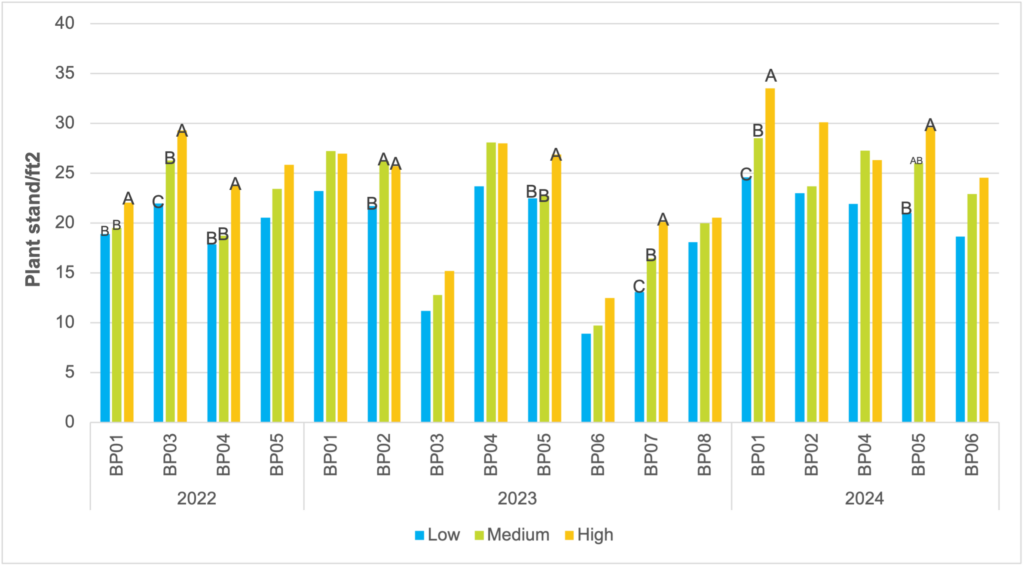
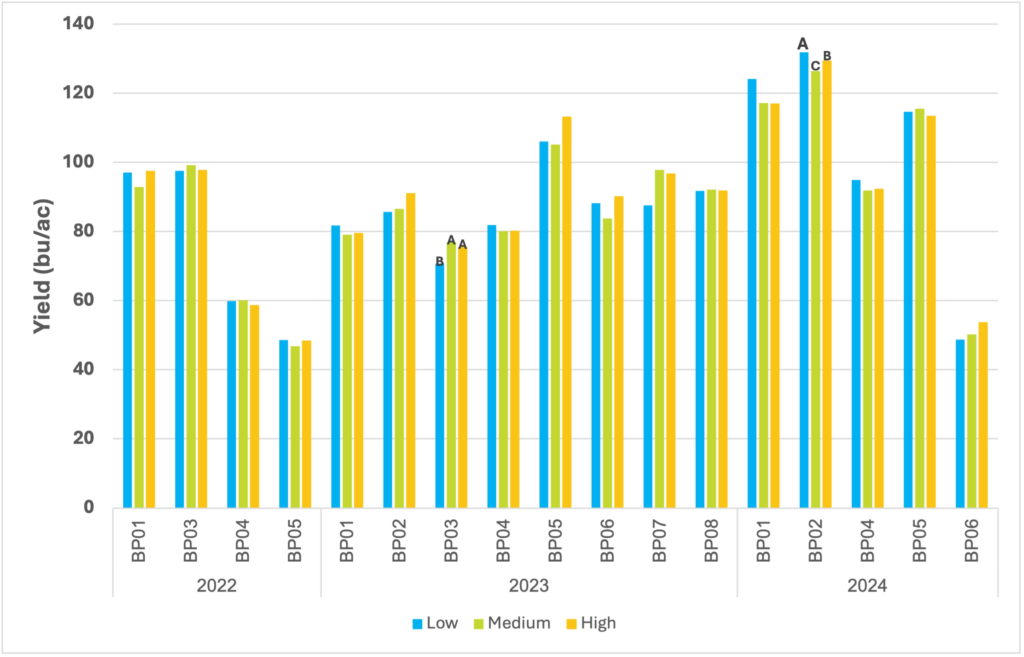
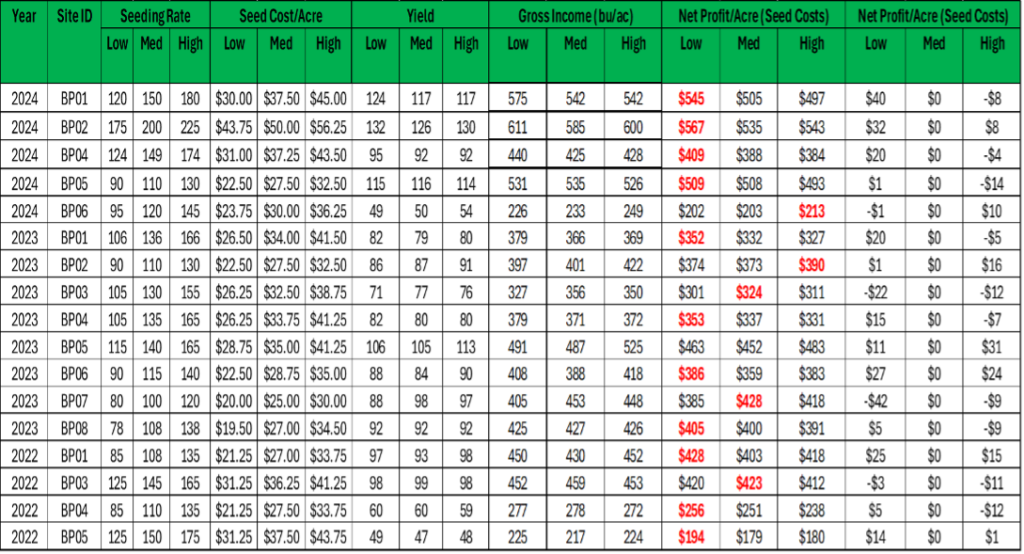
Research on the Farm – Barley Seeding Rate Trial Summary

MCA-funded research at the 2024 Manitoba Agronomists’ Conference

On Dec. 11 and 12, 2024, Manitoba agronomists met to discuss the latest developments in pest, crop and soil management. This year, the conference theme was “Strategies for Winning Agronomic Battles: A Case Study on Herbicide Resistant Weeds.” Much of the research shared at the Manitoba Agronomists’ Conference was funded in part by Manitoba Crop Alliance (MCA). Below is a summary of the posters shared that feature MCA-funded research.

Crop Management

Climate and Fall Shoulder Cover Crops: Where Do They Intersect?  
Emmanuel Agyapong, Afua Mante, Yvonne Lawley, Francis Zvomuya, University of Manitoba

            (Abstract) (Poster PDF)

Response of lodging-related morphological traits of wheat to nitrogen fertilization and plant growth regulator 
Gurnoor Kaur, Ginelle Grenier, Douglas J. Cattani, Pham Anh Tuan, Belay T. Ayele, University of Manitoba

            (Abstract) (Poster PDF) 

Genomic analysis of preharvest sprouting associated alpha amylase activity in barley  
Rui Wang, Gurkamal Kaur, Belay T Ayele, University of Manitoba, Marta S Izydorczyk, Canadian Grain Commission, Dean Spaner, University of Alberta, Aaron D Beattie, University of Saskatchewan, Ana Badea, Agriculture and Agri-Food Canada

            (Abstract) (Poster PDF)

Identification of genetic loci for lodging resistance in spring wheat (Triticum aestivum L.) 
Ginelle Grenier, Curt McCartney, Belay T. Ayele, University of Manitoba, Muhammad Iqbal, Dean Spaner, University of Alberta, Gavin Humphreys, Agriculture and Agri-Food Canada

            (Abstract) (Poster PDF)

Optimizing Pea Production in Manitoba Rotations: Yield and Quality  
Ramona Mohr, Mohammad Khakbazan, Yong Min Kim, Maria Antonia Henriquez, Monika Gorzelak, Agriculture and Agri-Food Canada

            (Abstract) (Poster PDF)

On-Farm Understandings: Assessing the Impact of Seeding Rates on Wheat and Sunflower Grain Yield and Quality through On-Farm Trials  
Andrew Hector, Morgan Cott, Manitoba Crop Alliance

            (Abstract) (Poster PDF)

Are Intercropped Cover Crops Compatible with Canola Weed Management?  
Janelle Gawiak, Yvonne Lawley, University of Manitoba, Maryse Bourgault, University of Saskatchewan, Linda Gorim, University of Alberta

            (Abstract) (Poster PDF)

Pest Management

Effect of integrated crop management strategies on weed control and crop yield in wheat  
Uthpala Ekanayake, Rob Gulden, Jonathan Rosset, Dilshan Benaragama, University of Manitoba, Chris Willenborg, University of Saskatchewan

            (Abstract) (Poster PDF)

Fusarium Head Blight Risk Mapping Tool – 2024 Summary  
Paul Bullock, Timi Ojo, Manasah Mkhabela, Jamie Wan, Taurai Matengu, Henrique Carvalho Dept of Soil Science, University of MB, MB Agriculture

            (Abstract) (Poster PDF)

Assessing crop and weed management impacts on wheat crop and weeds through drone-based remote sensing 
Shirmith Nirmal, Rob Gulden, Dilshan Benaragama, University of Manitoba, Steve Shirtliffe, Christian Willenborg, University of Saskatchewan

            (Abstract) (Poster PDF)

Soil Management

Effects of Tile Drainage on Soil Salinity in Southwestern Manitoba Soils  
David Whetter, AgriEarth Consulting Ltd, Bruce Shewfelt, PBS Water Engineering Ltd

            (Abstract) (Poster PDF)

Co-Composting with Struvite: Enhancing Phosphorus Availability in Low-P Prairie Soils  
Amanda Desrochers, Inoka Amarakoon, Joanne Thiessen Martens, University of Manitoba

            (Abstract) (Poster PDF)

Linking Optimal Nitrogen Management Practices to Soil Moisture Conditions
Carlie Johnston, Xiaopeng Gao, Rotimi Ojo, University of Manitoba, Ramona Mohr, Agriculture and Agri-Food Canada

            (Abstract) (Poster PDF)

During the soil management session, MCA whole farm specialist Ashley Ammeter also presented on the topic of crop residue management. A recording of that presentation is available on the University of Manitoba Faculty of Agricultural and Food Sciences YouTube Channel.

For a full list of poster presentations and speakers from the 2024 conference, visit the Manitoba Agronomists’ Conference website. Recordings of all presentations from the conference are available on the University of Manitoba Faculty of Agricultural and Food Sciences YouTube Channel.

Thank you to the conference partners, University of Manitoba, Manitoba Agriculture and the Prairie Certified Crop Advisor Board, for hosting an excellent conference!

Meet Manitoba Crop Alliance’s 2024-25 post-secondary bursary recipients

Manitoba Crop Alliance (MCA) is proud to support agriculture’s next generation. MCA’s bursary program is designed to assist with the financial needs of students pursuing education in a field that will benefit the agriculture sector.

Six post-secondary students from Manitoba have been awarded with MCA 2024-25 bursaries valued at $2,000 each. The 2024-25 bursary recipients are Mika Cleave from Ochre River, Noah Kaminsky from Brunkild, Chad Pouteau from Mariapolis, Layne Thompson from Ochre River, Jadyn Wiebe from Plum Coulee, and Abby Mazier from Justice.

“Educating and inspiring the next generation is a strategic priority for our organization,” says MCA chair Robert Misko. “Each of our bursary recipients has chosen to pursue their passion and expand their knowledge, and I hope they will eventually use that knowledge and passion to advance our industry.”

Bursary applicants needed to meet the following criteria:

  • Have completed a minimum of one year (two terms) of post-secondary education at the college or university level (diploma or degree) and are enrolled full-time for the 2024-25 school year in an agricultural program within Canada.
  • Have achieved a minimum cumulative grade point average (GPA) of 3.0.
  • Have an interest in wheat (spring or winter), corn, barley, flax or sunflower crops, or agriculture in general, as demonstrated in a brief, one-page letter.
  • Are from a farm that is a member in good standing with MCA
  • Have not previously been awarded an MCA post-secondary bursary (past high school bursary recipients remain eligible for a post-secondary bursary).

An independent selection committee was contracted to evaluate the applicants based on their connection to or interest in agriculture, explanation of why they decided to enrol in an agriculture-related post-secondary program, how they hope to benefit the agriculture industry once they have graduated and are in the workforce, and their academics and writing skills.

This year, the selection committee included Curtis Cavers, an agronomist with Agriculture and Agri-Food Canada based in Portage la Prairie, and Loveleen Kaur Dhillon, the agronomist in residence for special crops at the University of Manitoba.

Born and raised in southern Manitoba, Cavers holds a bachelor of science in agriculture, majoring in soil science, and a master’s degree from the University of Manitoba. Prior to assuming her current role at the University of Manitoba, Dhillon completed her PhD in plant science at the University of Saskatchewan and was working as a post-doctoral fellow.

Thank you to the selection committee for evaluating the bursary applications and congratulations to the 2024-25 bursary recipients!

Meet the MCA 2024-25 bursary recipients


Manitoba Crop Alliance awards six post-secondary students with 2024-25 bursaries

Feb. 26, 2025 (Carman, MB) – Manitoba Crop Alliance (MCA) has awarded six post-secondary students from Manitoba with MCA 2024-25 bursaries valued at $2,000 each. The six bursary recipients are Mika Cleave from Ochre River, Noah Kaminsky from Brunkild, Chad Pouteau from Mariapolis, Layne Thompson from Ochre River, Jadyn Wiebe from Plum Coulee, and Abby Mazier from Justice.

“Educating and inspiring the next generation is a strategic priority for our organization,” says MCA chair Robert Misko. “Each of our bursary recipients has chosen to pursue their passion and expand their knowledge, and I hope they will eventually use that knowledge and passion to advance our industry.”

MCA established these bursaries to assist with the financial needs of students who are enrolled in a post-secondary agricultural program within the province of Manitoba.

An independent selection committee was contracted to evaluate the applicants based on their connection to or interest in agriculture, explanation of why they decided to enrol in an agriculture-related post-secondary program, how they hope to benefit the agriculture industry once they have graduated and are in the workforce, and their academics and writing skills.

This year, the selection committee included Curtis Cavers, an agronomist with Agriculture and Agri-Food Canada based in Portage la Prairie, and Loveleen Kaur Dhillon, the agronomist in residence for special crops at the University of Manitoba.

For more information about the MCA 2024-25 bursary program and to read biographies of the recipients, visit mbcropalliance.ca.

-30-

For more information, please contact:

Cole Christensen
Communications Manager
Manitoba Crop Alliance
403-589-3529
cole@mbcropalliance.ca

About Manitoba Crop Alliance:
Manitoba Crop Alliance is a non-profit organization established Aug. 1, 2020, representing more than 7,700 farmer members. Manitoba Crop Alliance puts their farmer members first and strives to continuously improve the competitiveness and profitability of all crops represented by the organization by focusing on four main areas: research, agronomy, market access and development, and communications. It is through investment in these key areas that Manitoba Crop Alliance can ensure wheat, barley, corn, sunflower and flax are sustainable production choices for Manitoba farmers. For more information, visit 
mbcropalliance.ca.

Top