Manitoba Crop Alliance launches 2025 APP cash advance program

Hiroshi Kubota, research scientist, Agriculture and Agri-Food Canada

Follow @HiroshiKubota2 on X.

Hiroshi Kubota is a research scientist in sustainable cropping systems at Agriculture and Agri-Food Canada’s (AAFC) Lacombe Research and Development Centre (RDC). Originally from Japan, he earned his bachelor of science in agriculture at the Tokyo University of Agriculture, focusing on tropical agriculture.

Kubota lives in Lacombe, AB, with his wife and two young daughters.

Where did you work before AAFC?

After I graduated from my undergraduate degree, I travelled for a couple of years. I went to Papua New Guinea and Australia before returning to Japan to save money for my graduate studies in Canada. I came to Canada in 2009 and did my master’s degree in plant science at the University of Alberta. After I completed my master’s, I continued my PhD there before starting my current position with AAFC.

What got you interested in this area of work?

My uncle’s volunteer work as a science teacher in Africa influenced my interest in agriculture. Growing up without the internet, I was fascinated by his stories and the photos he shared – both the positive and challenging aspects of life in Africa.

One story about children suffering from poverty and malnutrition made me want to help. The first thing that came to mind was medicine, but I quickly realized I did not like the sight of blood.

That is when I started to think about agriculture as a career and chose to study in Japan. I was not from a farm family. Everything I learned about agriculture at university fascinated me, and I enjoyed my time there. After graduation, I was ready to volunteer in Africa when the program was cancelled. I was still interested in agriculture and decided to come to Canada to learn more about crop production here.

Tell us a bit about what you’re working on at AAFC.

In my daily work at AAFC, I spend time developing new research ideas that resonate with current and future challenges that farmers face. I make it a priority to connect with colleagues and stakeholders through various channels. I feel fortunate to work with a dedicated and experienced technical team, which enables me to focus on the broader aspects of our research instead of needing to check the plots every day. Together, we are trying to address the issues.

Now I’m the lead of the GROW Barley framework for the next seven years. My focus is on improving barley agronomy in Western Canada. Good agronomy is critical to improving competitiveness with other crops. Significant investments by industry and government are made in variety development, but the adoption of those new varieties is slow compared to other crops due to the complexity of the barley industry.

There are several barley agronomy studies underway in Western Canada. Through the GROW Barley framework, I intend to address gaps in existing or ongoing barley agronomy research activities. The first GROW Barley project was supported for funding, and I am excited about starting the project this spring.

Outside of GROW Barley, I am leading three barley-related projects this year and am grateful for the industry’s support for this research. The first project focuses on determining optimal seeding rates of five new feed barley varieties from different genetic backgrounds, including varieties from Western Crop Innovation, the University of Saskatchewan, AAFC Brandon and Nutrien. The other two projects are malting barley studies evaluating agronomic practices to achieve uniform maturity.

What can you say about the value of farmers providing funding and support to your organization?

Support and funding from farmers are invaluable to me as a research scientist. I’m fortunate to be in Western Canada, where both industry partners and farmers actively contribute to advancing research. This funding makes it possible for me to conduct work that directly benefits farmers, and I am deeply grateful for the trust and support I have received. It motivates me to ensure the research I conduct delivers practical, meaningful outcomes for the agricultural community.

How does that farmer funding and support directly benefit farmers?

When considering research projects, I review research priorities from crop commissions and, when possible, speak directly with farmers. Since the crop commissions represent farmers, I trust that I’m hearing their key challenges. My focus is on developing research ideas that are practical and beneficial, ensuring the outcomes have a direct impact on the farm.

How do you spend your time outside of work?

Outside of work I like to do physical activities, although with two little kids it can be hard to find time for hobbies! I love skiing and swimming. I used to be on a competitive swimming team from Grade 6 to 12 in Japan.

What is the best part about your job?

Connecting with stakeholders in the industry. As a relatively new research scientist, and a non-Canadian-born one, it is important for me to understand Canadian agricultural systems as much as I can. Farmers, industry stakeholders, commodity organizations and colleagues are always welcome to share their thoughts, experiences and challenges. This collaboration helps me to provide the best scientific information possible.

How do you celebrate agriculture?

I love eating and cooking, and I try to eat locally grown crops as much as I can. My kids are two and five, and we try to let them experience any agriculture-related activities as much as we can.

What’s your favourite movie?

I am a huge fan of Star Wars.

Follow @HiroshiKubota2 on X.

University of Manitoba hires first agronomist in residence for special crops

Steve Robinson, research scientist, Agriculture and Agri-Food Canada

Working in the world of epigenetics, Steve Robinson is a research Scientist at Agriculture and Agri-Food Canada (AAFC). Robinson was born and raised in Dudley, England, and has studied genetics nearly all his life. He began his post-secondary education studying genetics at the University of Birmingham, earned a PhD in molecular genetics from Newcastle University and studied at the John Innes Centre in Norwich before moving to Canada as a postdoctoral researcher.

He lives in Saskatoon with his wife and daughter.

What got you interested in this area of work?

Well, genetics seemed to be the area where you could be the most experimental in biology. This, combined with advances in molecular biology, I found fascinating. As an undergraduate student I found there were descriptive areas of biology that interested me less, and I was more drawn to experiments involving heritable traits – seeing changes occur over generations. I guess I have always been fascinated by genetics.

When I went to Norwich to begin my graduate research, my PhD supervisor, Derek Lydiate, moved the lab from Norwich to Saskatoon, bringing other Brits along with him. I was able to make many contacts while visiting and that is how we ended up here in sunny Saskatoon.

Tell us a bit about what you are working on at AAFC.

My work in the lab focuses on gene regulation and I’m particularly interested in the challenges resulting from polyploidy. I’m primarily working in canola and wheat, with the goal of improving these crops.

In one ongoing project, we are developing a method to introduce valuable genes from wild relatives into canola, breaking critical hybridization barriers. In another project, “Next Generation Fungicides: Translating dsRNA technology from the lab into the field,” funded partially by Manitoba Crop Alliance (MCA), we are trying to control Fusarium head blight (FHB) in wheat using RNA interference (RNAi). This approach involves trying to silence essential genes in pathogens, so you can spray double-stranded RNA onto the crop and, in this case, it would provide protection against Fusarium graminearum.

This project began in 2017 as a basic research project and has evolved into technology we are now testing in the field. Over the past eight years, we have advanced successes developed in the lab, and following engagement with the Canadian pesticide regulator (PMRA) to obtain research permits, we are now collaborating with other AAFC and external researchers evaluating the potential of RNAi in small, field-scale trials. Our goal is to develop new fungicidal controls that are safe to people and the environment, targeting only the pathogen of interest.

In another project funded partially by MCA, “Breeding hardier crops for SK: Dynamic phenotyping to dissect component of water stress in wheat,” we are screening a collection of wheat diversity using new equipment called a Plant Array Lysimeter. This measures transpiration and allows us to apply precise irrigation treatments to individual plants. We are screening for differential responses to drought stress. Our goal is to identify the genes that allow for greater production under drought conditions.

What can you say about the value of farmers providing funding and support to your organization?

This funding is critical. In fact, almost all my funding comes from farmers and producer groups. Without their support, we could not do the innovative experiments we envision. We are incredibly grateful to this system of funding that is available, as it ensures we focus on goals of importance to the Prairies. It complements the funding opportunities available within AAFC.

How does that farmer funding and support directly benefit farmers?

The work done in my lab takes time to reach the field. Take the RNAi-based fungicide project as an example. Within eight years, we have gone from exploring the potential of the idea all the way to conducting field trials. As these field trials progress, we will be looking for a commercial partner to bring the technology to market. When that happens, it will provide another solution for farmers to use in their arsenal to combat plant diseases and protect their yields.

How do you spend your time outside of work?

I enjoy playing most sports. Being from England, I’ve always played football, although here it is called soccer. I play on a couple of teams regularly; it gets me away from work and is a good distraction. Since moving to Canada, we enjoy skiing, so we try to ski whenever we can. If only Saskatoon was closer to the mountains.

What is the best part about your job?

The freedom to develop new ideas and design experiments to test them. There is great reward when you get to see the excitement of experiments working! At AAFC I work in a department that possesses resources to combine basic and applied research. That means we can take positive developments from the lab and bring them to the field within the same department, which has great value.

Who or what inspires you?

The people I work with. Their dedication and ability to turn ideas I have sketched out on paper into reality is incredible. It is important to recognize and retain these talents. Seeing the experiments succeed together is inspiring.

The Focal Point: Winter 2025 Edition

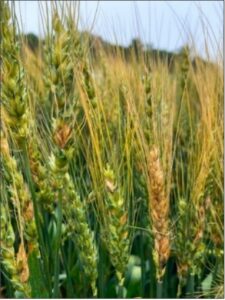
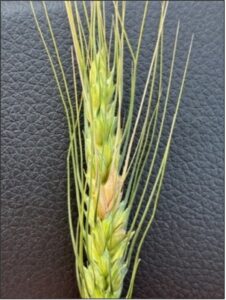
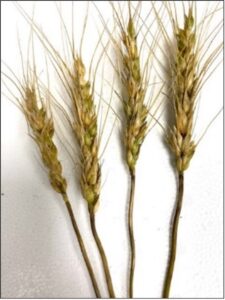
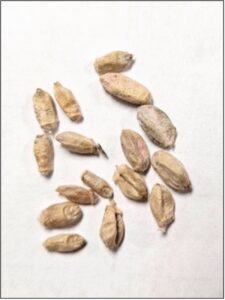
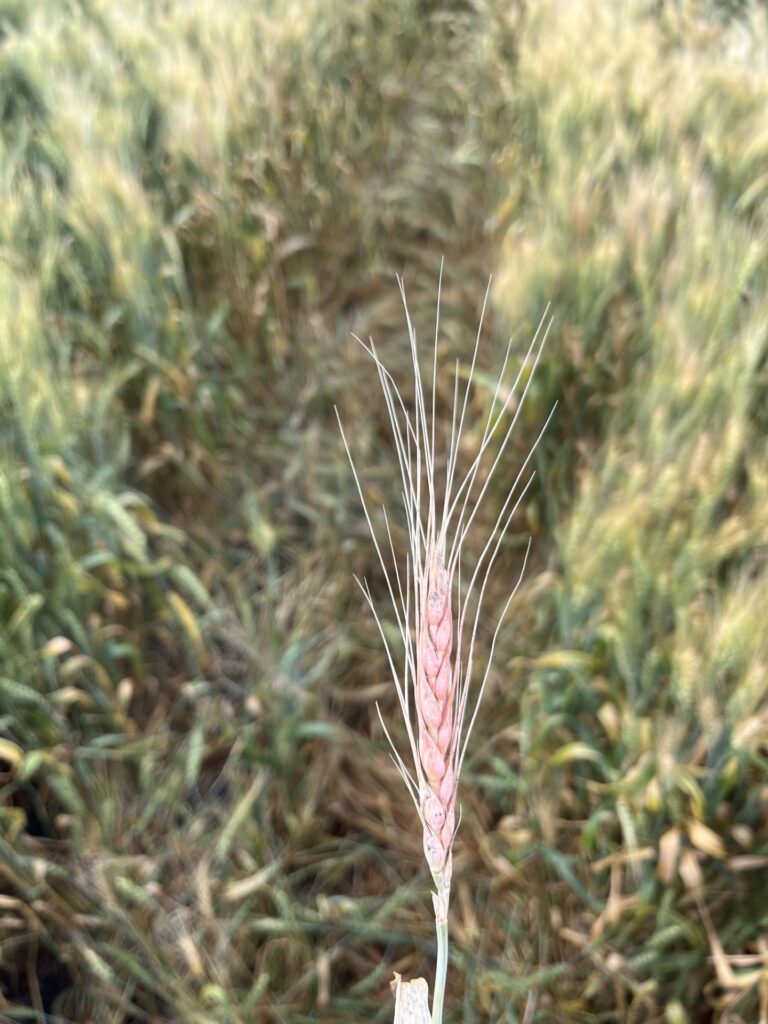
Identifying Fusarium Head Blight Symptoms in Spring Wheat

Meet our new crop committee delegates

The 2024 nomination period for delegates positions on our four crop committees took place from July 2 – Oct. 1, 2024.

In total, 16 farmer members were nominated for 17 available delegate positions across the four crop committees and were thereby elected by acclamation. Among those 16 delegates, eight are new to their respective committees.

Read on to learn more about the newest additions to our crop committees:

Corn 

Craig Riese (St. Andrews, MB)

Craig Riese farms in the St. Andrews and Selkirk area with his wife Crystal and two sons. Together they operate Westphalia Farms Ltd., where they grow corn, soybeans, wheat and canola. They added corn to the rotation in 2016 and currently grow about 800 acres.

Riese’s past and current industry involvement has included serving as a delegate and director with Keystone Agricultural Producers, as well as a delegate with Manitoba Pork. He has found corn to be a great addition to his farm and continues to learn and adapt to the challenges that come with its nature as a late-season crop.
Patrick Gamache (Laurier, MB)

Patrick Gamache is a sixth-generation farmer who farms in Laurier with the help of his parents, grandfather and employees. Currently, their main crops are wheat, canola, soybeans, edible beans and corn, but they have also grown rye, barley, oats and meadow fescue. Apart from grain farming, Gamache was also a seed grower and co-owner in an ag retail business for several years, in addition to working with cattle. He is passionate about agriculture and aims for perfection on his farm.

Gamache attended the University of Manitoba, where he received is agriculture diploma. He has volunteered with Agriculture in the Classroom – Manitoba, does community work in his hometown and has been a volunteer firefighter for 11-plus years. He is looking forward to being more involved with Manitoba Crop Alliance. 

Flax

Myles Kubinec (Holland, MB)

Myles Kubinec farms with his wife Anastasia and his father-in-law in Holland, growing both commercial and pedigreed seed. He is originally from a mixed operation in Alberta and received a degree in mechanical engineering from the University of Alberta. Kubinec and his wife have three sons that are also involved in the operation, when they’re not keeping their parents running to sports.
Amanda Ellis (Wawanesa, MB)

Amanda Ellis is co-owner/operator with her husband Simon of Black Creek Farm Ltd. and Ellis Seeds, a third-generation, 1,500-acre seed farm and retail. They grow flax, wheat, oats, peas, soybeans and canola, as well as the occasional “project” crop, such as hemp or millet.

Ellis has a diploma in business-finance from Assiniboine College and previously worked in finance at a Credit Union. She is interested in being involved in the agriculture industry, often volunteering for pilot projects and research studies. These have included participating as a panellist for University of Manitoba agriculture presentations and co-hosting farm tours for students and the public.

Ellis believes there is great market potential for flax, with growing demand in health food and pet food, as well as opportunity for research and the development of new, higher-yielding varieties. She is enthusiastic and curious to see what she can learn from and share with the flax crop committee.

Sunflower

Andrew Saramaga (Hazelridge, MB)

Andrew Saramaga is a fourth-generation farmer who works with his dad and a few employees in the Hazelridge area. Together they grow a variety of crop types, including corn, soybeans, spring and winter wheat, canola, sunflowers and various forage seeds.

Saramaga received his degree from the University of Manitoba. From there, he got involved in the early days of soybean production and marketing. This led to an opportunity to get involved with the former Manitoba Pulse Growers Association (now Manitoba Pulse & Soybean Growers), where he chaired the association for two years.

Saramaga’s farm has been growing sunflowers for about 15 years, starting with confection types and moving to black oil types in the last few years. He is excited to bring his experience to the sunflower crop committee and help further the sunflower industry in Manitoba.

Wheat and Barley

Carly Chatham (Killarney, MB)

Carly Chatham farms with her husband Cody at his family farm, Chatham Seeds, in Killarney. The Chathams are seed growers and continue to produce top-of-the-market wheat varieties. Chatham was born and raised in Carman and has been involved in the agriculture industry since she was a student.

Chatham obtained her agriculture diploma and bachelor of science in agriculture at the University of Manitoba. She has had job roles in research as a technician in small-plot work and breeding, worked at Paterson Grain as a sales agronomist and spent the last seven years as an independent agronomist at Field 2 Field Agronomy. She also holds a designation in the Prairies as a Certified Crop Advisor.

When she’s not working, Chatham enjoys golfing and a little bit of curling in the winter. She believes Canada is a top wheat-producing nation and would like to see us continue to grow the best wheat in the world.
Marcus Loeppky (Niverville, MB)

Marcus Loeppky farms in the Niverville area, where he grows wheat, oats, canola, soybeans and corn on approximately 4,800 acres with his cousin Paul. He has been married for 20 years to his wife Candice and they have two girls, Taylor (14) and Morgan (11).

Ty Ballard (Bield, MB)

Ty Ballard has been a dedicated grain farmer growing wheat, peas and canola for many years on his family farm, Rockin’ Cattle Company Inc., in Bield. He believes the increasing global demand for wheat and barley is a good opportunity for Manitoba farmers to heavily contribute to the industry and grow the market for the crop. He also believes wheat and barley are excellent choices to have in any crop rotation for a high-yielding crop.


Malcolm Morrison, crop physiologist, Agriculture and Agri-Food Canada

Manitoba Crop Alliance begins issuing cash advances on winter cereals planted fall 2024

Curtis Cavers, agronomist, Agriculture and Agri-Food Canada

Born and raised in southern Manitoba, Curtis Cavers is an agronomist with Agriculture and Agri-Food Canada (AAFC) based in Portage la Prairie. He earned his bachelor of science in agriculture, majoring in soil science, and later completed his master’s degree at the University of Manitoba (U of M). Curtis lives on an acreage near Elm Creek with his wife’s family.

Where did you work before AAFC?

I started working with AAFC in 2007. Before that, I worked for Manitoba Agriculture for just over 10 years and have been a Certified Crop Advisor (CCA) for many years. It is a great program to be part of, providing ongoing training and practical knowledge sharing for industry agronomists and participants.

What got you interested in this area of work?

Who might be a better question! One person in particular, Dr. Tee Boon Goh, sparked my interest. I met him in my intro to soils class, and he was just a ball of energy. If you ask anyone else in agriculture about Dr. Goh, they’ll say the same thing. He is an enthusiastic, fantastic lecturer and the reason that I switched majors to soil science. Afterward, I met many other great people in the soil science department at the U of M, many of whom I still connect with today.

Tell us a bit about what you’re working on at AAFC.

I focus mainly on soil science from an agronomic perspective. In the past, we’ve had projects on tillage and pertaining to soil compaction, salinity and, more recently, soil erosion. These are the three areas we are investigating in terms of soil health research.

One project, Genetic selection-assessment of genetic resilience and excess moisture from a subset of MCVET crop varieties, was part of the extremes of moisture initiative and was conducted from 2019-22. This initiative came together in 2016 after a prolonged wet spell, when farmers were having issues dealing with excess moisture.

Several projects came out of that, including this one, where we tested various crop varieties for differences in tolerance to either excess moisture or drought-like conditions. We wanted to push these limits without breaking the system, stressing crops beyond normal expectations.

The takeaway was that resilience to extreme moisture wasn’t as variable as we expected. Most high-yielding crop varieties maintained their performance under both average and extreme conditions. For example, if variety X has consistently performed well in variety trials, it’s likely to perform best in times of both excess moisture and drought.

This work led to our current research looking at variable landscapes and extremes of moisture. Eroded hilltops are often dry, while lower areas like wetlands or potholes are persistently wet. As we get into precision farming or managing on a landscape basis, we are examining how farmers can manage this variability to increase their productivity and efficiency. I am focusing on these landscape extremes to see if adjustments can make them more productive or, at the very least, more consistent over time.

What can you say about the value of farmers providing funding and support to your organization?

Farmers know what challenges they are facing every day on the farm. It is encouraging to work with farmers who are curious, inquisitive and open-minded to new ideas and asking questions. Sketching out back-of-the-envelope ideas together is exciting. Farmers bring invaluable insights to the table that, combined with our research, can create powerful solutions.

I think of it as a roundtable – everyone shares what they see, which gives us a fuller picture. Working with farmers to tackle practical issues and potentially find solutions is what makes this work so rewarding, even if it’s not always simple or quick.

How does that farmer funding and support directly benefit farmers?

It helps direct us to the issues that are most pressing for farmers. If farmers identify specific areas of focus, that helps us prioritize research where it is needed most. I always make sure to ask, “Is this something that would benefit farmers?” and then check if it resonates with them.

How do you spend your time outside of work?

I’m doing extra studies right now, so I don’t have a lot of free time. There’s always work to do on the acreage, which keeps our family busy.

What’s the best part about your job?

Working with farmers and producer groups. I’ve been fortunate to collaborate with Manitoba Crop Alliance and others over the last few years. It’s rewarding to brainstorm ideas that have a clear purpose and a real potential to benefit farmers. Identifying problems and working on solutions for farmers is the meat and potatoes of what we do, and that is what I am here for.

How do you celebrate agriculture?

I try to share positive aspects of agriculture any chance I get, by participating in events, supporting Agriculture in the Classroom and sharing information about the CCA program. These activities not only celebrate agriculture but also offer training opportunities to learn about other aspects of agriculture. They are great ways to both share knowledge and learn.

What is a good piece of advice that has stuck with you?

A former boss once said, “Go do your job, Curtis. It’s like driving a car – just put your foot to the floor and go. I’ve got your back.” That supportive management style has meant a lot to me. Dr. Scott Wright, that was good advice!

Top