Manitoba Crop Alliance and Manitoba Pulse & Soybean Growers invest in diversification centres to boost research capacity

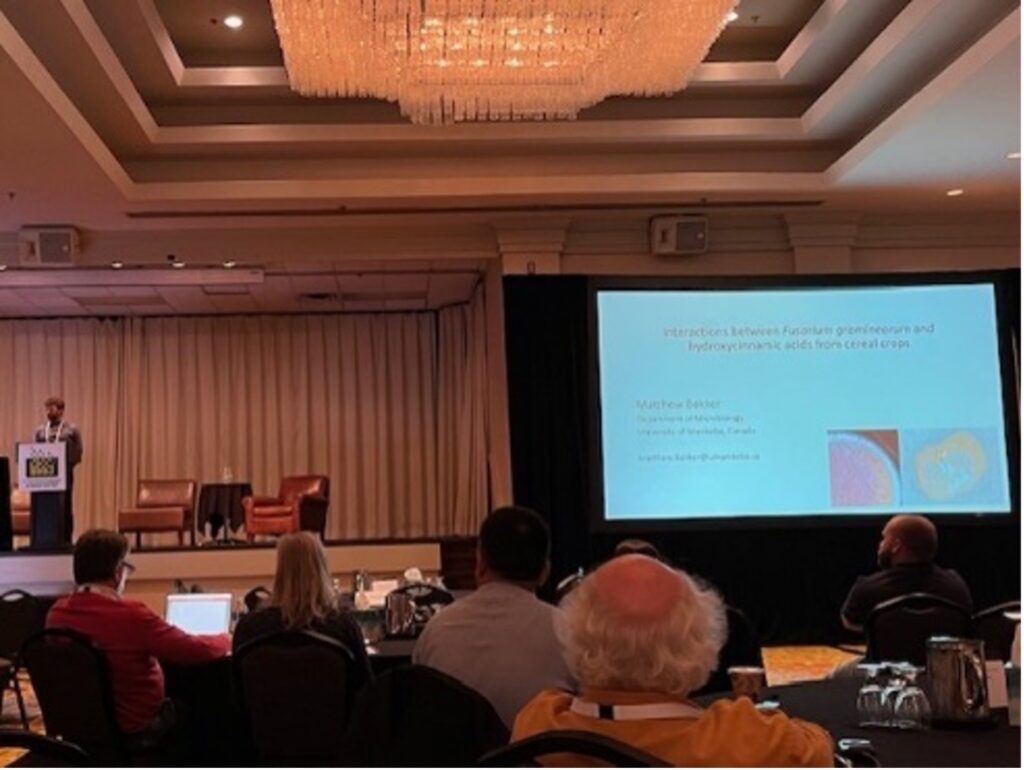
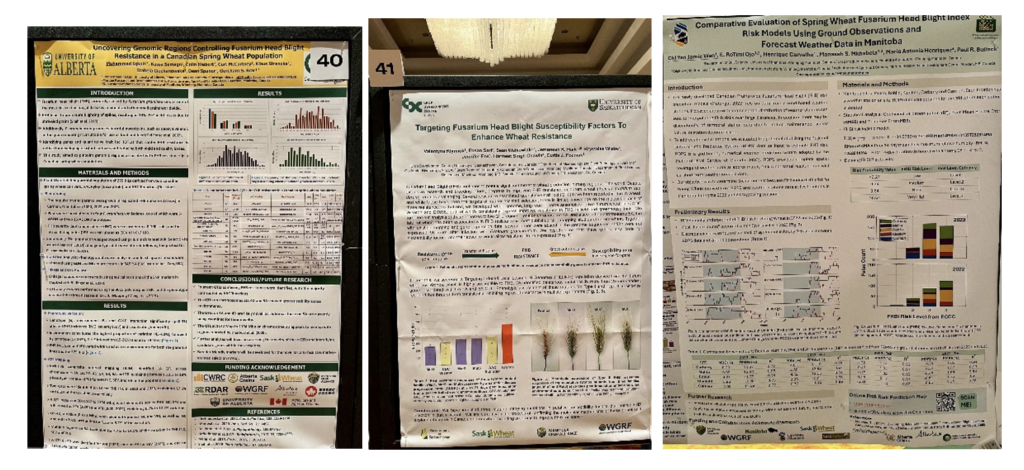
Learnings from the sixth International Symposium on Fusarium Head Blight

Jeff Schoenau, professor, University of Saskatchewan

The Fence Post: Fall/Winter 2024

Manitoba Crop Alliance announces results of 2024 crop committee delegate nominations

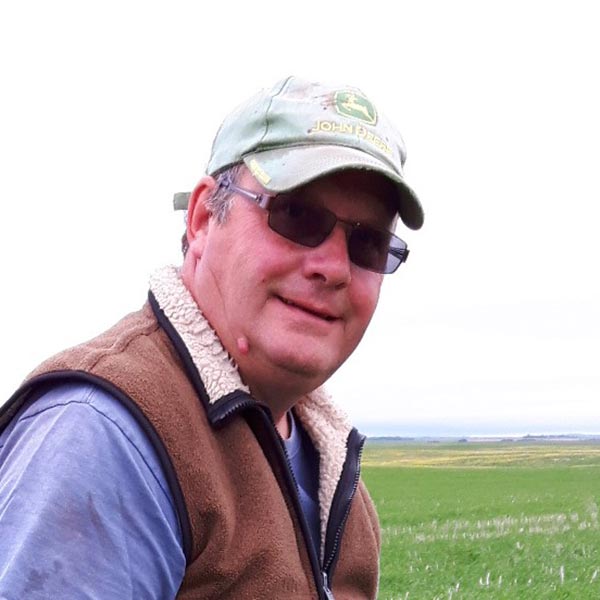
Colin Hiebert, research scientist, Agriculture and Agri-Food Canada

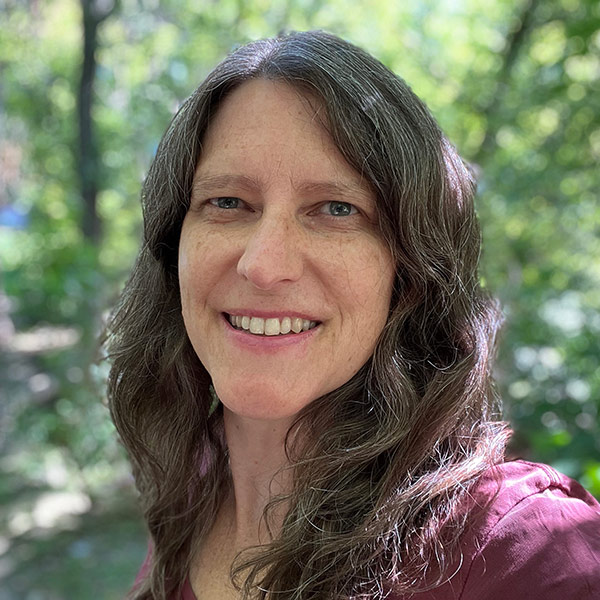
Colin Hiebert is a research scientist at Agriculture and Agri-Food Canada’s (AAFC) Morden Research and Development Centre (RDC). He completed his undergraduate degree in biology at the University of Winnipeg, before continuing his graduate studies in plant genetics, focusing on wheat during his PhD. He now lives in Winkler, MB, with his wife and their two sons.

Where did you work before joining AAFC?

Before starting graduate school, I worked in both the public and private sectors of agriculture. After finishing my PhD, I was a postdoctoral researcher at AAFC’s Cereal Research Centre in Winnipeg (now closed) for a year before I was hired as a research scientist there. Subsequently, my program was moved to Morden.

What got you interested in this area of work?

I have always enjoyed the field of genetics, and wheat is scientifically fascinating. It is also a Prairie icon, so working on wheat connects me to western Canadian culture and the economy. Wheat is also a global crop, allowing me to interact with and impact research and agriculture internationally. The convergence of all these different factors drew me to working on wheat.

Tell us a bit about what you are working on at AAFC.

I lead a wheat genetics program, covering everything from fundamental genetics (classical genetics) to modern genomics tools. We cover quite the continuum of research, which was reflected in the previous cluster (2018-23) and in the current cluster (2023-28).

In the “Pre-breeding and development of breeding tools to diversify disease resistance in bread wheat” 20218-23 project, we focused on introducing combinations of disease resistance genes into elite genetic backgrounds that breeders can use in their programs. One challenge is when we have new or underutilized disease resistance genes, they are often in backgrounds that are not suitable for production in Western Canada. The pre-breeding work addressed this challenge.

Another challenge is that it is difficult to select resistance genes by a visual assessment, so we use DNA markers, or marker-assisted selection, to make the process more efficient and accurate. We discovered new DNA markers that made gene selection more efficient both for our projects and for breeder selection.

A positive outcome from this project was discovering a new stem rust resistance gene, Sr67, which is effective against strains of stem rust fungus including the Ug99 races discovered in Africa. There was previously a lot of research activities that went into mitigating the risk of those races. This work is still ongoing to mitigate the threats that exotic strains pose to Canadian producers.

At Morden, we have a biocontainment facility where we can evaluate plants in our genetic studies or in breeding programs against these exotic races to mitigate the risk of them coming to Canada. Sr67 is effective against present strains and can provide resistance against races that could pose a threat. The discovery was recently published here.

We have included the Sr67 gene in the current cluster project to ensure early adoption of this new gene. This is an exciting extension from the previous round of funding.

What can you say about the value of farmers providing funding and support to your organization?

All my collaborators here and at the other AAFC research centres and I are very grateful to farmers for their funding. In these types of projects, we are trying to directly address their more immediate needs. This funding allows us to translate some of our more upstream work into something that can find its way into a farmer’s field. We want our research to make a difference to producers.

How does that funding and support directly benefit farmers?

My research program focuses largely on disease resistance genes. By working closely with pathologists and breeders, we hope to create more sustainable disease resistance, which could lower input costs for farmers and protect yield potential. There are still issues that require chemical inputs, for example, but if we can get resistance to a point where the efficacy of the chemicals is better because the degree of disease protection required is not as high, that will help farmers.

I hope farmers feel welcomed and comfortable reaching out to scientists. Their insights and concerns help shape the direction of our research.

How do you spend your time outside of work?

I coach my kids’ hockey teams, and we enjoy a lot of outdoor activities like hiking, backpacking and hunting.

What is the best part of your job?

There are many aspects I enjoy. I get to tackle interesting scientific questions that impact an important sector in the Canadian economy and for Western Canada. I also get to interact with the international research community and meet people from around the world working on similar challenging research questions. I also have opportunities to interact with farmers, as I live and work in a rural community at a rural research centre. These conversations offer insights into how our research impacts their operations and livelihoods.

How do you celebrate agriculture?

My wife has done a restart on her family’s farm, and I have been able to participate in that. This was the second year of the farm’s restart, and it has been both enjoyable and a great way for us to celebrate agriculture.

Manitoba Crop Alliance commits over $2.6 million to Global Agriculture Technology Exchange

Winter Wheat Variety Yield and Market Share Data – 2024

Manitoba Crop Variety Evaluation Trial Data

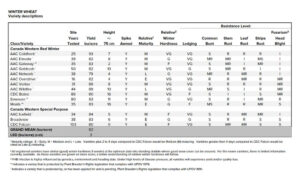
Winter wheat yield data from the Manitoba Crop Variety Evaluation Trials (MCVET) is in for the 2024 growing season. This data provides farmers with unbiased information regarding regional variety performance, allowing for variety comparison. Data was derived from small plot replicated trails from locations across Manitoba. Fungicides were not applied to these plots; thus, true genetic potential can be evaluated. Although considerable amounts of data are collected from MCVET, the disease ratings are from variety registration data.

Table 1. 2024 MCVET winter wheat variety descriptions

Note: Table 1 sourced from MCVET team.

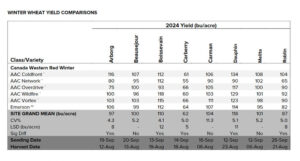
Table 2 below summarizes the yield results from the 2024 MCVET data by trial location. The yield results represent 2024 data only, therefore long-term trends should be considered when making variety selection decisions. Previous yield data can be found in past editions of Seed Manitoba. As well, apart from yield, there are other variety characteristics to consider when making variety selection decisions, such as disease, insect and lodging resistance. Check out this Manitoba Crop Alliance article for more information on considerations when selecting a new cereal variety.

Table 2 also indicates if there were yield differences between varieties at each trial site. If there was a significant yield difference the least significant difference (LSD) is also included. The LSD signifies the smallest difference necessary in bushels per acre for two varieties to be considered significantly different from each other.

Table 2. 2024 MCVET winter wheat yield comparison data

Note: Table 2 sourced from MCVET team.

MASC Variety Market Share Data

The Manitoba Agricultural Services Corporation (MASC) has also released its 2024 Variety Market Share Report. This report breaks down the number of acres seeded to each crop type in Manitoba, as well as the relative percentage of acres each variety was seeded on within each crop type. This information is useful to understand overall production patterns in Manitoba. A link to the 2024 report can be found here.

It is important to note that farmer members’ dollars directly contributed to the plant breeding research activities that were instrumental in the development of the top winter wheat varieties.  

Select takeaways

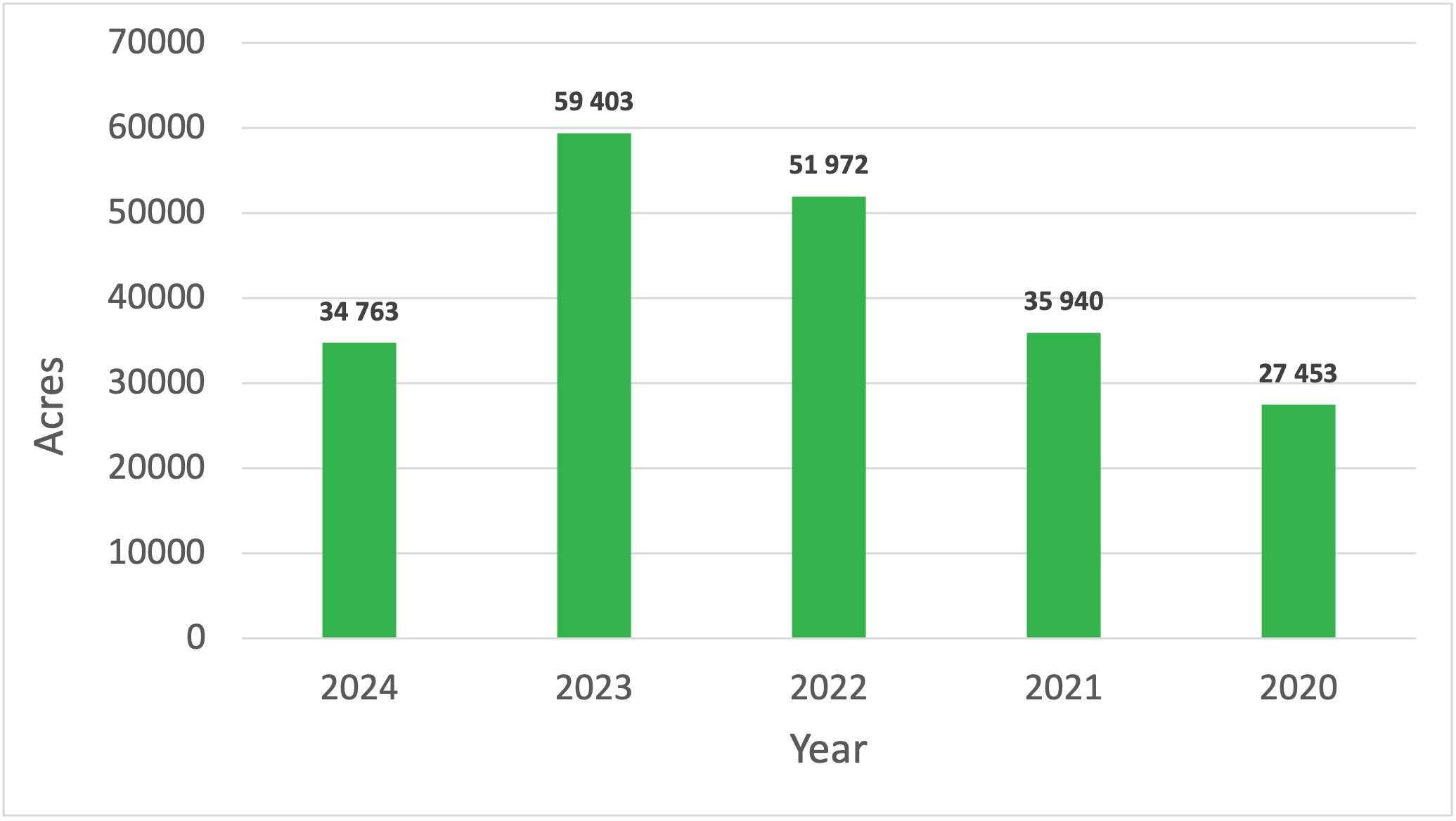
A small number of winter wheat acres were seeded again in 2024, with approximately 35,000 acres seeded.

Figure 1. Summary of the amount of winter wheat acres seeded in Manitoba over the last five growing seasons. Data obtained from MASC Variety Market Share Reports from 2020-2024.

Eight varieties by percentage acres seeded are listed in Table 1, these are the only varieties listed in this year’s MASC Variety Market Share Report. All eight seeded varieties are Canada Western Red Winter (CWRW) wheat.

Table 1. The top eight 2024 winter wheat varieties by percentage of seeded acres in Manitoba.

Variety

Wheat Class

Yield (bu/ac)**

Relative Maturity**

Lodging**

Relative Winter Hardiness**

FHB Resistance**

Relative Acreage (%)*

AAC Wildfire

CWRW

89

Late

Good

Very Good

Moderately Resistant


52.8

Emerson

CWRW

83

Medium

Very Good


Good

Resistant

14.7

AAC Vortex


CWRW

87

Medium

Very Good

Very Good

Moderately Resistant

8.9

AAC Goldrush


CWRW

82

Medium

Good

Very Good

Intermediate

7.9

No Var


n/a

n/a

n/a

n/a

n/a

n/a

7.7

AAC Gateway


CWRW

82

Medium

Very Good

Fair

Intermediate

5.2

CDC Buteo


CWRW

80

Medium

Fair

Very Good

Moderately Resistant

2.7

AAC Overdrive

CWRW

82

Early

Very Good

Very Good

Moderately Resistant

0.2

Note: * Data obtained from MASC 2024 Variety Market Share Report. ** Data obtained from the 2023 MCVET Winter Wheat and Fall Rye report. Fusarium Head Blight; FHB.

AAC Wildfire was the top seeded winter wheat variety, occupying 52.8 per cent of seeded winter wheat acres. This is an increase of just over nine per cent from 2023. AAC Wildfire was registered in 2015 and is a late maturing CWRW variety. AAC Vortex, which was registered in 2021, was seeded on just under nine per cent of acres in 2024, up close to five per cent from 2023. AAC Goldrush, which was registered in 2016, decreased in percentage of acres seeded, dipping by just under five per cent from 2023. AAC Overdrive, which was registered in 2022, increased in acres seeded by 0.2 per cent in 2024.

Emerson, which has a Fusarium head blight rating of “resistant,” has been the most seeded variety in Manitoba for several years. However, its acreage has dropped just over 20 per cent since 2022. A similar trend was seen in AAC Gateway, which dropped from 16.1 per cent in 2022, to just over five per cent in 2024. AAC Elevate, which had steady acreage of just over five per cent in 2022 and 2023, dropped out of the top eight in 2024.

Seed Manitoba Variety Selection and Growers Source Guide should be consulted when making variety selections.

Joanne Thiessen Martens, assistant professor, University of Manitoba

Now an assistant professor of soil chemistry and fertility in the department of soil science at the University of Manitoba (U of M), Joanne Thiessen Martens previously completed her undergraduate studies at the U of M in agriculture and food sciences. She completed her bachelor of science in agroecology before she began working, and later returned to complete her PhD in soil science. She lives in Winnipeg with her husband and their two young-adult children.

Where did you work before U of M?

Before my current position, I worked in the U of M’s department of plant science in the Natural Systems Agriculture Lab under Dr. Martin Entz. I worked there as a technician and research associate for quite a few years.

What is the best part about your job?

There are a lot of great things about my job, but it comes down to working with ideas – whether those ideas are from students in class, farmers we are working with, colleagues in the department or across the country, discussions at conferences or reading literature. I love thinking about all the ideas people produce and the ways they test those hypotheses. It is the creativity that is interesting.

Tell us a bit about what you are working on at U of M.

Manitoba Crop Alliance (MCA) is co-funding a cover crop study my master’s student Jessica Frey and I are working on. Jessica is a technician at the Parkland Crop Diversification Foundation and was interested in seeing how we could create a cover crop system that would be easy for farmers to implement and still provide benefits in our short season growing area.

At sites at Roblin and Carberry, we are trialing seeding an overwintering legume cover crop like alfalfa, red clover or white clover with wheat or another cereal in the first year, and then allowing that to continue to grow as a living mulch in the crop in the second year, with the second crop being canola.

This project is now into the second year. The idea is that the cover crop is seeded at the same time as the wheat in one pass while considering the herbicide packages that will hopefully suppress the weeds without killing the cover crop. We hope to see some nitrogen benefits from it, as well as all the other benefits you get from cover crops, such as soil cover in the fall and early spring and living roots in the soil supporting soil health.

Another project partially funded by MCA is focused on organic farmers and addressing phosphorus deficiencies, as well as a high-level interest in recycling different materials in a circular bioeconomy. We would like to create a phosphorus-enriched compost with a much higher concentration of phosphorus than a normal compost. We would do that by composting some sort of organic waste (yard waste, food waste or manure) together with a mineral phosphorus input – either struvite, which is recovered from municipal wastewater, or rock phosphate. Hopefully, we can create this phosphorus-enriched compost using recycled products.

We are beginning the composting process with our partner Enviroclean Landfill Solutions Ltd. in Morden, which does in-vessel (very rapid) composting. Next, we will be evaluating those compost products for their nutrient profile, as well as their degradation of any contaminants that would be in any of those feedstocks before we go into field testing in 2025.

What can you say about the value of farmers providing funding and support to your organization?

It is incredibly important. Funding from farmers keeps us, as researchers, grounded. Research has a couple important roles to play. One is addressing the challenges farmers are currently facing. That is where support from farmers through MCA is crucial. But also, funding from farmers through MCA shows their willingness to support a broad range of research, understanding that we are tackling problems they see right now, as well as new issues that may be coming down the pipe.

How does that farmer funding and support directly benefit farmers?

We aim to keep our research practical so it can benefit farmers in the challenges that they see every day and in the future. Researchers can take on some of the risk in thinking about the questions that may become important in our future and investigate them before they impact farmers. Thank you, farmers, for your support and to the commodity groups for your collaborative support of research.

How do you spend your time outside of work?

My hobbies are remarkably like my work. I like reading, gardening and being outdoors. When I have time, I like to fit in a bit of music. I play piano and I have started learning to play bass guitar.

How do you celebrate agriculture?

There is a part of me that celebrates agriculture every time I eat something. I have spent most of my life here in Canada, but I lived in Brazil for a few years and saw mangoes and coconuts on trees, and I visited Malawi in Africa and saw products quite different to home like peanut plants. Now when I eat my granola bar with peanuts, I think about those peanut fields and the people growing them. That connection of food to agriculture every day is a little celebration.

What are you excited about for the future of your sector/agriculture?

What I am most excited about is seeing how our understanding of ecological processes and technology come together, and how we can harness both those types of knowledge to enhance each other. I also see exciting opportunities for the agricultural systems that come out of bringing together different types of knowledge.

Maryse Bourgault, assistant professor, University of Saskatchewan

Maryse Bourgault lives in Saskatoon, where she is an assistant professor and the Western Grains Research Foundation Integrated Agronomy Research Chair at the University of Saskatchewan. She completed her bachelor’s degree in environmental sciences at McGill University in Montreal then started a master’s degree that she later upgraded to a PhD. She then completed her first postdoc with CSIRO, Australia’s national science organization in Brisbane, followed by her second postdoc at the University of Melbourne.

Where did you work before the University of Saskatchewan?

I was working at Montana State University as an assistant professor based at the Northern Agricultural Research Center in Havre, Montana. Before that, I was working as an extension agronomist with the Queensland State Department of Primary Industries and Forestry. Altogether, I spent nine years in Australia. I was only supposed to be there for seven months to finish my PhD and I ended up getting my citizenship, so I can retire on a beach someday!

What got you interested in this area of work?

Being an environment student, I had an obvious passion to make sure our existence on earth is not destroying the environment for everybody else. I was doing a minor in international development and when you go into a community to try and help people, the first thing you address is their basic needs. People need to eat before they will be convinced to the protect the environment.

Basic needs are fundamental and unless you address these, you can push as much as you want on environmental measures, but it is not going to have much impact. That is how I became interested in agriculture. I did a master’s where we were lucky to be sent to Uzbekistan, where they deal a lot with irrigation. Unfortunately, the expansion of irrigation led to the disappearance of the Aral Sea, so they are actively looking to reduce irrigation water use while maintaining agricultural productivity.

I started with irrigation and looking at the environmental impact it had compared to environments like Australia where there is next to no irrigation, yet they are still able to grow plenty of wheat and different crops. I became really interested in dryland agriculture and investigating how we can improve it. A lot of our current irrigation systems depend on water that comes from glaciers, and we know that a lot of glaciers are disappearing. You and I may not see this, but our grandchildren will probably see a world where irrigation water isn’t there, unless we do something to change and reverse that situation.

Tell us a bit about what you are working on at the university.

In a current project, Making cover crops work with grain cropping systems in the Canadian Prairies, partially funded by Manitoba Crop Alliance, I am collaborating with Yvonne Lawley (University of Manitoba) and Linda Gorim (University of Alberta) to investigate how to include cover crops into no-till conventional farming.

In this experiment we are trying different cover crop establishment timings and different cover crop species in canola and wheat. The idea is to enable farmers to incorporate cover crops and their benefits into current cropping systems. The concern is always that we have limited moisture in the Prairies, and if you are growing a plant then presumably that plant is using some of that water. So, can we have enough of those benefits, with nitrogen inputs for example, to compensate? Or can we improve rainfall infiltration to compensate for the water use those plants are using? That is where we are trying to make it work in current systems.

With the chair position, I am trying to have a systems approach to research. Instead of testing one product or one solution to deal with a problem, we are looking at how to design the entire cropping systems in time and space. This means crop rotations, but also testing systems like intercropping, cover crops, and reintegrating forage and livestock into grain production systems. I tend to say that we try things that might fail for farmers, because my salary isn’t linked to our results, so we can afford to try things and try again, until we make it work.

What can you say about the value of farmers providing funding and support to your organization?

Farmer participation and financial contributions to our research are quite important. In our research we are looking at practices, so we do not have a patentable product to sell afterwards or another revenue source that can fund continuing research. Most of the funding we receive comes from farmers, and I think it is useful for scientists to know the questions that we are investigating and the funding we have are because farmers are also interested.

How does that farmer funding and support directly benefit farmers?

Well, sometimes failures are just as useful for farmers as practices that are successful. There are financial risks involved with some of these practices that we can evaluate and take those risks on to learn collectively and share the results with farmers. In our research we hope we can provide better solutions or possibilities to farmers.

Compared to other places in the world, Canadian farmers are quite involved and supportive of our research, so thank you! It makes a significant difference to our research, our knowledge and research careers because there are many interesting opportunities.

How do you spend your time outside of work?

I garden, which is a bit stereotypical for a plant scientist, but I don’t water my plants a lot! I often joke that is why I decided to investigate drought, because I am too lazy at watering my plants. I am also a big reader.

Who or what inspires you?

Students inspire me. It sounds cliché when teachers say it, but it is true. We get into these conversations in class, and I am amazed because as scientists, sometimes we become a little cynical with all the admin and “boring stuff” in the background that can get a bit too much at times, but students have such fresh ideas and optimism about the future. That inspires me.

What is the best piece of advice you have received?

Perhaps this person didn’t think that this would be so important in my life, but someone told me once it is important to think about what you really want in life. I know it sounds a little generic, but often we go through life one step after the other and keep running that hamster wheel. It is important to stop, think and figure out exactly what makes you happy and what you want to do with your life because it goes faster than you think.

Top