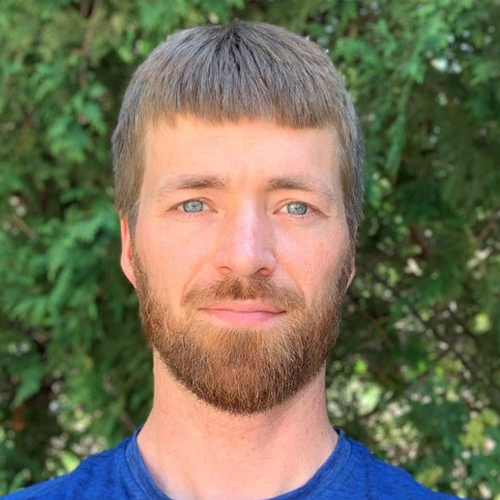
Rob Graf, winter wheat breeder, Agriculture and Agri-Food Canada

Follow @grafwheat on Twitter!

Follow @grafwheat on Twitter!

Rob Graf is a winter wheat breeder with Agriculture and Agri-Food Canada (AAFC) at the Lethbridge Research and Development Centre. Rob completed his bachelor of science in agriculture at the University of Saskatchewan (USask), specializing in agronomy, and earned his PhD under the supervision of Gordon Rowland at the USask Crop Development Centre. Rob began his career in 1987 as a wheat breeder with the Saskatchewan Wheat Pool and was there for 12 years. During that time, he was part of a team that developed three Canada Western Red Spring (CWRS) wheat varieties, including McKenzie and Prodigy. In 1999, Rob joined AAFC as a winter wheat breeder. He currently lives in Lethbridge with his wife, Linda, and is looking towards retirement in October.

Tell us a bit about what you’ve worked on at AAFC throughout your career.

Our mandate is to develop improved winter wheat varieties for Western Canada. In the AAFC breeding program, we’ve concentrated on varieties for the Canada Western Red Winter (CWRW) milling class and, to a lesser extent, feed varieties for the Canada Western Special Purpose class. In a general sense, the objectives of the breeding program are to improve agronomics, disease resistance and end-use quality. The agronomic issues we focus on are increased yields, improved winter hardiness (both prime considerations), increased lodging resistance (strong straw in a range of height options), a range in maturity and good test weight.

As for disease resistance, in Western Canada there are five priority-one diseases that must be addressed for variety registration. These include the rusts (stem, leaf and stripe), Fusarium head blight (FHB) and common bunt. Disease resistance was one of the objectives I felt really needed to be concentrated on. In 1999, disease resistance was only starting to be deployed in the winter wheat varieties being registered. Farmers had to make the choice to grow a variety with leaf and stem rust resistance (important for Manitoba), or a variety with bunt resistance (particularly important in southern Alberta). At that time, FHB wasn’t on the radar for winter wheat, but it was a major issue in spring wheat. That’s one of the reasons why winter wheat acres in Manitoba exploded in the 2000s (the escape from FHB and orange wheat blossom midge) along with the variety CDC Falcon, which had short, strong straw, early maturity and high yields; farmers liked it. Today, we have varieties that have good resistance to all five priority-one diseases and are also working on resistance to other diseases and pests. It took about 20 years, but we’ve been able to get there through some really excellent collaborations with nurseries and testing sites across Western Canada.

A key element to developing varieties that work well in Manitoba was a collaboration with Anita Brûlé-Babel at the University of Manitoba. Her team planted a large leaf-and-stem-rust screening nursery for us that I rated and made selections from every year. We don’t normally see leaf and stem rust in Alberta, so that made a huge difference for Manitoba farmers. The other critical aspect of our collaboration was the provision of an FHB screening nursery. Without that, we couldn’t have made the advances that we did. For example, Emerson, which is still a popular variety in Manitoba, was identified as an FHB-resistant line in those nurseries. Without that nursery, we wouldn’t have known. It’s collaborations like these that are so crucial to the success of any breeding program.

Quality is the third pillar of our breeding program. When I started, the major improvements CWRW needed included increased protein concentration, gluten strength and flour water absorption. Over time, we’ve gradually increased protein concentration and gluten strength, and we’re finally starting to make progress on flour water absorption. My hope is that over the next few years, we will see a substantial increase in winter wheat flour water absorption.

Upon my retirement, Harwinder Sidhu will be taking over the winter wheat breeding program. I’ve been mentoring him for the last year, getting him up to speed on the program, and I think he’ll do an excellent job. He is a recent PhD graduate from the University of Guelph, where his PhD project was focused on genomic selection for FHB resistance in winter wheat.

What got you interested in this area of work?

I grew up on a farm near Humboldt, SK. I remember when my dad changed varieties from Neepawa to Napayo and then Sinton. It was intriguing to me that Napayo had awns (most varieties at the time were awnless), as I thought only barley was awned. A couple of years later, we grew Sinton, which was interesting because it had better leaf rust resistance, which I could actually see in the field. I also remember a wet harvest period in the mid-1970s when Sinton sprouted in the swath and Napayo didn’t. It was those genetic differences in the varieties that got me intrigued, and I guess the rest is history.

What is the best part about your job?

There are a lot of things! I really enjoy seeing the genetic variability when we cross various parents. I also like the interaction with farmers and the industry to hear what their problems and concerns are, and then trying to come up with breeding solutions to address them. When I’m able to deliver a variety that addresses at least some of those concerns, and it becomes accepted and farmers like the variety, it’s a great feeling.

What can you say about the value of farmers providing funding and support to your organization?

The funding farmers provide to breeding programs is absolutely vital to their success. When an industry group approaches AAFC with issues they need to have addressed and are willing to invest, it means a lot. Governments have many priorities for funding, and that goes for farmers as well. The funds received for breeding and pathology programs, and some of the more basic research, are absolutely vital to the successes that we’ve had and to the continued success and prosperity of the industry and Canada.

How does that farmer funding and support directly benefit farmers?

The funding support has hugely impacted the number and size of populations that I can handle as a breeder. Breeding is a numbers game. You need large numbers to find those rare segregants that bring together all of the traits that are needed by the industry. It allows us to handle a lot more material, gives us the ability to put trials at important locations, and it supports disease screening nurseries and quality analysis. From a Manitoba perspective, that has been crucial in developing varieties with resistance to FHB, stem rust and leaf rust.

What is one of your major accomplishments over your career?

Within the winter wheat program, one of the major wins was the registration of Emerson. Essentially, we moved from most winter wheat varieties being quite susceptible to FHB, to the first wheat in Canada that was rated resistant. That was certainly a bit of good luck, but as breeders we need to be able to set things up to identify those advances.

What opportunities lie ahead for winter wheat breeding?

Winter wheat has a bright future. From the standpoint of climate change over the medium term, it’s likely that our winters will get milder. Winter wheat provides the opportunity to use early spring moisture that farmers are waiting to dry off prior to spring seeding. Why not use that moisture to build yield? With the possibility of hotter summers, because the crop matures earlier, it may also be able to escape some of the heat stress we get in late July and August. It certainly has an excellent opportunity to fit into our environment, perhaps somewhat better than it has in the past. Not to say that it doesn’t fit now, but I think as time goes on, farmers will see it as a more attractive option. Or at least I sure hope so!

What are you looking forward to most about retirement?

There is a number of things. I am looking forward to taking a break, visiting more with family and friends, and my wife and I enjoy camping and plan to do more of that together. Our granddaughter just turned one, so we look forward to spending more time with her, as well. We’d also like to do some travelling in Canada and the United States, and longer term in Europe and other places.

Who or what inspires you?

There are a lot of people who inspire me! My colleagues and all of the important work that they are doing inspires me every day. Young people and their optimism for the future also inspires me.

What is the best piece of advice you’ve received?

There are a couple of things, both from my dad. “Pray and live like you’ll die tomorrow; work like you’ll live forever.” The other was, “If you see something that needs doing, don’t wait for someone else to do it.” Those are gems of wisdom I can’t argue with.

Follow @grafwheat on Twitter!

To meet other researchers involved in winter wheat breeding and agronomy, check out our profiles on Curt McCartney and Brian Beres!

Highly coveted certification assists consumers in identifying environmentally friendly products

By Ellen Pruden, Cereals Canada

Sustainability labels on food packaging can be found in the grocery stores on everything from coffee to chocolate and even on wine. Food and beverage packages that contain Canadian wheat have not seen an ecolabel applied to their products until now with the Habitat-Friendly Winter Wheat Ecolabel. The Habitat-Friendly Winter Wheat Ecolabel program is a solution that benefits Canadian wildlife habitats, the environment and the economy.

Research by Ducks Unlimited shows that winter wheat provides ground cover in the spring to help reduce soil erosion and offers nesting habitat for wildlife, especially waterfowl and songbirds in Western Canada.

While bread and flour are obvious products that could be certified, any food or beverage brands that use western winter wheat are eligible. For example, Beam Suntory, a world leader in premium spirits, received certification for its newly launched Northern Keep Vodka, a premium craft vodka that is committed to sustainability and land protection.

“We’re thrilled to announce that Northern Keep Vodka is one of the first brands in Canada to be accredited as a certified Habitat-Friendly Winter Wheat product. This highly coveted certification assists consumers in identifying environmentally friendly products that provide critical habitats for ducks, birds and other Canadian wildlife,” says Danielle Milette, senior brand manager of Northern Keep Vodka.

Northern Keep Vodka believes in preserving Canada’s natural resources and has partnered with the Nature Conservancy of Canada to protect ecologically significant parts of the country. “Sustainability and protection of the lands that have gifted us the bounty of grains needed to create this premium vodka are at the core of everything Northern Keep Vodka does,” Milette says.

Consumers will start to see the branded ecolabel on Northern Keep Vodka product promotions in local liquor stores this spring.

“As the Habitat-Friendly Winter Wheat program grows with more companies, choosing products with the ecolabel helps supports Canadian farmers while making a positive impact on the environment,” says Doug Martin, winter wheat farmer from East Selkirk, MB. “By working together from field to product, we are showcasing one part of Canadian agriculture’s sustainability story.”

Manitoba Crop Alliance has partnered with Cereals Canada to develop this ecolabel in co-operation with the Alberta Wheat and Barley Commissions, Saskatchewan Winter Cereals Development Commission and Ducks Unlimited Canada. The ecolabel highlights the ecological benefits of winter wheat to consumers and creates new marketing opportunities that increase demand for winter wheat.

The Habitat-Friendly Winter Wheat Ecolabel program promotes western Canadian winter wheat, while also sharing the environmental benefits that are inherent in this crop. “It is an innovative approach to market development that taps into growing consumer demand for sustainable products,” says Daniel Ramage, director of market access and trade policy at Cereals Canada. It also represents an opportunity to communicate agriculture’s positive contributions to the environment.

Farmers can participate in the program by growing western Canadian winter wheat and delivering it to a certified processor or end user. Grain handlers, mills and food manufacturers can become certified through an application and audit to confirm they can appropriately document grain segregation and track flour blending to meet the required 30 per cent minimum percentage of winter wheat for certified flour.

Along with Northern Keep Vodka, another company using the ecolabel is Les Moulins de Soulanges, a specialty flour manufacturer based in Quebec’s Montérégie region. They are sourcing Manitoba winter wheat to sell certified habitat-friendly winter wheat flour to bakers across North America. Both companies found a fit with the Habitat-Friendly Winter Wheat program that puts sustainability at the forefront.

“We want to see this program expand. We are always looking for more companies to get certified and to use the ecolabel, and more farmers to grow winter wheat,” says Ramage. “We are excited about new partners joining the program and look forward to announcing the addition of another participating brand later this spring.”

Learn more about the Habitat-Friendly Winter Wheat Ecolabel program at habitatwheat.ca

Learn more about the Northern Keep Vodka and their sustainability efforts at northernkeep.ca

East Selkirk, MB, winter wheat farmer and MCA wheat and barley committee delegate Doug Martin

Eric Johnson, Research Officer, University of Saskatchewan

Follow @ericusaskweeds on Twitter!

Follow @ericusaskweeds on Twitter!

Eric Johnson is a Research Officer for the Agronomic Crop Imaging Lab in the Department of Plant Sciences at the University of Saskatchewan (USask). He is also a member of the Resistant Wild Oat Action Committee. Eric earned his Bachelor of Science and his master’s degree from USask. He lives in Battleford with his wife Trish.

Where did you work before USask?

I started my career working with Sask Agriculture in extension as an agricultural representative (now obsolete), and then I became a regional crop specialist. In 1996, I moved to the Scott Research Farm with Agriculture and Agri-Food Canada where I started doing weed control research, and was also the test site manager for the Pesticide Minor Use Program until 2015. After that I joined the weeds lab with Dr. Chris Willenborg at USask until 2019 when I moved to the Agronomic Crop Imaging Lab.

What got you interested in this area of work?

Because I worked in the Battleford area with Saskatchewan Agriculture, I had a very close working relationship with the research scientists at the Scott Research Farm. Once they were nearing retirement, an opportunity to work on research became available and I was ready for a new challenge. I’d spent 15 years or so working in extension and I always felt that it would be much easier to do extension if I was actually doing the research myself. The change to research seemed like a new challenge and opportunity where I could combine the best of both worlds.

Tell us a bit about the Resistant Wild Oat Action Committee.

The idea of the Resistant Wild Oat Action Committee came forward to the Canadian Weed Science Society from a farmer from central Alberta, Ken Espheter, and Neil Harker, a retired weed scientist. There was an active Wild Oat Action Committee in the 1970s which originally did all the work on dormancy and the ecology and biology of wild oat that we know today. In the 1990s we ended up with quite a number of effective herbicides at controlling wild oats and, at this time, although there was some resistance developing, the perceptions were that there would be a never-ending pipeline of new wild oat herbicides, so the committee came to an end.

Today, the Resistant Wild Oat Action Committee includes 12 members of farmers, agronomists, industry as well as research and extension people. Our mission is that “we are a cross-industry committee devoted to developing herbicide resistant wild oat management solutions through producer engagement, knowledge transfer and research.” What we are trying to do is not only conduct research and extension, but engage producers in the process so they are involved in developing the solutions.

We received funding from Manitoba Crop Alliance, Alberta Wheat Commission, Saskatchewan Wheat Development Commission and Saskatchewan Forage Seed Development Commission for a two-year pilot project to engage producers in developing solutions for resistant wild oats. We have developed a producer group in central Alberta who are conducting field projects and meet periodically to discuss resistance testing with growers who haven’t done it before. The Resistant Wild Oat Action Committee has developed extension materials in the form of infographics that are available on our website. We have also initiated a testing project with selected producers who are suspicious that they have resistant wild oat but have never tested for it. The producers are asked to fill out a short questionnaire. The testing project will involve 30 to 40 producers across Western Canada. At the end of the project, we will conduct a follow-up evaluation on the producer’s perspective of the value of testing.

Unfortunately, we’ve had to deal with COVID-19 and I think we could have had a lot more momentum by having face-to-face meetings rather than trying to do everything virtually. We will be doing an evaluation of the impact of this pilot project after the second year to find out what impact it has had, and what other things could be done to increase that impact or make a difference.

If farmers are interested in resistance testing or want to learn more about it, they can watch this videoabout understanding resistant wild oats on the Canadian Weed Science Society website, email wildoataction@gmail.com or follow @RWildOat on Twitter.

What can you say about the value of farmers providing funding and support to your organization?

Farmers provide funding and support two ways. They provide funding through the producer groups, and through direct support from those who are volunteering their time on the committee. We have some extension people from the producer groups that are providing human resource support by volunteering on the committee. We wouldn’t be able to address some of the current research gaps or engage more farmers without this support.

How does that farmer funding and support directly benefit farmers?

I think the main benefits from this funding are hopefully to raise the profile of resistant wild oats, develop farmer-led solutions to manage herbicide resistant wild oats and produce readily available extension materials. If we can get farmers engaged in the research and development of solutions, they will benefit greatly. The long-term benefit from this pilot project for farmers will be to have an ongoing Resistant Wild Oat Action Committee.

How do you spend your time outside of work?

I really enjoying gardening, and I golf a little bit in the summer and curl in the winter. I’m getting close to retirement, so I’m going to have to develop some more hobbies!

What is your favourite crop?

I’ve worked on 60 different crop types in my career. I haven’t done any work on it in awhile, but I really liked working with hemp when I was working with it. I’m fortunate that I’ve had the opportunity to work with just about every crop that we can grow in Western Canada.

What get’s you most excited about your work?

Right now, the fact that we are starting to work in the digital age of agriculture is exciting. When I joined the Agronomic Crop Imaging Lab, I thought using satellite/drone imagery was way beyond me. But, because we have some really brilliant post-docs and have attracted some really bright students, I’ve been able to actually understand how they do things. It’s really interesting and it has been quite exciting to see the types of applications we’ve been able to make use of with that type of research.

Follow @ericusaskweeds on Twitter!

Raju Soolanayakanahally, Research Scientist, Agriculture and Agri-Food Canada

Follow @raju_aafc  on Twitter!

Follow @raju_aafc  on Twitter!

Based in Saskatoon, Raju Soolanayakanahally, Ph.D., is a Research Scientist with Agriculture and Agri-Food Canada (AAFC). Raju completed both his B.Sc. in Agriculture and M.Sc. in Crop Physiology at the University of Agricultural Sciences in Bengaluru, India. He then moved to Canada and earned his Ph.D. in Forest Sciences from the University of British Columbia (UBC). He has been working with AAFC since 2011.

Where did you work before AAFC?

I grew up in India and moved to Canada in 2005. Prior to working with AAFC, I completed my Ph.D. at UBC in Forest Sciences. During my Ph.D., I attempted to better understand adaptation to north-temperate and boreal environments in an extensive range-wide collection of balsam poplar using phenology, ecophysiology and genetic polymorphisms. After my Ph.D., I was initially hired at Indian Head, where my research focused on the development and evaluation of new poplar and willow feedstocks for bioenergy opportunities, carbon sequestration and for environmental services for use in agroforestry. Later, I relocated to Saskatoon in early 2016.

What got you interested in this area of work?

I come from a farming background. My father and mother ran our family farm back in India, and I spent my childhood with chickens running around the yard, fresh fruits and vegetables just around the corner, and fresh milk everyday. Agriculture was my upbringing and that led me to pursue a B.Sc. in agriculture. I was the first one in my family to pursue agriculture as a career.

Tell us a bit about the Adapting wheat to arid environments: mining Canadian germplasm for reduced night-time water loss and improved water productivity project you’re working on.

Water use by crops isn’t a big concern if rainfall is abundant in the growing season. But with the growing concerns of climate change and following a year like 2021 where growing season precipitation was lower than average, improving “water productivity” is a focus for the Adapting wheat to arid environments: mining Canadian germplasm for reduced night-time water loss and improved water productivity project. This project was funded in collaboration last year by Manitoba Crop Alliance, Alberta Wheat Commission, Sask Wheat Development Commission and Western Grains Research Foundation, and the purpose of this research is to look at how we can minimize unproductive water loss at nighttime in Canada Western Red Spring (CWRS) wheat.

During daytime, plants fix carbon dioxide (CO2) at the expense of water loss to the atmosphere through tiny pores (stomata) on leaf surfaces. Generally, this is defined as productive water use. However, plants also lose water at night, but in the absence of sunlight, they can’t fix CO2, so they end up losing water without producing biomass. We define this as unproductive water use.

When we look at how many millions of hectares of wheat is produced in Canada, if every plant starts to save 50 millimetres of water at nighttime, we are talking millions of litres of water becoming available during the daytime. For example, if there are 20 days with no precipitation or rainfall, due to savings of this nighttime water the plant can now extend itself for an additional five or six days without getting to terminal stress from drought.

Through this project we are investigating a heritage bread wheat panel (1842-2018) to look at the direction of trait selection over time. We’ve chosen the most popular varieties coming out of CWRS breeding programs in Swift Current (semi-arid climate) and Brandon (cool, moist climate). We want to understand how the varieties bred in two different ecozones have been selected for nighttime water-saver traits. If there are lines with low nighttime water losses, we use them in our breeding program to rapidly adapt our wheat plants for climate change.

The other aspect we are investigating is waxiness on the wheat leaves. When the sun intensity falls on the leaf surface, the wax layer deflects the light, and if there is no wax layer the leaf gets stressed rapidly, thus affecting their photosynthetic carbon gain. In order to keep the canopy cooler, the plant starts to lose water at rapid speed. We are looking at wheat varieties that have optimized wax profiles, so not only will they help with cooling during daytime, but they will also help with non-stomatal water loss by having wax barriers.

What can you say about the value of farmers providing funding and support to your organization?

Coming from India, we don’t have similar mechanisms where farmers contribute research dollars through the checks-offs when they sell their grain. I personally appreciate the funding and support provided by wheat producers in the area of stress physiology. It is an excellent, strategic investment. In my role as a plant physiologist, I work closely with wheat breeders to identify wheat lines with climate-resilience traits (heat tolerance, drought tolerance, etc.), allowing breeders to make them available to producers on an ongoing basis.

How does that farmer funding and support directly benefit farmers?

Wheat breeders are at the forefront of adapting wheat genetics to future climates and as a plant physiologist, I am actively involved in screening wheat lines that impart yield-stability traits. Climate-adapted, superior genetic material may then be used as a donor for introgression in order to improve breeder-defined elite wheat germplasm. Consequently, farmers have access to new climate-resilient wheat genetics for adopting to future climates.

How do you spend your time outside of work?

I enjoy walking around Saskatoon’s neighbourhoods and observing trees, especially when the leaves come out in spring and change color in the autumn. Events such as these reflect changes in the climate and adjustments by city trees.

What is the best piece of advice you’ve received?

In the early days at AAFC, I was full of great ideas but my mentor said “You need to learn to observe and listen, and then you will realize the problems that need solving.” To put it another way, get out of your lab, walk around, observe, then bring the problems back to the lab.

What is your favourite crop?

From a Canadian perspective, canola and wheat are my two favorite crops. Each of them is very resilient in its own way. But poplars are a lot of fun to work with, and I am passionate about them!

Follow @raju_aafc on Twitter!

Meet Manitoba Crop Alliance’s 2021-22 Bursary Recipients

Manitoba Crop Alliance (MCA) supports students who are in post-secondary education programs, studying to support the agriculture industry. MCA has established a bursary program intended to assist with the financial needs of students who are enrolled in a post-secondary agricultural program within the Province of Manitoba.

Six students from Manitoba have been awarded with MCA 2021/22 bursaries valued at $2000 each. The MCA 2021/22 bursary recipients are George Meggison from Goodlands, Jada Ricard from Baldur, Joelle Little from McConnell, Nicole Jonk from Bruxelles, Simon Hodson from Lenore, and Taylor Mutch from Crystal City.

“Congratulations to all of the MCA 2021/22 bursary winners and thank you to everyone who submitted applications,” says Fred Greig, Chair of MCA. “Through the establishment of this bursary program, MCA hopes to encourage and support students studying work in or supporting the agriculture industry.”

Bursary applicants needed to meet the following criteria:

  • have completed their first or second year of post-secondary education at the college or university level (Diploma or Degree) and are enrolled, full-time for the 2021/2022 school year in an agricultural program within the Province of Manitoba;
  • have achieved a minimum cumulative grade point average (GPA) of 3.0;
  • have an interest in wheat (spring or winter), corn, barley, flax or sunflower crops, or agriculture in general, as demonstrated in a brief, one-page letter;
  • are from a farm that is a member in good-standing of MCA.

An independent selection committee was contracted to evaluate the applicants based on their connection to or interest in agriculture, explanation of why they decided to enroll in an agriculture-related post-secondary program, how they hope to benefit the agriculture industry once they have graduated and are in the workforce, and their academics and writing skills.

The selection committee included Patti Rothenburger, Director of the Agriculture Branch for Manitoba Agriculture, Scott Chalmers, Diversification Specialist with Manitoba Agriculture and Stephanie Cruikshanks, Labour Specialist with Manitoba Agriculture.

Congratulations to the MCA 2021/22 Bursary winners!

Thank you to the selection committee for evaluating the bursary applications.

2020-2021 New Research Commitments

Manitoba Crop Alliance entered into funding agreements for a number of new research projects in the 2020-2021 fiscal year. Download the file below to have a closer look at each of the new projects and the funding details.

The amount reflected in the “MCA Commitment’ column represents the total funding amount over the lifetime of the project. Projects vary in length, from one year to projects ending in 2026.

For more information about MCA’s research program click here.

Sean Walkowiak, Research Scientist, Canadian Grain Commission

Follow @seanwalkowiak on Twitter!

Follow @seanwalkowiak on Twitter!

Sean Walkowiak, Ph.D., is a Research Scientist at the Canadian Grain Commission (CGC), Grain Research Laboratory. The CGC is a science-based department in the Federal Government of Canada that provides support for the grain industry. Sean earned his Bachelor of Education from the University of Ottawa, his Bachelor of Science and his Master of Science both in biology, from Carleton University, and his Ph.D. in biology from Carleton University. Sean now lives in Winnipeg with his wife and two daughters.

Where did you work before the CGC?

I started with the CGC in 2019. Before that I worked at the University of Saskatchewan (U of S) Crop Development Centre with the durum and elite wheat breeding program run by Dr. Curtis Pozniak where I was helping manage some of the research projects. Prior to the U of S, I was at Agriculture and Agri-Food Canada (AAFC) in Ottawa working on wheat diseases.

What got you interested in this area of work?

Good mentors! When I was at AAFC in Ottawa I was supervised by Dr. Gopal Subramaniam. He was an excellent mentor. I guess I could say he gave me the research bug. And then I moved to Saskatoon and I worked with Dr. Pozniak, who is also a very passionate, hardworking scientist, and he kept that bug alive. Now I am running my program at the CGC, work that I find fun and impactful; I love science. When you’re developing new tests or generating new results that impact the industry, there is a clear connection and benefit to it you can see yourself. That’s partly what makes it a lot of fun.

Tell us a bit about the Generating a rapid a low-cost diagnosis of fungi on wheat project and what you’re working on at the CGC.

I am the lead researcher on the Generating a rapid and low-cost diagnosis of fungi on wheat project, part of the collaborative Research & Development Agreement between the Manitoba Crop Alliance (MCA), SaskWheat and the Western Grains Research Foundation (WGRF). This project began in April 2021 and it builds off of the surveillance and monitoring work done by the CGC and collaborators at the University of Manitoba (UM), AAFC, U of S and University of British Columbia.

The project looks at diseases that impact wheat production with the focus on Fusarium head blight (FHB), one of the most important wheat diseases in Canada, and the different rust diseases. Every year, we run a survey for Fusarium species that cause FHB using DNA tests. There are other methods of looking at the species or different toxins they produce, such as chemical assays and inspection under a microscope, and these give researchers a better idea of what type of Fusarium is impacting producers. The differences between the species and toxins are important because they can cause different levels of disease in your fields.

This project is trying to develop new methods to be able to identify the species and other differences that might happen between the different Fusarium that cause FHB. The method is a rapid bio typing machine called MALDI-TOF, a mass spectrometry machine. This machine is mostly used in hospitals to identify different bacteria if people have infections. It is a very high throughput low-cost way of gathering important information about microbes that are potentially on the grain. Before now this machine hadn’t been applied to agriculture in a Canadian context before.

At CGC we have access to this machine and want to use it to test wheat and Fusarium, and to look at the different leaf, stripe and stem rusts as they also have different races. In order to determine the different races of rust, you usually have to do infection assays that are expensive, laborious and take a long time. If we can identify these races quickly using one of these methods, for maybe $0.30 and 10 mins of our time, and we can tell you what the race is, we’re saving weeks of time trying to identify the races using an infection assay. That is the major focus of this project.

I also collaborate on a number of projects that are led by other scientists, and supported by MCA and other producer groups within Canada. It is important to support research that benefits all crops in Canada, and at the CGC we try to provide as much support as we can.

What can you say about the value of farmers providing funding and support to your organization?

The CGC provides broad support to the agricultural industry through research. The research we do is collaborative in nature to support other government departments, universities, and private industry. Having the funds to do that research is important because it trickles down to all of the other organizations, and then it trickles down further to producers. A lot of the funding is important to provide the framework to enable us to collaborate with all of these other organizations so we have a unified approach to tackling the issues that are important to producers.

How does that farmer funding and support directly benefit farmers?

The work we do is really in the name of farmers. We really appreciate the support they give and the partnership we have with them to make sure we are addressing issues that are important to them in our research, and helping them be successful on their farms. The surveillance work is important to know what races and species are in fields causing disease and yield losses, or contaminating with toxins that might cause farmers to get less money when they go to sell their grain. By observing the pathogens, we can make better mitigation strategies to be able to stay one step ahead. It informs the breeders and variety registration system ensuring producers are getting the most up-to-date information about the crops they grow. It also helps the breeders know which races and species are important to target in their programs so they can develop new cultivars that produce optimal results in the fields.

How do you spend your time outside of work?

I play recreational hockey in Winnipeg and I also coach my kids’ hockey team.

What gets you excited about the work you do?

Everything. I love the students and the teaching component of it, raising the next generation of scientists. I like seeing the work we finish come with real world results that can be translated to something that is meaningful.

What inspires you?

The science inspires me. It’s always a challenge, and nothing stays the same. The challenges that producers face and scientists face are always changing, and the technologies are always changing. There are lots of ways that as researchers we can apply ourselves to come up with new and creative solutions that can help keep our agriculture sector flourishing.

Follow @seanwalkowiak on Twitter!

Top