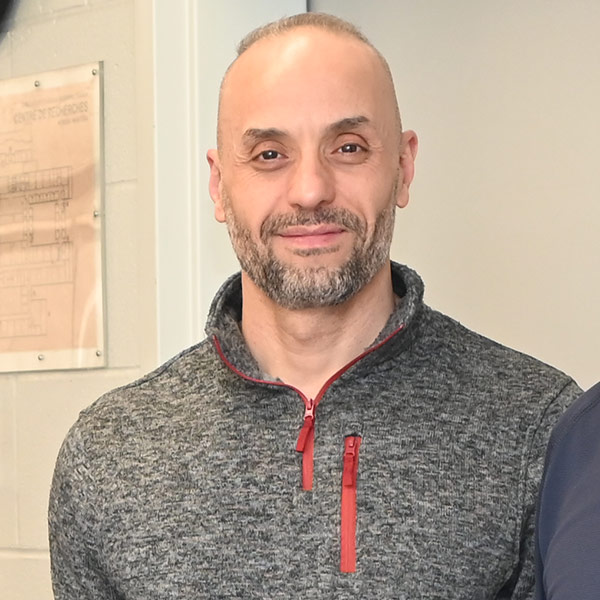
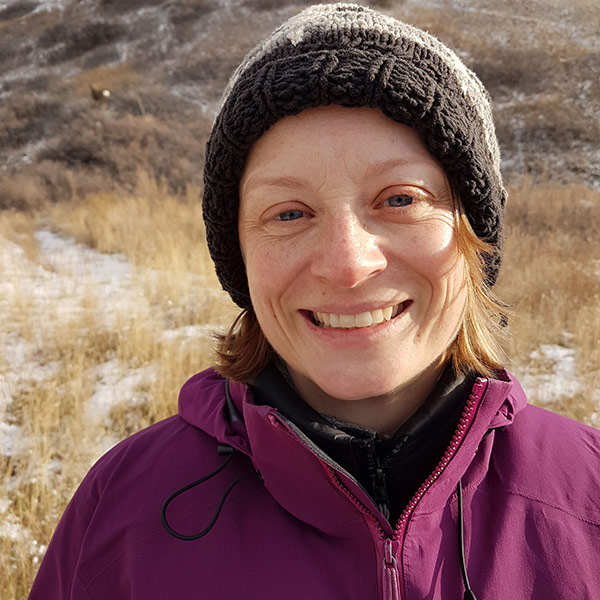
James Tucker, research scientist, Agriculture and Agri-Food Canada
James-Tucker_crop

James Tucker is a research scientist in barley genomics at Agriculture and Agri-Food Canada’s (AAFC) Brandon Research and Development Centre (RDC). He completed a bachelor of science in chemistry and biology at the University of Winnipeg before spending a year in entomology at the University of Manitoba (U of M). He then moved to Montreal to do a master’s degree in quantitative genetics at Concordia University. He worked for a while before returning to studies later in his career to complete his PhD in plant science at the U of M. Tucker lives outside of CFB Shilo with his wife. He is the father of two children.

Where did you work before the Brandon RDC?

I started out as a summer student in the ’90s and worked my way up as a research technician in Winnipeg at the Cereal Research Centre before moving to Brandon in 2001. I worked as a biologist and then a barley pathologist, supporting the barley breeding program. In 2018, I was made into a research scientist at the centre. Aside from one summer working for the Canadian Forestry Service, my work experience has all been within AAFC.

What got you interested in this area of work?

Initially, it was employment. I was working in Winnipeg in entomology and molecular genetics as a technician and then took a job as a barley pathologist. I had an interest in genetics for a long time. In genetics there is a lot to work on and there are always new and complicated problems. What really grew on me was the community. Barley is an extremely co-operative research community and it’s been a really positive experience working within that community.

Tell us a bit about your work at the Brandon RDC.

The Developing barley germplasm with improved resistance to Fusarium head blight (FHB) and other biotic stresses for western Canada project is the major driver of my research. This project ran from 2018-23 and was funded under the National Barley Cluster.

I work closely with Ana Badea, a barley breeder here at the Brandon RDC, as well as the other barley breeders in Canada. There are a lot of diseases in barley making it quite complicated. We focus on the diseases that are of major economic concern and cause damage for farmers. This includes Fusarium head blight (FHB), stem rust, spot blotch and other biotic stresses that affect barley production.

In the spring, we work on experiments to get seed from Dr. Badea’s program to collaborators, for example – and receive seed from other institutions around the country and internationally – and set up studies and seeds for our disease nurseries (stem rust, leaf disease and FHB) here at the centre. Plots are grown and infected, followed by record-taking of disease ratings for thousands of plots. A big task in the fall is harvesting the FHB nursery. In barley, there is not a good relationship between the visuals and the toxins like wheat, so we need to harvest a lot more, and by hand. The work is labour intensive, where approximately 10,000 rows are harvested each year. Then during the winter, we are cleaning and processing the seeds, sending them for analyses in order to get all of the information back in time for the breeders to use to make their selections.

What can you say about the value of farmers providing funding and support to your organization?

In my view, a lot of the research I do is funded through farmers and their faith in giving me the funds I need to do the research that matters to them. In the research I do, I always focus on the benefits for farmers, which is very important to me. I really appreciate the funding support.

How does that farmer funding and support directly benefit farmers?

In my research program there are short-term and long-term goals. Some things take longer than others. Breeders have a big job. They have to breed for so many traits, while constantly trying to improve yields, so that farmers can benefit. I work with the breeders to help them select the best lines to advance depending on the trait they are targeting (e.g., resistance). This results in farmers getting new and improved varieties with better disease resistance packages, for example. 

How do you spend your time outside of work?

I do a lot of gardening. I’ve been doing martial arts for most of my life, and I really enjoy being in nature going hiking or walking in the forest and riding ATVs.

How do you celebrate agriculture? 

I have a good-sized garden. I love putting my hands in the soil, smelling the soil and growing things. It’s kind of like my Zen time. It’s pretty exciting that we get to put seeds in the ground and the sun provides the requirements to grow and produce food that we get to eat. I normally grow excess food and tell the neighbours it’s a “you pick” garden, so they can come and take what they like.

What is a good piece of advice you’ve received?

 I’ve had a lot of mentors over the years, and some good advice I received is that research is a slow and steady game of increments over the years. There are really good days where you find something or a new discovery, but it’s slow working and it takes time, especially in FHB research. You have to gain an understanding that things don’t happen quickly and it takes time and resources to do research, but over time, you eventually achieve your goal.

Click here for more information about the Brandon RDC.

MCA-funded research at the 2023 Manitoba Agronomists’ Conference

Research on the Farm: Sunflower Plant Population Trials Summarized (2021 – 2023)

Manitoba Crop Alliance’s Research on the Farm program looks at common agronomic, crop-specific concerns on field-scale, replicated trials in commercial fields. 2023 saw the sunflower plant population trials completed with 21 site-years of data.

The objective of this specific trial was to quantify the agronomic and economic impacts of various plant populations on both oilseed and confectionary sunflower production in Manitoba. Constant genetic improvements in sunflower hybrids raise the question of whether farmers can either increase or decrease their planting populations with improvements in quality and/or yield. Farmers took to the field to make that final decision.

Figure 1: MCA Research on the Farm Sunflower Plant Population Trial locations, 2021 – 2023.

Tone Ag Consulting performs MCA’s Research on the Farm trials in all 6 of our crop-types. In this specific trial type, they are helping the farmer with planting and harvest of the plots, plus taking some key information during the growing season. This includes soil sampling in the spring followed by growth stage notes and precipitation data during the season.

Table 1: Three-year summary of sunflower plant population trial for 21 site years. Six site-years contributed statistically significant yield differences which would provide profit for the farm, based only on seed prices.

When looking at this full data set, it doesn’t necessarily give a farmer the details they are looking for. At the end of the day, they want to know the ROI for each treatment, which includes spring seed costs and sunflower prices off the combine. Simply stated, if the “high” planting rate outyielded the “low” and “check” planting rates, it may have only been marginally, therefore the higher seed cost of planting at a high rate was likely not the economical choice.

Table 2: Three-year economic summary of sunflower plant population trial for 21 site years. Net profit per acre was calculated using estimated seed cost in spring 2023 and contract pricing in fall 2023.

Sunflower farmers tend to be aware of the best management practices for their farm, which is evident in Table 2, above. Planting populations are reasonably simple to set up on-farm and MCA recommends farmers make the effort to periodically do this same testing. 2022 and 2023 were dry years in areas of Manitoba, which may have skewed results, but it is important to continue to collect data in years of varying precipitation to determine planting rates that work better on your farm in all environments.

New-to-flax chemistry now registered for in-crop use

It has long been known that flax farmers need stronger weed control options to successfully grow and maintain good quality and higher-yielding flax crops. BASF has been a strong supporter of flax in recent years, encouraging the growth of acres on the Prairies. In 2022, BASF announced a new registration for Heat ® LQ applied as a pre-harvest treatment aid on flax, which both MCA and SaskFlax partnered in running a field trial program for testing.

As of early November 2023, BASF announced that Armezon® herbicide is now registered for post-emergent applications to flax. This use was registered under the User Requested Minor Use Label Expansion program. Armezon® herbicide is a Group 27, post-emergent herbicide that is quickly absorbed by leaves, roots, and shoots to quickly control target weeds. The herbicide claims control of common ragweed, Eastern black nightshade, kochia (less than 10 cm), redroot pigweed, volunteer canola (prior to 6-leaf stage) and wild mustard, when applied at the recommended rate and with a specific adjuvant partner.

Manitoba flax farmers are very fortunate to have this ongoing support and can look forward to an additional tool in their toolbox to aid in successfully keeping their flax crops cleaner in 2024.

Further details on Armezon® herbicide registration in flax can be found in the accompanying documents.

Manitoba Crop Alliance begins issuing cash advances on winter cereals planted fall 2023

Andriy Bilichak, research scientist, Agriculture and Agri-Food Canada

Follow @ABilichak on X (formerly Twitter).

Andriy Bilichak is a research scientist and cereal biotechnology program lead at Agriculture Agri-Food Canada (AAFC)’s Morden Research and Development Centre (RDC). Bilichak completed his PhD in plant biotechnology at the University of Lethbridge and his postdoctoral fellowship at the Lethbridge RDC.

He was raised in Ukraine and now lives in Winkler, MB, with his wife Nina, who is currently on maternity leave with their baby girl, their son Mark, and his mother.

Where did you work before the Morden RDC?

After my postdoc at the Lethbridge RDC, I worked on a collaborative project with Dow AgroSciences, now Corteva, developing methods for non-transgenic gene editing in wheat. After that, I worked for a startup biotech company where I looked into different genotypes of high-THC and high-CBD lines of cannabis and how to improve pathogen resistance. Then I eventually began my position at the Morden RDC.

What got you interested in this area of work?

I’ve been working on gene editing from the beginning. My PhD was in plant transformation/biotechnology, so it was a logical next step for me to move into gene editing. I enjoy working with like-minded people and thinking and living in science and working towards new discoveries.

Tell us a bit about what you’re working on at the Morden RDC.

My program at the Morden RDC focuses on gene editing and functional genomics, which is the characterization of novel genes. We are trying to identify genes and their role in pathogen response or abiotic stress, for example. The original program was focused on spring wheat, but we’ve added winter wheat and plan to add barley as well.

Since we work on biotech and transformation, the major part of our program is gene editing. We use CRISPR/Cas9 gene editing tools to dissect the contribution of different genes, either in pathogen response like leaf rust or abiotic stress. We also collaborate extensively with other groups that look into other traits like pre-harvest sprouting, for example.

The overall vision for the program is to adopt gene editing for targeted modification in elite Canadian cultivars. We are trying to discover genes that are involved in tissue culture response in wheat, as we want to apply this knowledge to introduce gene editing into elite Canadian cultivars.

The goal would be, for example, if the breeder comes to us and says, “I have this great variety with all these nice agronomic qualities, but it lacks this one. Can you edit or modify this trait for me through genetics/gene editing?” we would be able to quickly do that. The transformation protocol usually takes four months from the time we put the embryo in tissue culture until the time we regenerate the seedling, and it takes another four or so months for the plant to grow. So, let’s say we can regenerate a particular mutation or edit the target gene within a year. This improves line and delivery to the breeder.

In terms of peptides work, the Application of antimicrobial peptides to increase cereal crops resistance to fungal pathogens project was funded by Manitoba Crop Alliance and Western Grains Research Foundation. Through this research, our lab student screened a library of 20 peptides that were selected from literature that had indications of potential antifungal properties that were never tested against leaf rust.

She found some peptides had much stronger antifungal activity compared to others. We then took those peptides and checked the growth curve to try to find out the best concentration for them. Then, when we sprayed those peptides on the leaf surface before infection with leaf rust, we discovered we could suppress the first infection on the susceptible cultivars by just foliar application of those peptides.

We also discovered endogenous wheat-encoded novel peptides that could potentially be used as a fungicide. We are currently working toward engineering these peptides in the wheat genome through gene editing applications. In this way, wheat expressing the anti-fungal peptides in leaves can potentially become more resistant to rust infection. Eventually, these edited non-transgenic lines can be tested in the field for pathogen resistance.

What can you say about the value of farmers providing funding and support to your organization?

We highly appreciate funding from farmers that allows us to do discovery work and adoption of new biotechnology tools for wheat improvement. Most of the work we do is upstream science that eventually can find its application in the farmer’s fields.

Biotechnology tools become very important in adapting wheat genetics to better cope with climate change and unpredictable weather conditions during the growing season. The gene-edited crops become widely accepted worldwide and through funding of biotechnology programs like ours, Canadian farmers can remain competitive on the international markets through growing of the improved cultivars generated using novel breeding tools.   

How does that farmer funding and support directly benefit farmers?

Although we work in upstream science, in every project we apply for we indicate how that work will benefit farmers in the long term and how we can transition it from the lab into the field. We collaborate extensively with other groups (like breeders) on the transition into the field.

In terms of gene editing, we focus on traits that are important to farmers like increased yields or reduced pesticide applications. We are thinking about how to reduce fungicide applications, for example, by looking into alternative means to control pathogens (like peptides). Every research project is centred around the objective of benefitting farmers and agriculture.

How do you spend your time outside of work?

I enjoy sports. I like playing soccer, especially with my son because he is really into soccer. I used to play table tennis and I hope to renew that passion again.

What is the best part about your job?

It’s always interesting for me to go to the lab where we apply biotechnology tools for trait improvement in wheat. Whether we increase the transformation or editing efficiency, whether we have a particular phenotype that we are interested in, and how, in general, gene editing can contribute to the development of new varieties and how it can help in breeding programs. In my opinion, now is a very exciting time to be in plant biotech.

What is your favourite podcast right now?

I enjoy listening to different science podcasts, especially ones that tell odd stories about scientific discoveries and how they came into the world. Two examples are Unsung Science and Disappearing Spoon. They are both very interesting.

Follow @ABilichak on X (formerly Twitter).

The Fence Post: Fall/Winter 2023

Project Update: MCA Development of Long-Type Confection Sunflower Hybrids

Each year, Manitoba Crop Alliance (MCA) releases the Sunflower Variety Performance Trial (VPT) data for both oil and confection sunflowers. In recent years, several confection experimental lines have been tested under the company, MCA. It is reassuring to the future of the sunflower industry in Manitoba that several seed companies continue to invest in the success of this crop.

In 2011, the National Sunflower Association of Canada (NSAC), now amalgamated under MCA, joined the impressive list of organizations that are investing in variety development to bring improved sunflower hybrids to our farmer members. Manitoba has a strikingly short list of available confection hybrids and those that are available are not new genetics. There is also an absence of herbicide-tolerant hybrids with improved disease packages that would benefit confection sunflower farmers.

This is a very exciting time for MCA. As a project that started many years ago with NSAC and has remained a high priority in MCA’s research program, it is very possible that one of these lines will be registered soon, with strong interest from the sunflower industry. MCA is very proud of our breeder’s hard work and commitment to building these three strong experimental hybrids that have strong yields and promising genetic and agronomic packages for Manitoba’s unique growing conditions.

MCA sunflower breeder, Mike Hagen, standing in the first commercial field to test MCA experimental hybrids.

MCA is looking for confection sunflower farmers to conduct strip trials in their 2024 commercial sunflower fields. Interested farmer members can contact Daryl Rex, research trial specialist at MCA, for more information.

MCA’s Elite Sunflower Hybrid Guide

Background

This project supports Manitoba Crop Alliance’s farmer-led hybrid confection sunflower breeding program. Hybrids with herbicide and disease resistance, suitable for Canadian growing conditions will be developed as part of this project.

Project Objectives

  1. Develop elite parent lines, possessing genes for tolerance to sulfonylurea herbicide, rust and downy mildew.
  2. Produce testing seed, test and isolate confection sunflower hybrids for Canadian production that are high yielding, lodging resistance with improved dark, long-type seed. Resistant to sulfonylurea herbicide, rust and downy mildew.

Key findings from the Assessment of New Malting Barley Varieties for Production and Malting Selection in Manitoba final project report

CMBTC study reveals malting barley lines that pack a punch

Top