Blog: What's New at MCA

Working together to set the standard for Canadian grains and oilseeds

The Prairie Grain Development Committee (PGDC) is responsible for setting standards (merit), evaluating and recommending grain crop candidate varieties for registration in Western Canada. There are four independent recommending committees:

  • Prairie Recommending Committee for Wheat, Rye and Triticale (PRCWRT)
  • Prairie Recommending Committee for Oat and Barley (PRCOB)
  • Prairie Recommending Committee for Pulse and Special Crops (PRCPSC)
  • Prairie Recommending Committee for Oilseeds (PRCO)

The committees are comprised of representatives from the entire value, including variety/trait developers, farmers, commodity organizations, seed industry representatives, grain companies and end users.

In March, the PGDC held their annual meetings in person for the first time since 2019. Two staff and four crop committee delegates from Manitoba Crop Alliance (MCA) attended the meetings in Banff, AB.

“It’s extremely important to be involved in the decision-making process,” says Rauri Qually, a farmer from Dacotah, MB, and delegate on MCA’s wheat and barley crop committee.

“Farmers are a key part of the industry. We grow and sustain these varieties, whether developed privately or publicly. It is important for breeders, seed growers, merchants and industry officials to understand our perspective in real world cropping situations. This feedback is essential.”

Nick Matheson, an MCA director and flax committee delegate from Stonewall, MB, agrees that farmer feedback is extremely valuable in this arena.

“Farmers are the actual boots on the ground growing the commodity,” he says. “I think it’s very important to have farmer perspective at these meetings because the varieties need to meet the needs of farmers.”

Mallorie Lewarne, MCA’s agronomy extension specialist for cereal crops, adds that the PGDC is a great opportunity for farmers to directly interact with the scientific community and highlight the issues that are most prevalent on their farms.

“It is at these meetings we get to know the attributes of varieties coming forward for commercialization,” says Lori-Ann Kaminski, research program manager for cereal crops at MCA.

“We are judging upcoming lines against ‘merit criteria’ that we set. Farmers at this meeting can have a voice (vote) on any changes to those merit characteristics and get a look at how prospective lines stack up in field trials over two or three years, depending on crop type, at multiple Prairie locations.”

MCA also invests directly in the delivery of field-ready barley, flax and wheat varieties from Western Canada’s public breeding programs at the University of Manitoba, the University of Saskatchewan’s Crop Development Centre, the University of Alberta and Agriculture and Agri-Food Canada. Western wheat and barley commissions formed the Canadian Wheat Research Coalition and the Canadian Barley Research Coalition to facilitate this collaborative approach to farmer funding of regional and national research projects in variety development and agronomy, including Core Breeding Agreements, the Canadian National Wheat Cluster and the Canadian National Barley Cluster.

Through these investments, Kaminski says, the “entire value chain is working together to build Canada’s reputation for quality and consistency.”

For Qually, Canada’s reputation around the world of producing the finest quality grains and oilseeds is key to the success of our industry at home.

“The variety registration system allows the industry and whole value chain to work together and decide what lines will be best, while maintaining our status of quality throughout the world,” he says. “It also allows the breeders to listen to the rest of the industry’s concerns and suggestions for making our grain and oilseed varieties all they can be.”

After attending the PRCWRT agronomy evaluation team meeting and annual meeting, Ryan Hueging, an MCA director and wheat and barley committee delegate from Woodlands, MB, says he is confident he will have access to new varieties that will improve profitability on his farm, and that these varieties will contain the quality buyers are looking for.

The variety registration system provides important information (the merit criteria) for farmers, such as disease ratings, agronomy characteristics and quality. This information also goes into Seed Manitoba.

“Farmers can evaluate risks specific to their area and decide on varieties to plant,” says Sheila Elder, a farmer from Wawanesa, MB, and chair of MCA’s wheat and barley crop committee.

“For example, in areas with fewer ‘growing degree days’ a shorter-season crop can be considered; for areas with risk of Fusarium head blight (FHB), a more resistant variety can be chosen; and if a farmer wants to grow a crop that has a higher risk of lodging, an appropriate growth regulator could be considered.”

When asked to share one takeaway from the meetings, there was general consensus recognizing all of the hard work and dedication that goes into developing varieties, as well as the organization, time and skills that go into gathering a large, diverse group together to decide on which lines to advance.

“My one takeaway would be that there is a lot of hard work and dedication put into creating varieties that are progressively improving,” says Hueging. “That comes from a very good collaborative effort to get all members of each specific segment of our industry to share their knowledge.”

Lewarne says she always leaves the PGDC meetings with an immense respect for the plant breeders, as well as the geneticists, pathologists and everybody else who works alongside them.

“Canada has a reputation for its high-quality wheat, and the breeders work tirelessly to maintain or exceed those standards for our customers around the world, while also taking farmers’ needs into consideration,” she says. “It seems like the target is constantly moving, but our Canadian breeders show up each year with new lines that improve on disease, agronomy and quality characteristics.”

MCA staff and farmers at PGDC meetings in Banff, March 2023. From left Rauri Qually, Ryan Hueging (back), Mallorie Lewarne, Lori-Ann Kaminski, Nick Matheson (back) and Sheila Elder.

What happened at Banff in 2023?

  • Wheat, Rye and Triticale – 12 CWRS, two CWAD, four CPSR, one CWSWS, one rye, one spring triticale, and two winter triticale lines brought forward. Breeders are always working to meet or exceed merit criteria, so a lot of culling happens before lines are brought forward at the committee meetings. All but three were supported for registration (two CWRS and one CPSR). Over the last few years, the committee has been assessing which newer varieties should be used as our standards or checks. New FHB checks are to be implemented in 2024 because current intermediate checks are looking more moderately susceptible, especially for durum. Hoping to do some post-registration testing to update Seed Manitoba.
  • Barley – 12 lines brought forward (three general purpose, seven malt and two food) and 10 were supported for registration. Both lines not supported were proposed as malting varieties.
  • Flax – There were no new varieties brought forward this year, as upcoming lines are still in the data-gathering stages.

What happens next?

The recommendations from PGDC go forward to the Canadian Grain Commission for assignment of market class and the Variety Registration Office of the Canadian Food Inspection Agency for registration. At the same time, breeding institutions and companies are making decisions about commercialization.

If you are interested in learning more about the PGDC, please reach out to MCA staff, directors or crop committee delegates, or visit pgdc.ca.
 

Meet Manitoba Crop Alliance’s 2022-23 bursary recipients

Meet Manitoba Crop Alliance’s 2022-23 bursary recipients

By Manitoba Crop Alliance

Manitoba Crop Alliance (MCA) is proud to support students who are studying to work in the agriculture industry. MCA’s bursary program is designed to assist with the financial needs of students who are enrolled in a post-secondary agricultural program within the province of Manitoba.

Six students from Manitoba have been awarded with MCA 2022-23 bursaries valued at $2,000 each. The 2022-23 bursary recipients are Kaitlyn Christine Hunt-Delaurier from Laurier, Lianne Rouire from Treherne, Milan Lukes from Gunton, Stephanie Manning from Souris, Hannie Peters from Ile Des Chenes, and Alison Manness from La Salle/Domain.

“I would like to congratulate all our 2022-23 bursary winners and thank all the students who applied,” says MCA Chair Robert Misko. “It is clear from the quality of all the bursary applications we received that the future of the agriculture industry in Manitoba is bright.”

Bursary applicants needed to meet the following criteria:

  • Have completed their first or second year of post-secondary education at the college or university level (diploma or degree) and are enrolled full-time for the 2022-23 school year in an agricultural program within the province of Manitoba.
  • Have achieved a minimum cumulative grade point average (GPA) of 3.0.
  • Have an interest in wheat (spring or winter), corn, barley, flax or sunflower crops, or agriculture in general, as demonstrated in a brief, one-page letter.
  • Are from a farm that is a member in good-standing of MCA.
  • Have not previously been awarded an MCA Bursary.

An independent selection committee was contracted to evaluate the applicants based on their connection to or interest in agriculture, explanation of why they decided to enroll in an agriculture-related post-secondary program, how they hope to benefit the agriculture industry once they have graduated and are in the workforce, and their academics and writing skills.

This year, the selection committee included James Frey, applied production specialist with Manitoba Agriculture, and Rachel Evans, technical sales manager at FMC Canada for Manitoba and southern Saskatchewan.

Frey leads a small-plot research program in co-operation with Parkland Crop Diversification Foundation in Roblin, MB. He holds a B.Sc. in agribusiness and a master’s degree in natural resources management from the University of Manitoba. Prior to his current role, he worked with agricultural development projects in Northeast Asia.

Evans is an agronomist with 10 years of experience providing agronomic advice, research co-ordination and project leadership. She holds a master’s degree in plant science from the University of Manitoba, in addition to being a Certified Crop Advisor and member of the Manitoba Institute of Agrologists.

Thank you to the selection committee for evaluating the bursary applications and congratulations to the 2022-23 bursary recipients!

Meet the MCA 2022-23 bursary recipients

2021-22 New Research Commitments

By Manitoba Crop Alliance

Manitoba Crop Alliance entered into funding agreements for several new research projects in the 2021-22 fiscal year. Download the file below to have a closer look at each of the new projects and the funding details.

2021-22 New Research Commitments

The amount reflected in the “MCA Commitment” column represents the total funding over the lifetime of the project. Projects vary in length, from one year to projects ending in 2027.

For more information about MCA’s research program click here.

MCA delegate represents Canadian farmers internationally on Cereals Canada new crop mission

By Manitoba Crop Alliance

Cereals Canada and the Canadian Grain Commission recently launched the 2022 New Wheat Crop Report at a series of webinars targeted to global customers of Canadian wheat. This month, the report will be shared in person when delegations representing the cereals value chain travel to over 15 countries in Asia, Latin America, Europe, Africa and the Middle East. This will be the first time in nearly three years that the report has been presented in person.

Sheila Elder, a delegate on Manitoba Crop Alliance’s wheat and barley crop committee, will be travelling with the group on the Latin American leg of the tour. She will visit Mexico, Colombia, Ecuador, Peru and Chile and represent Canadian farmers at over a dozen seminars and meetings. In addition to providing a summary of 2022 Canadian growing conditions,Elder will talk about the growing conditions in her area, share her science-based production practices and answer questions from the audience.

Hearing directly from a Canadian grower is always a popular component of both the virtual and in-person meetings, as it provides a direct link between the customer and grower and puts a face on Canadian grain production. For Elder, this experience is an incredible opportunity to represent Canadian cereals growers and get a better understanding of customer interest from an availability,milling quality and end-product use perspective.

To learn more about the 2022 New Crop Report and download the 2022 Crop Summary, visit: cerealscanada.ca/2022-wheat-crop/.

Watch the new Cereals Canada Grain Farming in Canada video here.

Ever considered becoming an MCA delegate?

Have you considered becoming a delegate on one of Manitoba Crop Alliance’s (MCA) crop committees or a member of the board of directors, but don’t know much about these roles or where the process begins?

If so, check out this article excerpted from our Spring/Summer 2022 edition of The Fence Post, where several of MCA’s current directors and delegates share their experience and valuable insights to help educate fellow farmer members who are interested in getting involved.

Manitoba Crop Alliance announces funding for 2022 Whole Farm Research Program projects

Manitoba Crop Alliance (MCA) has successfully funded three research projects through the Whole Farm Research Program that began in 2022.

The total value of this research, which will be conducted over the next five years (2022-27), is $1,506,047. MCA’s contributions to the projects will total $476,470 over that five-year period.

The following research projects were funded in the inaugural call:

  • Optimizing Crop Rotations to Enhance Agronomic, Economic and Environmental Performance.
    • Principal Investigator: Dr. Ramona Mohr, Agriculture and Agri-Food Canada Brandon Research and Development Centre
    • Co-funders: Manitoba Pulse & Soybean Growers, Manitoba Canola Growers Association
  • Evaluating the Potential Benefits of End-of-Pipe Treatments for Tile Drainage Discharge in Southwestern Manitoba Undulating Landscapes
    • Principal Investigator: David Whetter, Agri-Earth Consulting
  • Making Cover Crops Work with Grain Cropping Systems in the Canadian Prairies.
    • Principal Investigator: Dr. Maryse Bourgault
    • Co-funders: Western Grains Research Foundation, Saskatchewan Forage Seed Development Commission, Results Driven Agriculture Research, Saskatchewan Wheat Development Commission

Developed in 2021, the Whole Farm Research Program allows for a whole-farm, cross-commodity approach to research. The Whole Farm Research program is not crop-specific and leads to innovative solutions for the benefit of Manitoba producers now and into the future.

Stay tuned for more information about our call for letters of intent for Whole Farm Research projects beginning in 2023!

The second call for proposals is complete, and reviews are underway. The second round of successfully funded proposals will be announced in 2023 – stay tuned!

To learn more about the Whole Farm Research Program, click here.

Meet Manitoba Crop Alliance’s 2021-22 Bursary Recipients

Manitoba Crop Alliance (MCA) supports students who are in post-secondary education programs, studying to support the agriculture industry. MCA has established a bursary program intended to assist with the financial needs of students who are enrolled in a post-secondary agricultural program within the Province of Manitoba.

Six students from Manitoba have been awarded with MCA 2021/22 bursaries valued at $2000 each. The MCA 2021/22 bursary recipients are George Meggison from Goodlands, Jada Ricard from Baldur, Joelle Little from McConnell, Nicole Jonk from Bruxelles, Simon Hodson from Lenore, and Taylor Mutch from Crystal City.

“Congratulations to all of the MCA 2021/22 bursary winners and thank you to everyone who submitted applications,” says Fred Greig, Chair of MCA. “Through the establishment of this bursary program, MCA hopes to encourage and support students studying work in or supporting the agriculture industry.”

Bursary applicants needed to meet the following criteria:

  • have completed their first or second year of post-secondary education at the college or university level (Diploma or Degree) and are enrolled, full-time for the 2021/2022 school year in an agricultural program within the Province of Manitoba;
  • have achieved a minimum cumulative grade point average (GPA) of 3.0;
  • have an interest in wheat (spring or winter), corn, barley, flax or sunflower crops, or agriculture in general, as demonstrated in a brief, one-page letter;
  • are from a farm that is a member in good-standing of MCA.

An independent selection committee was contracted to evaluate the applicants based on their connection to or interest in agriculture, explanation of why they decided to enroll in an agriculture-related post-secondary program, how they hope to benefit the agriculture industry once they have graduated and are in the workforce, and their academics and writing skills.

The selection committee included Patti Rothenburger, Director of the Agriculture Branch for Manitoba Agriculture, Scott Chalmers, Diversification Specialist with Manitoba Agriculture and Stephanie Cruikshanks, Labour Specialist with Manitoba Agriculture.

Congratulations to the MCA 2021/22 Bursary winners!

Thank you to the selection committee for evaluating the bursary applications.

2020-2021 New Research Commitments

Manitoba Crop Alliance entered into funding agreements for a number of new research projects in the 2020-2021 fiscal year. Download the file below to have a closer look at each of the new projects and the funding details.

The amount reflected in the “MCA Commitment’ column represents the total funding amount over the lifetime of the project. Projects vary in length, from one year to projects ending in 2026.

For more information about MCA’s research program click here.

MCA Funded Research Featured at Manitoba Agronomists Conference

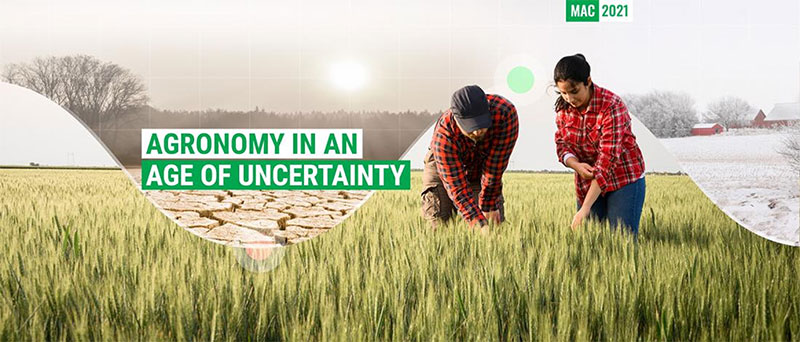
On December 15th and 16th 2021, Manitoba agronomists met virtually to discuss the latest developments in crop production, crop protection and soil management. This year’s conference theme was “Agronomy in an Age of Uncertainty”. Many of the presentations featured research funded in part by Manitoba Crop Alliance, find them linked below. Special thanks to the conference partners, University of Manitoba, Manitoba Agriculture, AAFC, and Prairie CCA, for putting together a great line up of speakers.

Posters

Supporting a Strong and Prosperous Honey Bee Industry in Manitoba

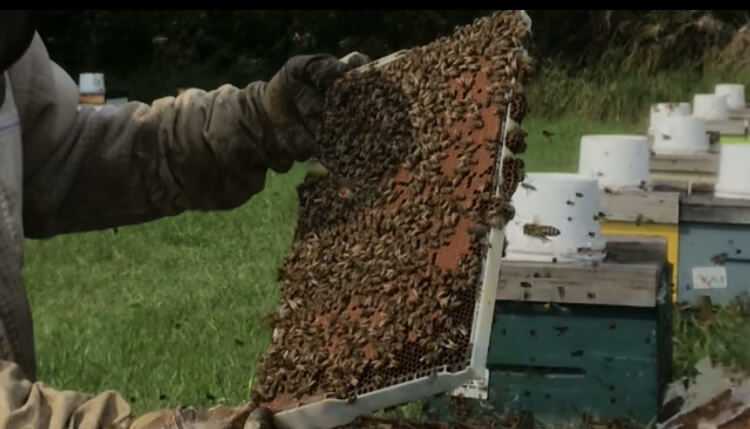
Post photo taken by Ian Steppler

Manitoba Crop Alliance (MCA) is providing $10,000 towards Manitoba Beekeepers’ Association (MBA) Knowledge Research Transfer Program (KRTP) for the fiscal year of April 1, 2022 – March 31, 2023.

“Honey bees and sunflower production go hand in hand,” explains Ian Steppler, farmer and chairperson, MBA. “Sunflowers need pollination to increase seed set and bushel weight, and honey bees need sunflowers to bring in a honey crop and to sustain the development of their nests. Our two industries rely on each other, interact with each other, but historically haven’t worked directly with each other.”

Photo: Ian Steppler

Implementation of the KRTP has built a direct line of communication between beekeepers and farmers in Manitoba, and with more partnerships, will continue to extend this communication. “To address production issues, we need to bring the issue down to the producer level and work with both beekeepers and farmers to help identify problems and find proactive solutions,” says Steppler. “We as producers need to ensure that our voice represents our needs and to do that, we need to work collaboratively with each other. Afterall, sustainable development is number one in all farmers minds.”

Communication between beekeepers and grain farmers is crucial to the sustainable development of beehives, as well as the sustainability of the cropping system as a whole. If farmers are aware of where the beehives are, they can contact the beekeepers to help identify any problems. Healthy honey bee hives pollinate sunflowers to bring in bigger and heavier yields, ultimately providing farmer members with a return on their investment.

“This partnership with MBA is a benefit not only for sunflowers, but for all of the crops we represent,” says Gregg Fotheringham, MCA director and sunflower committee delegate. “Like Ian previously mentioned, as grain producers we need to work collaboratively together to support beekeepers and their operations so we can move forward in the same direction.”

The KRTP has been developed to provide industry-led services that align with the MBA’s mission statement to: ‘Represent and promote the welfare of the entire Manitoba honey bee industry and the prosperity of its beekeepers’. The funding from MCA will go towards helping beekeepers address many of the major health issues within their hives.

Photo: Ian Steppler

Priority areas of the KRTP include:

  • Communication: improve communication within Manitoba’s beekeeping community, grain farmers and the public
  • Education: provide educational opportunities to help beekeepers become more profitable and sustainable
  • Demonstrative Research: invest in demonstrative research to fill in information gaps that directly benefit beekeepers
  • Monitoring: develop best management practises using beekeeper data (beekeeper managed hives)

For more information

Top