
Section Title
Wheat Fungal Leaf Disease Identification Roundup
- Wheat
Fungal leaf diseases can be major yield robbers in wheat crops across Manitoba. Leaf diseases reduce plant health and photosynthetic activity, mine plant nutrients and negatively impact grain yield and quality. In Manitoba, there are several yield-restricting leaf diseases, including leaf, stem and stripe rust; the septoria leaf blotch complex; and tan spot. These diseases can be found across all of Agro-Manitoba. Below is information on identifying features and symptoms of each disease.
Leaf rust (Puccinia triticina)
- Leaf rust does not overwinter in Manitoba. Leaf rust spores are blown into Manitoba from the Southern United States via prevailing winds (Texas-Oklahoma and Kansas-Nebraska corridors). More information on risk of cereal rust movement can be found
- Leaf rust infections are quite noticeable and are typically confined to the leaf area or the leaf sheath. It consists of small round pustules, that are orange/red in colour. When the plant ripens, the pustules’ colour changes from an orange/red to a dark brown/black due to teliospore development.
- Leaf rust pustules are scattered throughout the leaf and can cause complete destruction of the leaf tissue.
- Leaf rust thrives at a wide range of temperatures, ranging between 18-25 °C and moist conditions, including a dew period of at least 3 hours to initiate an infection.
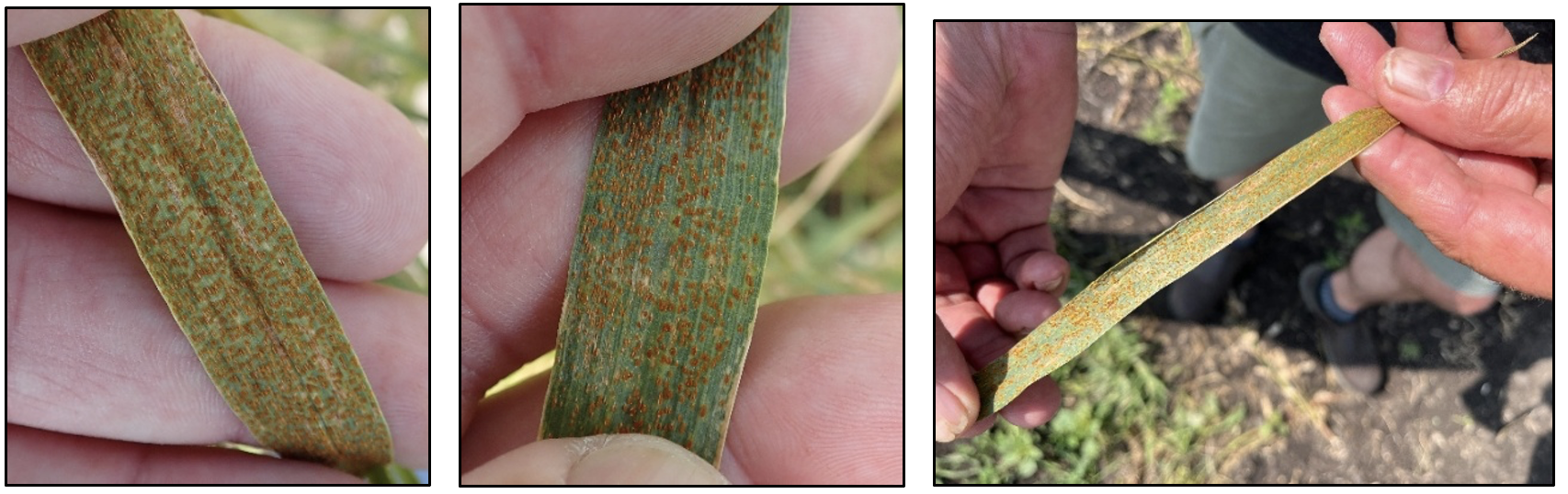
Photo Credit: Kelly Turkington (left and centre) and Andrew Hector (right).
Stem rust (Puccinia graminis f. sp. tritici)
- Stem rust spores arrive in Manitoba from the Southern United States via prevailing winds (Texas-Oklahoma and Kansas-Nebraska corridor). Stem rust can but rarely overwinters in Manitoba or Western Canada. More information on risk of cereal rust movement can be found
- Stem rust infections are noticeable and are typically confined to the plant stem but can move to leaves as well. Pustules are brick red (dark red) in colour and oblong in shape. Stem tissue appears ripped or tattered due to pustule development.
- The pustules change from a brick red to a dark brown/black as the plant ripens, due to teliospore development.
- Stem rust prefers temperatures between 20-28 °C and moist and humid conditions, including prolonged dews.
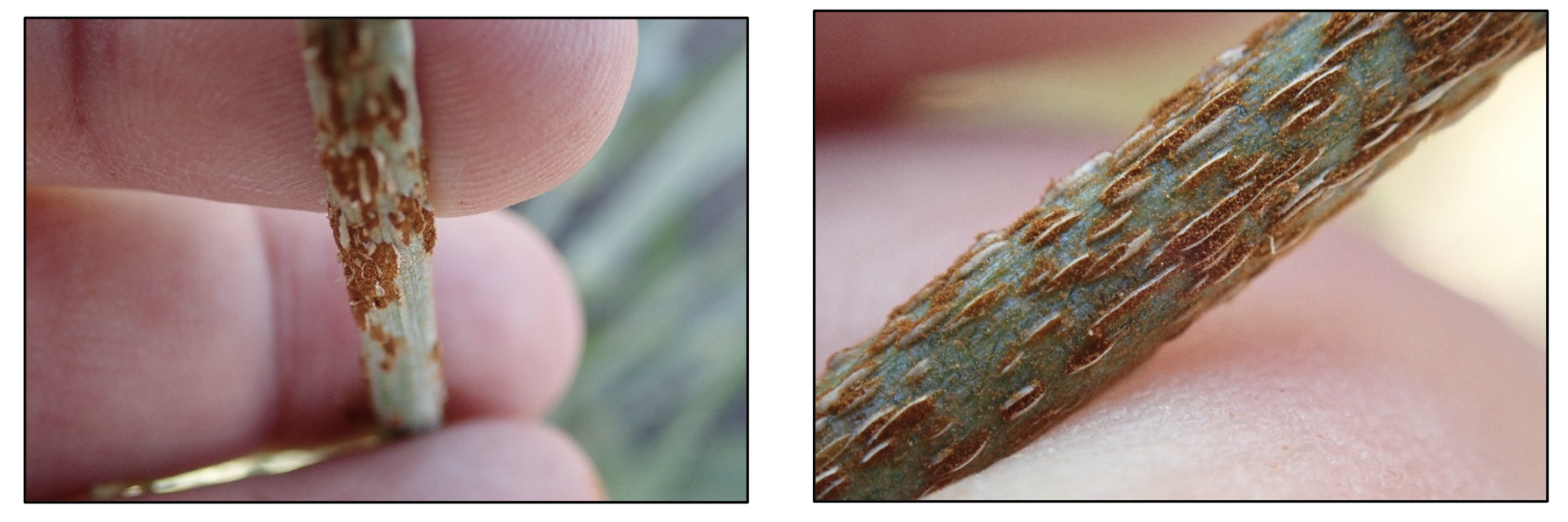
Photo Credit: Kelly Turkington.
Stripe rust (Puccinia striiformis f. sp. Tritici)
- Stripe rust spores arrive in Manitoba from the Southern United States via prevailing winds, but there have been rare instances where it has overwintered in Manitoba. Traditionally, stripe rust favours cooler temperature (9-15 °C), rather than hot and dry Manitoba summers.
- If weather is conducive for disease development, symptoms will occur roughly one week after infection. Elongated small yellow pustules (uredinia) appear as linear rows along the leaf, usually running the length of the leaf. Pustules run parallel to the leaf veins.
- Under favourable weather conditions and severe disease pressure, stripe rust can result in stunted plants and can also infect the wheat head, glumes, kernels and awns.
- As the crop matures, the pustules are replaced with teliospores, giving the disease a dark brown appearance.
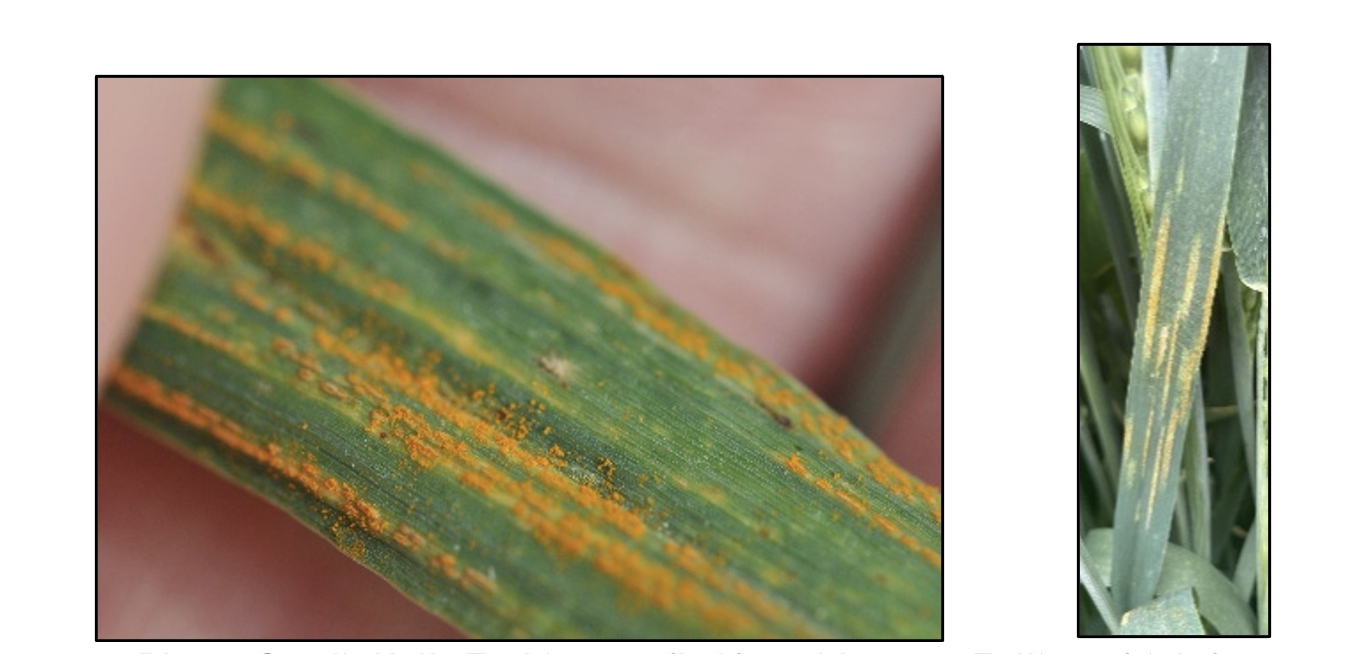
Photo Credit: Kelly Turkington (left) and Joanna Follings (right).
Septoria leaf blotch complex
- In general, the septoria leaf blotch complex is comprised of three unique pathogens. Pathogen symptoms are hard to differentiate and are often found together. The pathogens in the septoria leaf blotch complex prefer slightly warmer temperatures, ranging from 15-27 °C and wet and windy conditions.
Septoria Tritici blotch (Zymoseptoria tritici)
- Initial symptoms are yellow flecks, normally starting on lower leaves and will move up the canopy as disease develops.
- Initial lesions develop into larger grey-yellow or brown blotches. A yellow border around the blotches develops but is restricted by leaf veins and therefore develops longitudinally. Under severe infection, lesions will become necrotic and kill the leaves.
- Pycnidia which are small round fruiting bodies, are visible in the centre of the lesions. Under wet conditions a white gelatinous mass of spores will ooze from mature Pycnidia.
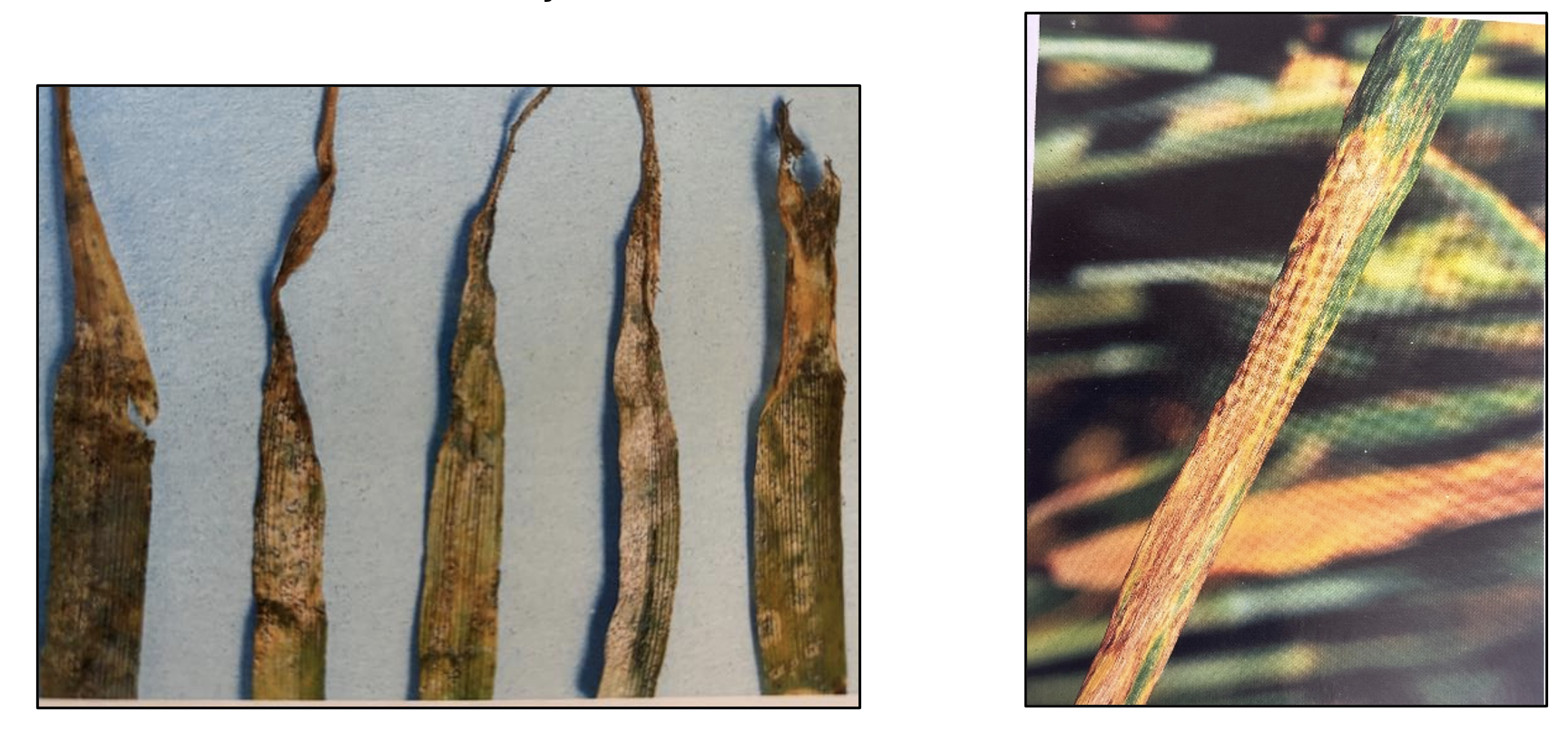
Septoria tritici blotch leaf (left) and stem (right) infection (Diseases of Field Crops in Canada 3rd edition).
Stagonospora nodurum blotch (Parastagonospora nodorum)
- Small lesions start as light spots with dark margins. Eventually, a yellow area develops around the lesions, but the developed area is less restricted than those of septoria tritici blotch. Eventually, the lesions will become necrotic and small fruiting bodies will develop.
- Stagonospora nodurum can also cause blotches on the glumes and nodes of mature plants, know as glume blotch. Symptoms include dark purple/brown lesions first appearing at the tips of the glume and spreading downwards. Dark fruiting bodies (pycnidia) may also be present and may infect wheat heads.
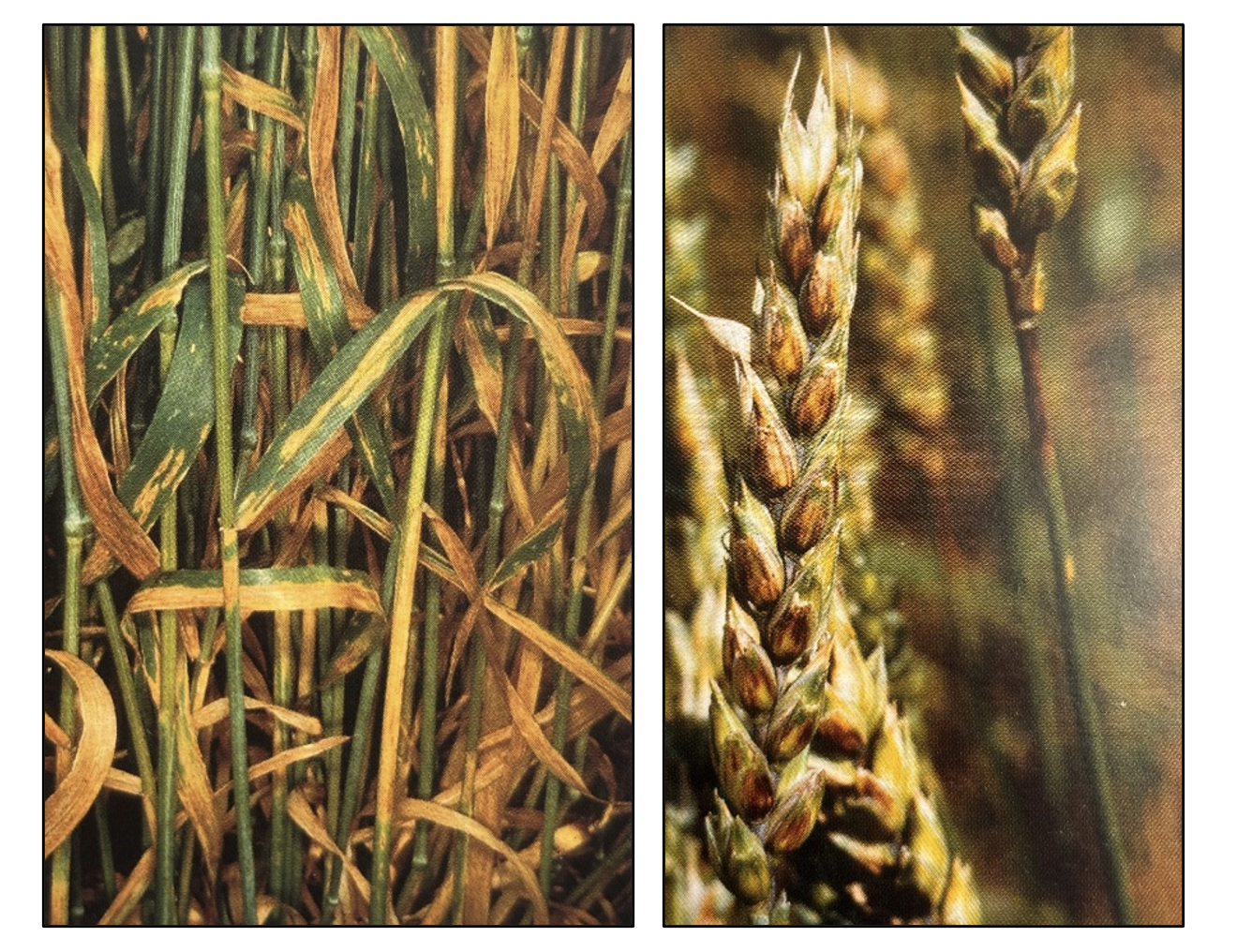
Septoria nodorum blotch leaf (left) and glum blotch (right) infection (Diseases of Field Crops in Canada 3rd edition).
Stagonospora leaf blotch (Parastagonospora avenae)
- First symptoms include small yellow flecks, that enlarge to become more oval or elliptical in shape. A zone of chlorotic tissue will develop, with lesion centers becoming grey/brown. Pycnidia are present but less conspicuous.
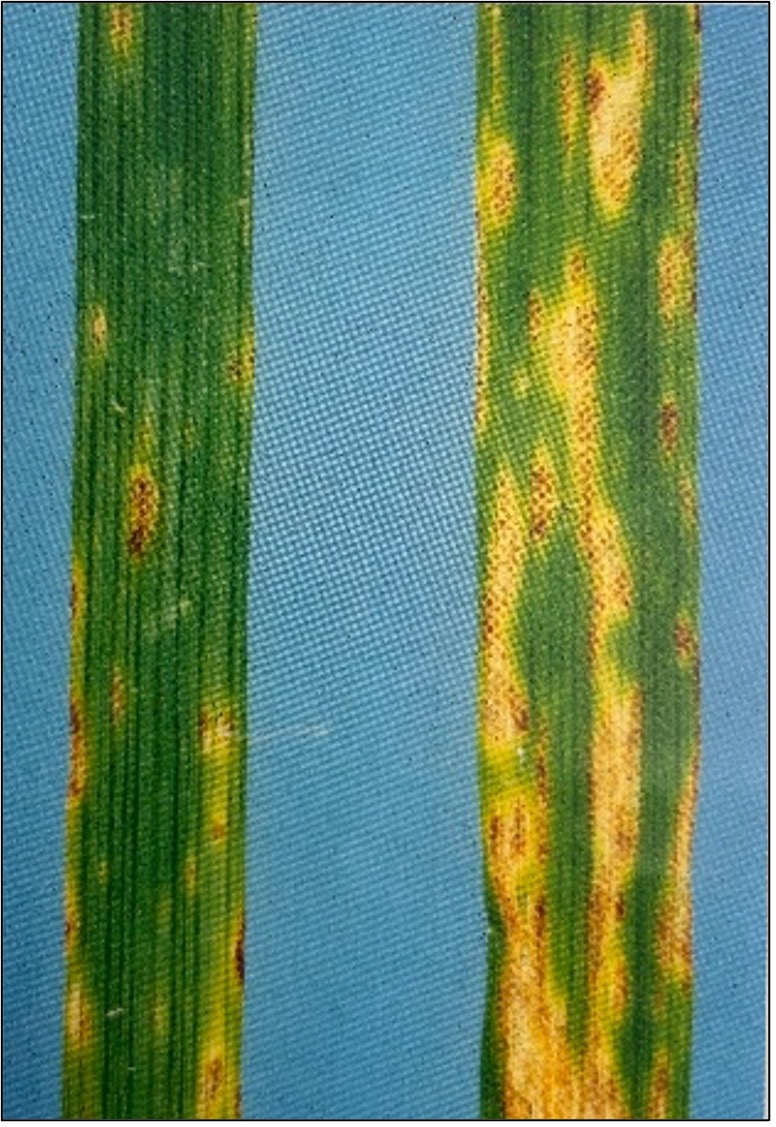
Stagonospora leaf blotch infection (Diseases of Field Crops in Canada 3rd edition).
Tan spot (Pyrenophora tritici-repentis)
- Tan spot symptoms initially occur on lower plant leaves, as small brown/black spots or flecks.
- As the disease progresses, tan oval shaped lesions begin to develop, running longitudinally to the wheat leaves. As lesions develop, a small dark central spot of the infection site becomes visible. As well, a yellow halo surrounds the lesion.
- Lesions are roughly 5-12 mm in length, but tend to coalesce as the disease develops, creating large irregular shaped blotches. Blotches look similar to those from the septoria leaf blotch complex, but don’t develop fruiting bodies. Severe damage will lead to leaf necrosis.
- Wheat heads infected with the tan spot pathogen can cause kernel discolouration, either staining the kernel reddish org darkening the kernel on the germ end (i.e. black point)
- Tan spot can develop in temperatures ranging from 15-28 °C. The disease favours prolonged wet periods and leaf wetness, including heavy dews. Disease development is stopped with hot and dry conditions.
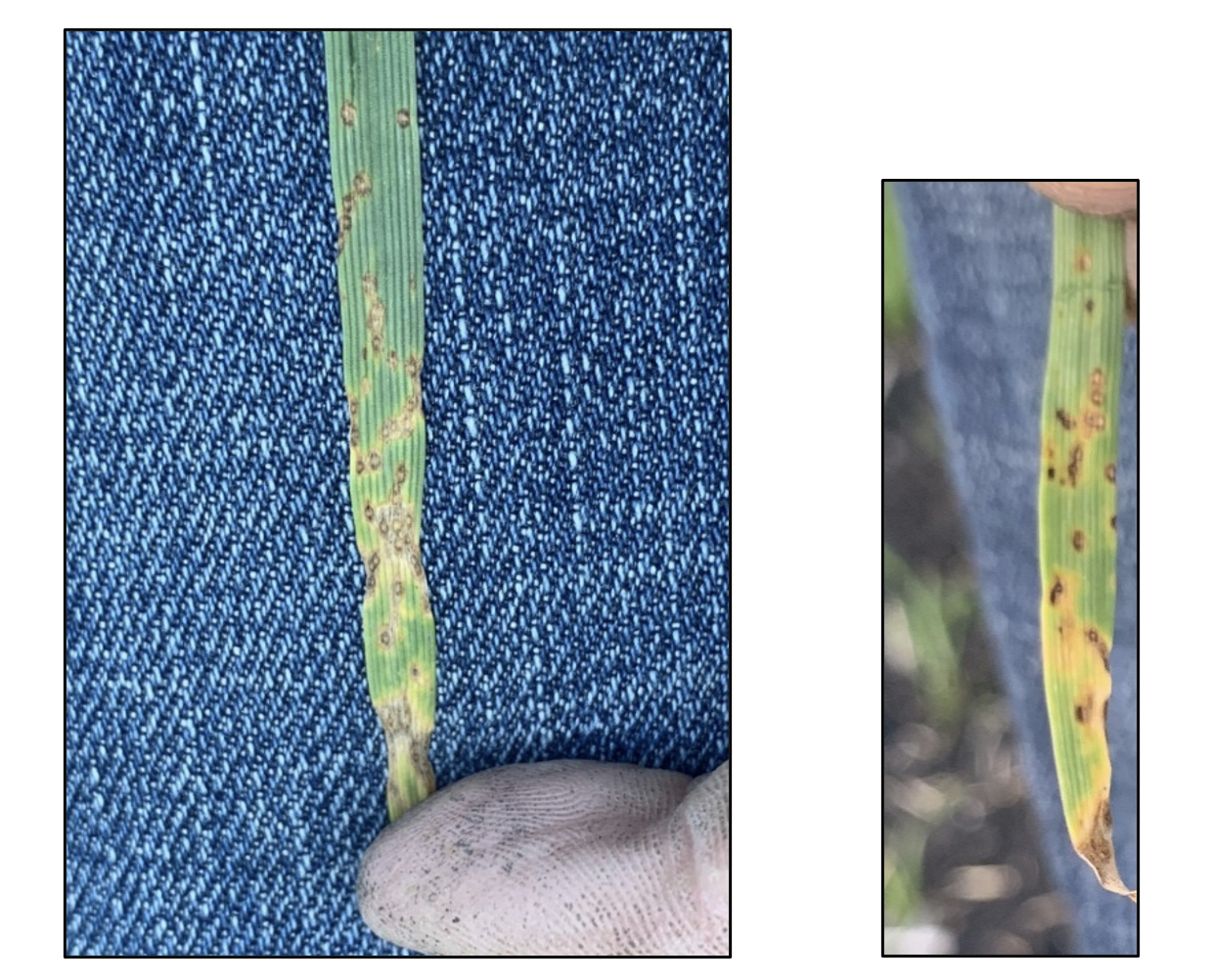
Photo Credit: Andrew Hector.

-
December 16, 2025
Although not the most prominent cereal diseases, seedling blight and root rot diseases do impact yield in small grains. These… Read More

-
September 8, 2025
Lodging is one of the most common issues across the Prairies. Growers can use tools such as PGRs or select… Read More
-
July 3, 2025
Identifying the structure and function of wheat head parts is important for making management decisions, describing insect and diseases issues,… Read More
-
July 2, 2025
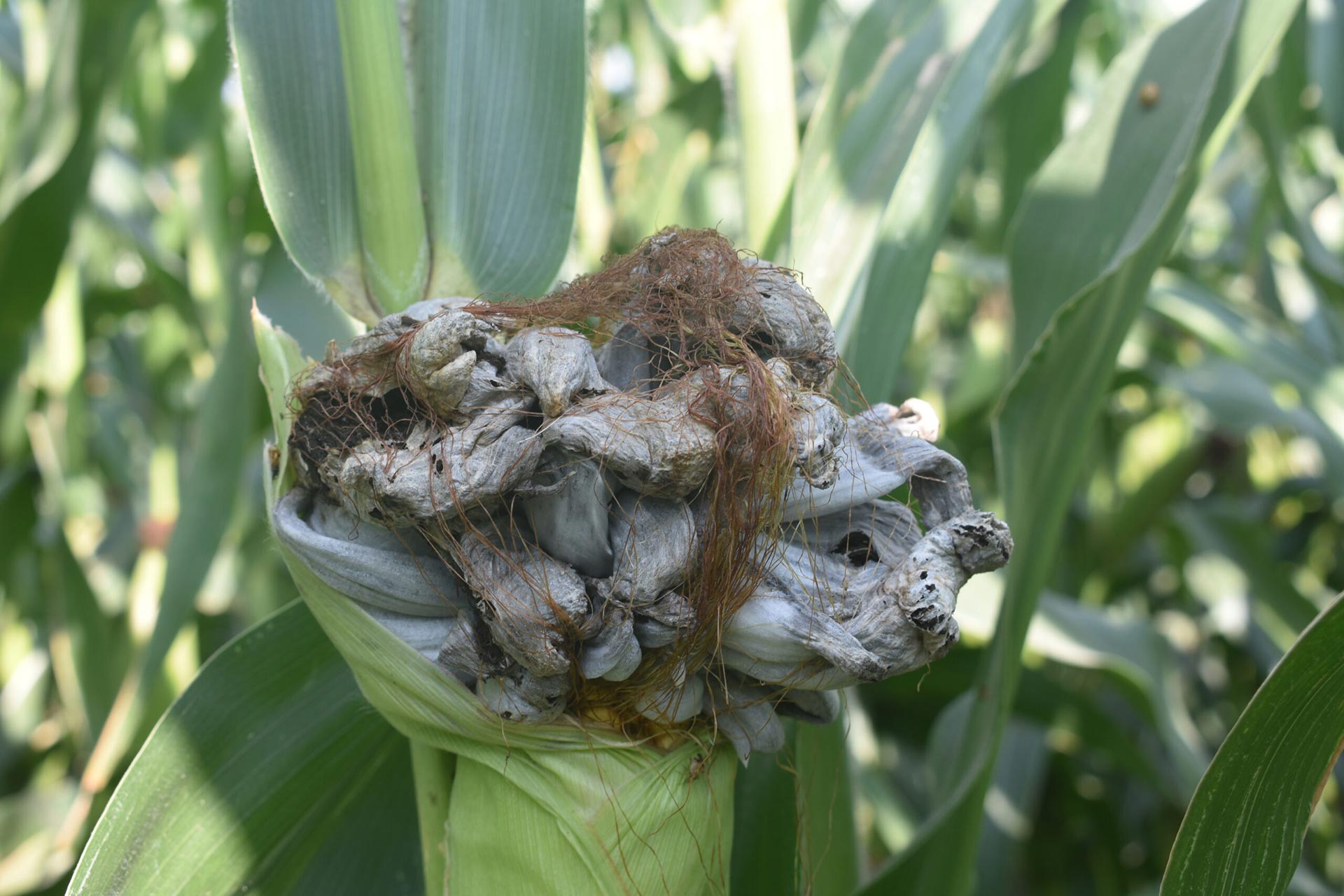
Learn to diagnose common smut, common rust, Goss's wilt and more. Read More

-
July 2, 2025
Learn to diagnose Anthracnose stalk rot, Fusarium stalk rot, Gibberella ear rot and more. Read More
-
April 25, 2025
Do you know where your wheat yield comes from? Understanding wheat yield components and how management choices influence each component… Read More

-
October 21, 2024
This document is designed as a guide for use in proactively scouting wheat fields to detect pests at or before… Read More

-
August 9, 2024
Manitoba growers know the devastating impacts of hail on wheat due to unstable spring and summer weather. Assessing hail damage… Read More


-
June 7, 2024
Armyworms (Mythimna unipuncta), sometimes called true armyworm, are a pest species that impact winter wheat, spring wheat, fall rye, barley,… Read More