The Fence Post: Spring/Summer 2025

Download The Fence Post: Spring/Summer 2025 (pdf)

Table of Contents


  • Message from the Chair: Investing in the future of agriculture
  • Message from the CEO: From stone collector to CEO
  • What’s new at MCA 
  • Five Questions with Katherine Stanley
  • Cover: 100 years of excellence
  • Research & Production
  • Market Development
  • 2025 Annual Report Summary
  • Advocacy

Manitoba Crop Alliance makes historic investment in Agriculture in the Classroom – Manitoba to grow future ag leaders

April 25, 2025 (Winnipeg, MB) Manitoba Crop Alliance (MCA) has announced a historic investment of $195,000 in Agriculture in the Classroom – Manitoba (AITC-M), an initiative set to expand classroom garden programs across the province. This bold funding will enable students to explore agriculture from seed to harvest through hands-on learning, deepening their connection with where their food comes from and the people who produce it.

At the heart of this initiative is MCA’s belief that agriculture is the greatest story never fully told. This investment is not merely about providing garden kits or curriculum enhancements, but rather about fostering public trust, advancing food literacy, and inspiring future leaders in agriculture.

MCA chair Jonothan Hodson reinforces the importance of early agriculture education by noting that “as fewer people grow up in rural areas, it has become especially important that young people gain an early understanding of farming and where their food comes from. We hope our investment will help equip students with that understanding and might even inspire them to consider careers in agriculture when they grow up.”

By sparking the wonder of watching a plant grow, these programs ignite lifelong learning and help students engage more meaningfully with the food they eat.

AITC-M, the lead organization behind these educational efforts, sees the MCA investment as a pivotal moment in the growth of its programming.

“This investment is truly game-changing for one of our most popular and in-demand programs,” says Katharine Cherewyk, executive director of AITC-M. “It will allow us to significantly expand our reach, connecting with more teachers and students in more communities across Manitoba. The classroom garden program offers a highly impactful, hands-on experience that brings agriculture to life in meaningful and memorable ways.”

Beyond its impact in the classroom, this transformative investment also marks a significant evolution in MCA’s relationship with AITC-M. What started as a base-level partnership has blossomed into a shared commitment to empower young people through education, curiosity, and community connection.

MCA vice-chair Sally Parsonage highlights the broader impact, stating that “agriculture education is crucial to the future of our industry. By supporting initiatives like the AITC-M classroom garden programs, we can ensure the next generation of Manitoba consumers appreciates and respects the important role farmers play in feeding people, here at home and around the world.”

Together, MCA and AITC-M are not just planting seeds in the ground—they are cultivating a vibrant future for agriculture in Manitoba, ensuring that the next generation is well-equipped to understand and sustain the food systems that support their communities.

To learn more about AITC-M and its transformative initiatives, please visit aitc.mb.ca. For additional information about MCA, please visit mbcropalliance.ca.

-30-

For more information, please contact:

Cole Christensen
Communications Manager
Manitoba Crop Alliance
403-589-3529
cole@mbcropalliance.ca

Tanis Chalmers
Engagement & Development Manager
Agriculture in the Classroom -Manitoba
204-522-7020
Tanis@aitc.mb.ca

About Manitoba Crop Alliance:
Manitoba Crop Alliance is a non-profit organization established Aug. 1, 2020, representing more than 7,700 farmer members. Manitoba Crop Alliance puts their farmer members first and strives to continuously improve the competitiveness and profitability of all crops represented by the organization by focusing on four main areas: research, agronomy, market access and development, and communications. It is through investment in these key areas that Manitoba Crop Alliance can ensure wheat, barley, corn, sunflower and flax are sustainable production choices for Manitoba farmers. For more information, visit mbcropalliance.ca.

About Agriculture in the Classroom-Manitoba:
Agriculture in the Classroom-Manitoba connects educators and students from K to 12 with curriculum-based programs, learning activities and educational resources designed to learn more about the important role agriculture plays in their everyday lives. AITC-M has been in operation since 1988 and is a member of Agriculture in the Classroom-Canada.

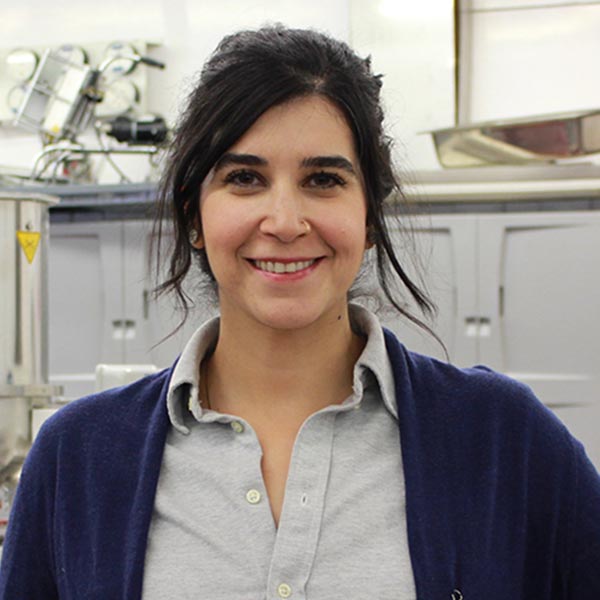
Maria Antonia Henriquez, research scientist, Agriculture and Agri-Food Canada

WEB_Maria-Antonia

Maria Antonia Henriquez is a research scientist in wheat pathology at Agriculture and Agri-Food Canada’s (AAFC) Morden Research and Development Centre (RDC).

Born and raised in Colombia, she completed her bachelor’s degree in agronomy and master’s degree in plant breeding at the National University of Colombia. She moved to Canada and received her PhD in plant pathology at the University of Manitoba (U of M), which was followed by postdoctoral research at the Brandon RDC.

Henriquez is the president-elect of the Canadian Phytopathological Society. She lives in Morden with her husband Oscar Molina, who is also a research scientist at the Morden RDC, leading the Integrated Crop Production Systems Agronomy program.

Where did you work before AAFC?

Before moving to Canada, I worked as a research assistant at the International Center for Tropical Agriculture (CIAT) for five years. CIAT is part of CGIAR, formerly the Consultative Group for International Agricultural Research, a global research partnership that unites international organizations engaged in research about food security.

What got you interested in this area of work?

My father had a big impact on my decision to get into agriculture research. At home, he had a large library with books and encyclopedias covering a wide range of topics, including science, philosophy, medicine and history. When I was nine or 10 years old, he challenged me to find different topics to discuss with him. During my childhood and adolescence, reading those books became my hobby. I spent hours in the library every day, and science and genetics got my attention. I also got inspired to do research with plants. During my bachelor courses and when I did my thesis, I became passionate about plant pathology and plant-microbial interactions at the molecular level. That was my starting point – I will always remember those years.

Tell us a bit about what you’re working on at the Morden RDC.

In my research program, we are using cutting-edge technologies and bioinformatic tools to find innovative and sustainable technologies to enhance genetic resistance and management strategies for Fusarium head blight (FHB) and leaf spot diseases in wheat. I work closely with breeders, plant pathologists, geneticists and agronomists to incorporate disease resistance into Canadian wheat cultivars and conduct applied plant pathology work in terms of crop rotations, development of biopesticides, digital agriculture and disease surveillance.

Many of these projects are funded partially by Manitoba Crop Alliance (MCA). I am leading the project “TEN-TG: A tilling and genome resource for FHB improvement” along with Curtis Pozniak from the Crop Development Centre at the University of Saskatchewan. In this project, we are working with AAC Tenacious, the only FHB-resistant wheat cultivar registered in Canada. We have identified AAC Tenacious mutants that are susceptible to FHB. As we are sequencing the genome of AAC Tenacious, we are going to compare the DNA sequence of those susceptible mutants with the genome of AAC Tenacious to pinpoint the exact mutations resulting in the susceptible phenotype. This comparison will tell us with a reasonable degree of confidence that those genes are in fact involved in resistance. We anticipate this research and the genetic resources we are developing will have an impact in the future with variety development in Canada.

In a digital agriculture project, I am collaborating with Chris Henry from the U of M and Chris Bidinosti from the University of Winnipeg in developing automated systems for detecting and assessing FHB in wheat using machine learning and imaging technologies. By creating both indoor and outdoor automatic systems, the project seeks to expedite the breeding of FHB-resistant wheat cultivars, a model that could be easily adapted to other cereal crops.

I am also leading a project with Steve Robinson where we are evaluating RNA-based fungicides for controlling FHB in field trials. We are currently testing the best combination of RNA-based solutions in yield plots and comparing those biopesticides with traditional fungicides.

What can you say about the value of farmers providing funding and support to your organization?

Funding and support from farmers are essential to fostering innovation, supporting research and development, and leads to the creation of more efficient farming techniques, crop varieties and pest management solutions. This funding is very important. It allows us to explore sustainable agriculture practices that can reduce chemical inputs, enhance soil health and preserve biodiversity. I am grateful for the support from farmers to my research.

How does that farmer funding and support directly benefit farmers?

The funding and support we receive from growers is a step closer to finding solutions to problems that affect the sustainability of the farms. The economic and social impacts extend beyond the individual grower, affecting the entire agricultural sector. By backing different research initiatives, farmers help us ensure their voices are heard and their challenges are addressed.

How do you spend your time outside of work?

Cycling, reading, gardening and listening to music.

What is the best part of your job?

There are so many things, but I would say the opportunity to work towards solutions for problems affecting Canadian agriculture. Particularly, working with important cereal diseases, such as FHB, but the most important is working in collaboration with a diverse group of people from AAFC, government partners, the private sector and universities.

Who or what inspired you?

My father. He is the most intelligent person I have met in my life, and his deep knowledge and understanding across various subjects was exceptional. Endless conversations about the power of the mind, critical thinking and personal values, like integrity, compassion, forgiveness, resilience and strong work ethic, shape who I am as a person. He was always challenging me and telling me to look at things from a different perspective or look for the answer in a different way. That has really stuck with me.

Manitoba Crop Alliance elects officer positions for 2025-26

March 13, 2025 (Carman, MB) – Manitoba Crop Alliance (MCA) is proud to introduce its new board executive for the upcoming year.

Earlier this week, Jonothan Hodson was elected as chair, Sally Parsonage was elected as vice-chair and Doug Martin was elected as secretary.

Hodson is a fifth-generation farmer from Lenore with a keen interest in on-farm research. His mixed farm features a wide variety of crops in any given year – including spring wheat, canola, soybeans, grain corn, barley, yellow peas and some forage crops – as well as a Black Angus cow/calf operation. Prior to becoming chair, Hodson served as MCA vice-chair for the last three years. He has been an MCA director since 2020 and was a director for one of MCA’s founding organizations (Manitoba Corn Growers Association) prior to the amalgamation. He is also a past director of the Manitoba Angus Association and a current director with the Valleyview Co-op.

“It’s an honour to be elected as chair by my peers on the board,” Hodson says. “MCA is spearheading valuable work to make Manitoba farmers more productive and sustainable. I look forward to continuing to help guide that work and the overall direction of the organization in my new role.”

Parsonage grew up on the family farm northeast of Baldur and became president of Parsonage Farms Ltd. in 2014 after she and her three siblings took over from their parents. Parsonage Farms grows a six-crop rotation of confectionary sunflowers, barley, beans, canola, oats and wheat. Prior to becoming vice-chair, Parsonage served as MCA secretary for one year. She also operates Air Greenway Ltd. with her family, an aerial spraying business that operates two spray planes during fungicide and desiccation season.

Martin is a fourth-generation farmer from East Selkirk, and co-owner and president of Martin Farms Ltd. He farms in partnership with his wife Laurie, as well as his cousin Gerry and Gerry’s wife Kelly. Together, they grow winter wheat, spring wheat, corn, soybeans, oats and canola. He is also a past chair of Winter Cereals Manitoba, a board member for Western Grains Research Foundation and a member of the advisory council for Keystone Agricultural Producers.

MCA would like to thank outgoing chair Robert Misko for his leadership and dedication during his time on the executive.

For more information about MCA’s board of directors and crop committees, visit mbcropalliance.ca.

-30-

For more information, please contact:

Pam de Rocquigny
Chief Executive Officer
Manitoba Crop Alliance         
204-745-6661
pam@mbcropalliance.ca

About Manitoba Crop Alliance:
Manitoba Crop Alliance is a non-profit organization established Aug. 1, 2020, representing more than 7,700 farmer members. Manitoba Crop Alliance puts their farmer members first and strives to continuously improve the competitiveness and profitability of all crops represented by the organization by focusing on four main areas: research, agronomy, market access and development, and communications. It is through investment in these key areas that Manitoba Crop Alliance can ensure wheat, barley, corn, sunflower and flax are sustainable production choices for Manitoba farmers. For more information, visit 
mbcropalliance.ca.

Research on the Farm – Barley Seeding Rate Trial Summary

Manitoba Crop Alliance’s (MCA) Research on the Farm (ROTF) program conducts scientific research with farmer members using replicated strip trials on commercial fields. Farmer co-operators use their own equipment and management practices to conduct this research. Research projects are developed to investigate current and pressing agronomic questions and provide site-specific answers. More information about the ROTF program and all trial results can be found here.

Barley genetics for both malting and feed varieties have improved over the last decade. Evaluating current seeding rates for new barley varieties was necessary to understand if target plant stand densities are optimized for both grain yield and quality. The purpose of this trial was to investigate the economic and agronomic impact of farmers increasing and decreasing their target plant stands. This was done by having decreased and increased seeding rate treatments compared to the farmers’ normal.

Over the past three years (2022-24) MCA conducted 17 barley seeding rate trials. Throughout the trial period, seeding rates ranged from 78-225 lb/ac. Eleven sites planted feed barley and six sites planted malting barley. CDC Austenson (feed) and AAC Connect (malting) were the most planted varieties

At eight of 17 sites, the seeding rate had a significant impact on plant density. In all cases except one, the highest seeding rate resulted in the highest plant population.

Figure 1. Summary of average barley plant density by seeding rate for all trial sites from 2022 – 2024. Note: Letters indicate significant differences between treatments.

Higher plant densities have been linked to more uniform maturing crops, with increased crop protection product efficiency. Furthermore, increased plant density is an important cultural practice to improve crop weed competition.

Significant yield differences were found at two of the 17 sites (12 per cent). At site BP03-2023, the yields from the normal and high seeding rates were significantly higher than the low seeding rate treatment. At BP02-2024, the low seeding rate treatment was the highest yielding.

Figure 2. Summary of average barley yield by seeding rate for all trial sites from 2022 – 2024. Note: Letters indicate significant differences between treatments.

Overall, at most sites, grain yield was not affected by a change in seeding rate from normal practices. The data from these trials suggests that these farmer participants have a good understanding of the optimal seeding rate for their farm. No statistical analysis was conducted on grain quality.

One last piece of the research puzzle is to understand the impact on profit from changing your seeding rate. The results of a simple profit analysis can be found in Table 1. At 11 of the 17 sites (65 per cent), the lowest seeding rate was most profitable. The higher seeding rates were found to be economical at only two sites. This analysis is looking at the cost of seed only; no other parameters, such as inputs and equipment costs, were included in these calculations.

Table 1. Economic analysis of all trial sites from 2022-2024.

Note: Seed costs are based on Manitoba Agriculture 2024 Cost of Production Guidelines ($12/bu). Barley prices based on Manitoba Agriculture’s Grain and Oilseed price report ($4.63/bu). Net profit calculated based on seeding costs only.

Tone Ag Consulting carries out MCA’s ROTF trials in all six of our crop-types. They assist the farmer with plot planting and harvesting. They also capture and collect key information throughout the growing season, including soil samples, growth stage notes and precipitation data.

MCA-funded research at the 2024 Manitoba Agronomists’ Conference

On Dec. 11 and 12, 2024, Manitoba agronomists met to discuss the latest developments in pest, crop and soil management. This year, the conference theme was “Strategies for Winning Agronomic Battles: A Case Study on Herbicide Resistant Weeds.” Much of the research shared at the Manitoba Agronomists’ Conference was funded in part by Manitoba Crop Alliance (MCA). Below is a summary of the posters shared that feature MCA-funded research.

Crop Management

Climate and Fall Shoulder Cover Crops: Where Do They Intersect?  
Emmanuel Agyapong, Afua Mante, Yvonne Lawley, Francis Zvomuya, University of Manitoba

            (Abstract) (Poster PDF)

Response of lodging-related morphological traits of wheat to nitrogen fertilization and plant growth regulator 
Gurnoor Kaur, Ginelle Grenier, Douglas J. Cattani, Pham Anh Tuan, Belay T. Ayele, University of Manitoba

            (Abstract) (Poster PDF

Genomic analysis of preharvest sprouting associated alpha amylase activity in barley  
Rui Wang, Gurkamal Kaur, Belay T Ayele, University of Manitoba, Marta S Izydorczyk, Canadian Grain Commission, Dean Spaner, University of Alberta, Aaron D Beattie, University of Saskatchewan, Ana Badea, Agriculture and Agri-Food Canada

            (Abstract) (Poster PDF)

Identification of genetic loci for lodging resistance in spring wheat (Triticum aestivum L.) 
Ginelle Grenier, Curt McCartney, Belay T. Ayele, University of Manitoba, Muhammad Iqbal, Dean Spaner, University of Alberta, Gavin Humphreys, Agriculture and Agri-Food Canada

            (Abstract) (Poster PDF)

Optimizing Pea Production in Manitoba Rotations: Yield and Quality  
Ramona Mohr, Mohammad Khakbazan, Yong Min Kim, Maria Antonia Henriquez, Monika Gorzelak, Agriculture and Agri-Food Canada

            (Abstract) (Poster PDF)

On-Farm Understandings: Assessing the Impact of Seeding Rates on Wheat and Sunflower Grain Yield and Quality through On-Farm Trials  
Andrew Hector, Morgan Cott, Manitoba Crop Alliance

            (Abstract) (Poster PDF)

Are Intercropped Cover Crops Compatible with Canola Weed Management?  
Janelle Gawiak, Yvonne Lawley, University of Manitoba, Maryse Bourgault, University of Saskatchewan, Linda Gorim, University of Alberta

            (Abstract) (Poster PDF)

Pest Management

Effect of integrated crop management strategies on weed control and crop yield in wheat  
Uthpala Ekanayake, Rob Gulden, Jonathan Rosset, Dilshan Benaragama, University of Manitoba, Chris Willenborg, University of Saskatchewan

            (Abstract) (Poster PDF)

Fusarium Head Blight Risk Mapping Tool – 2024 Summary  
Paul Bullock, Timi Ojo, Manasah Mkhabela, Jamie Wan, Taurai Matengu, Henrique Carvalho Dept of Soil Science, University of MB, MB Agriculture

            (Abstract) (Poster PDF)

Assessing crop and weed management impacts on wheat crop and weeds through drone-based remote sensing 
Shirmith Nirmal, Rob Gulden, Dilshan Benaragama, University of Manitoba, Steve Shirtliffe, Christian Willenborg, University of Saskatchewan

            (Abstract) (Poster PDF)

Soil Management

Effects of Tile Drainage on Soil Salinity in Southwestern Manitoba Soils  
David Whetter, AgriEarth Consulting Ltd, Bruce Shewfelt, PBS Water Engineering Ltd

            (Abstract) (Poster PDF)

Co-Composting with Struvite: Enhancing Phosphorus Availability in Low-P Prairie Soils  
Amanda Desrochers, Inoka Amarakoon, Joanne Thiessen Martens, University of Manitoba

            (Abstract) (Poster PDF)

Linking Optimal Nitrogen Management Practices to Soil Moisture Conditions
Carlie Johnston, Xiaopeng Gao, Rotimi Ojo, University of Manitoba, Ramona Mohr, Agriculture and Agri-Food Canada

            (Abstract) (Poster PDF)

During the soil management session, MCA whole farm specialist Ashley Ammeter also presented on the topic of crop residue management. A recording of that presentation is available on the University of Manitoba Faculty of Agricultural and Food Sciences YouTube Channel.

For a full list of poster presentations and speakers from the 2024 conference, visit the Manitoba Agronomists’ Conference website. Recordings of all presentations from the conference are available on the University of Manitoba Faculty of Agricultural and Food Sciences YouTube Channel.

Thank you to the conference partners, University of Manitoba, Manitoba Agriculture and the Prairie Certified Crop Advisor Board, for hosting an excellent conference!

Meet Manitoba Crop Alliance’s 2024-25 post-secondary bursary recipients

MCA_2024-25 PS Bursary Recipients Graphic_X

Manitoba Crop Alliance (MCA) is proud to support agriculture’s next generation. MCA’s bursary program is designed to assist with the financial needs of students pursuing education in a field that will benefit the agriculture sector.

Six post-secondary students from Manitoba have been awarded with MCA 2024-25 bursaries valued at $2,000 each. The 2024-25 bursary recipients are Mika Cleave from Ochre River, Noah Kaminsky from Brunkild, Chad Pouteau from Mariapolis, Layne Thompson from Ochre River, Jadyn Wiebe from Plum Coulee, and Abby Mazier from Justice.

“Educating and inspiring the next generation is a strategic priority for our organization,” says MCA chair Robert Misko. “Each of our bursary recipients has chosen to pursue their passion and expand their knowledge, and I hope they will eventually use that knowledge and passion to advance our industry.”

Bursary applicants needed to meet the following criteria:

  • Have completed a minimum of one year (two terms) of post-secondary education at the college or university level (diploma or degree) and are enrolled full-time for the 2024-25 school year in an agricultural program within Canada.
  • Have achieved a minimum cumulative grade point average (GPA) of 3.0.
  • Have an interest in wheat (spring or winter), corn, barley, flax or sunflower crops, or agriculture in general, as demonstrated in a brief, one-page letter.
  • Are from a farm that is a member in good standing with MCA
  • Have not previously been awarded an MCA post-secondary bursary (past high school bursary recipients remain eligible for a post-secondary bursary).

An independent selection committee was contracted to evaluate the applicants based on their connection to or interest in agriculture, explanation of why they decided to enrol in an agriculture-related post-secondary program, how they hope to benefit the agriculture industry once they have graduated and are in the workforce, and their academics and writing skills.

This year, the selection committee included Curtis Cavers, an agronomist with Agriculture and Agri-Food Canada based in Portage la Prairie, and Loveleen Kaur Dhillon, the agronomist in residence for special crops at the University of Manitoba.

Born and raised in southern Manitoba, Cavers holds a bachelor of science in agriculture, majoring in soil science, and a master’s degree from the University of Manitoba. Prior to assuming her current role at the University of Manitoba, Dhillon completed her PhD in plant science at the University of Saskatchewan and was working as a post-doctoral fellow.

Thank you to the selection committee for evaluating the bursary applications and congratulations to the 2024-25 bursary recipients!

Meet the MCA 2024-25 bursary recipients


Manitoba Crop Alliance awards six post-secondary students with 2024-25 bursaries

Feb. 26, 2025 (Carman, MB) – Manitoba Crop Alliance (MCA) has awarded six post-secondary students from Manitoba with MCA 2024-25 bursaries valued at $2,000 each. The six bursary recipients are Mika Cleave from Ochre River, Noah Kaminsky from Brunkild, Chad Pouteau from Mariapolis, Layne Thompson from Ochre River, Jadyn Wiebe from Plum Coulee, and Abby Mazier from Justice.

“Educating and inspiring the next generation is a strategic priority for our organization,” says MCA chair Robert Misko. “Each of our bursary recipients has chosen to pursue their passion and expand their knowledge, and I hope they will eventually use that knowledge and passion to advance our industry.”

MCA established these bursaries to assist with the financial needs of students who are enrolled in a post-secondary agricultural program within the province of Manitoba.

An independent selection committee was contracted to evaluate the applicants based on their connection to or interest in agriculture, explanation of why they decided to enrol in an agriculture-related post-secondary program, how they hope to benefit the agriculture industry once they have graduated and are in the workforce, and their academics and writing skills.

This year, the selection committee included Curtis Cavers, an agronomist with Agriculture and Agri-Food Canada based in Portage la Prairie, and Loveleen Kaur Dhillon, the agronomist in residence for special crops at the University of Manitoba.

For more information about the MCA 2024-25 bursary program and to read biographies of the recipients, visit mbcropalliance.ca.

-30-

For more information, please contact:

Cole Christensen
Communications Manager
Manitoba Crop Alliance
403-589-3529
cole@mbcropalliance.ca

About Manitoba Crop Alliance:
Manitoba Crop Alliance is a non-profit organization established Aug. 1, 2020, representing more than 7,700 farmer members. Manitoba Crop Alliance puts their farmer members first and strives to continuously improve the competitiveness and profitability of all crops represented by the organization by focusing on four main areas: research, agronomy, market access and development, and communications. It is through investment in these key areas that Manitoba Crop Alliance can ensure wheat, barley, corn, sunflower and flax are sustainable production choices for Manitoba farmers. For more information, visit 
mbcropalliance.ca.

Manitoba Crop Alliance launches 2025 APP cash advance program

Feb. 25, 2025 (Carman, MB) – Manitoba Crop Alliance (MCA) is now accepting applications for 2025 Advance Payments Program (APP) cash advances, with funds to be issued starting April 1.

The APP is a federal loan program administered by MCA. It offers Canadian farmers marketing flexibility through interest-free and low-interest cash advances. Under the program, eligible farmers are eligible to receive up to $1 million, with the Government of Canada paying the interest on the first $100,000 of the advance for the 2025 program year.

For the 2025 program year, MCA’s interest rate on interest-bearing cash advances is prime – 0.50 per cent. This interest-bearing rate is competitive with other APP administrators, major banks and credit unions. MCA is also maintaining a low, one-time application fee of $250 for the 2025 program year.

To correspond with the start of the 2025 spring program, MCA has launched a new APP cash advance website: mcacashadvance.ca. The site was designed to improve the user experience for APP cash advance clients, with a streamlined layout and a new client portal that will be available soon.

“The new website is a one-stop-shop for our cash advance clients, with application forms, key deadlines and other important information presented in a format that is easier than ever to navigate,” says MCA COO Darcelle Graham. “This is just one more way we can ensure our clients receive the exceptional service they deserve when they come to us for a cash advance.”

To apply for an advance under the 2025 program year, farmers can visit mcacashadvance.ca, or phone the MCA office at 1-204-745-6661 or toll-free 1-877-598-5685 to request an application form.

MCA also continues to process applications for the 2024 program year on over 35 crop kinds and honey until March 14.

If farmers would like to be notified regarding APP-specific information, please email hello@mbcropalliance.ca to be added to the subscriber list. More information about the APP cash advance program can be found at mcacashadvance.ca.

-30-

For more information, please contact:

Darcelle Graham
Chief Operating Officer
Manitoba Crop Alliance
204-745-6661
darcelle@mbcropalliance.ca

About Manitoba Crop Alliance:
Manitoba Crop Alliance is a non-profit organization established Aug. 1, 2020, representing more than 7,700 farmer members. Manitoba Crop Alliance puts their farmer members first and strives to continuously improve the competitiveness and profitability of all crops represented by the organization by focusing on four main areas: research, agronomy, market access and development, and communications. It is through investment in these key areas that Manitoba Crop Alliance can ensure wheat, barley, corn, sunflower and flax are sustainable production choices for Manitoba farmers. For more information, visit 
mbcropalliance.ca.

Hiroshi Kubota, research scientist, Agriculture and Agri-Food Canada

Follow @HiroshiKubota2 on X.

Hiroshi Kubota is a research scientist in sustainable cropping systems at Agriculture and Agri-Food Canada’s (AAFC) Lacombe Research and Development Centre (RDC). Originally from Japan, he earned his bachelor of science in agriculture at the Tokyo University of Agriculture, focusing on tropical agriculture.

Kubota lives in Lacombe, AB, with his wife and two young daughters.

Where did you work before AAFC?

After I graduated from my undergraduate degree, I travelled for a couple of years. I went to Papua New Guinea and Australia before returning to Japan to save money for my graduate studies in Canada. I came to Canada in 2009 and did my master’s degree in plant science at the University of Alberta. After I completed my master’s, I continued my PhD there before starting my current position with AAFC.

What got you interested in this area of work?

My uncle’s volunteer work as a science teacher in Africa influenced my interest in agriculture. Growing up without the internet, I was fascinated by his stories and the photos he shared – both the positive and challenging aspects of life in Africa.

One story about children suffering from poverty and malnutrition made me want to help. The first thing that came to mind was medicine, but I quickly realized I did not like the sight of blood.

That is when I started to think about agriculture as a career and chose to study in Japan. I was not from a farm family. Everything I learned about agriculture at university fascinated me, and I enjoyed my time there. After graduation, I was ready to volunteer in Africa when the program was cancelled. I was still interested in agriculture and decided to come to Canada to learn more about crop production here.

Tell us a bit about what you’re working on at AAFC.

In my daily work at AAFC, I spend time developing new research ideas that resonate with current and future challenges that farmers face. I make it a priority to connect with colleagues and stakeholders through various channels. I feel fortunate to work with a dedicated and experienced technical team, which enables me to focus on the broader aspects of our research instead of needing to check the plots every day. Together, we are trying to address the issues.

Now I’m the lead of the GROW Barley framework for the next seven years. My focus is on improving barley agronomy in Western Canada. Good agronomy is critical to improving competitiveness with other crops. Significant investments by industry and government are made in variety development, but the adoption of those new varieties is slow compared to other crops due to the complexity of the barley industry.

There are several barley agronomy studies underway in Western Canada. Through the GROW Barley framework, I intend to address gaps in existing or ongoing barley agronomy research activities. The first GROW Barley project was supported for funding, and I am excited about starting the project this spring.

Outside of GROW Barley, I am leading three barley-related projects this year and am grateful for the industry’s support for this research. The first project focuses on determining optimal seeding rates of five new feed barley varieties from different genetic backgrounds, including varieties from Western Crop Innovation, the University of Saskatchewan, AAFC Brandon and Nutrien. The other two projects are malting barley studies evaluating agronomic practices to achieve uniform maturity.

What can you say about the value of farmers providing funding and support to your organization?

Support and funding from farmers are invaluable to me as a research scientist. I’m fortunate to be in Western Canada, where both industry partners and farmers actively contribute to advancing research. This funding makes it possible for me to conduct work that directly benefits farmers, and I am deeply grateful for the trust and support I have received. It motivates me to ensure the research I conduct delivers practical, meaningful outcomes for the agricultural community.

How does that farmer funding and support directly benefit farmers?

When considering research projects, I review research priorities from crop commissions and, when possible, speak directly with farmers. Since the crop commissions represent farmers, I trust that I’m hearing their key challenges. My focus is on developing research ideas that are practical and beneficial, ensuring the outcomes have a direct impact on the farm.

How do you spend your time outside of work?

Outside of work I like to do physical activities, although with two little kids it can be hard to find time for hobbies! I love skiing and swimming. I used to be on a competitive swimming team from Grade 6 to 12 in Japan.

What is the best part about your job?

Connecting with stakeholders in the industry. As a relatively new research scientist, and a non-Canadian-born one, it is important for me to understand Canadian agricultural systems as much as I can. Farmers, industry stakeholders, commodity organizations and colleagues are always welcome to share their thoughts, experiences and challenges. This collaboration helps me to provide the best scientific information possible.

How do you celebrate agriculture?

I love eating and cooking, and I try to eat locally grown crops as much as I can. My kids are two and five, and we try to let them experience any agriculture-related activities as much as we can.

What’s your favourite movie?

I am a huge fan of Star Wars.

Follow @HiroshiKubota2 on X.

Top