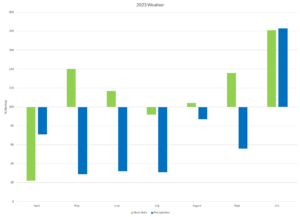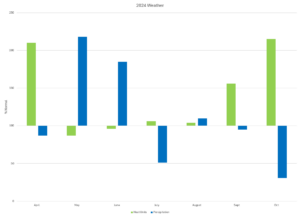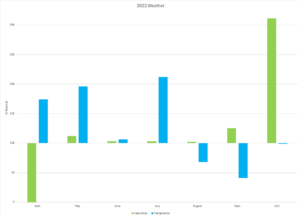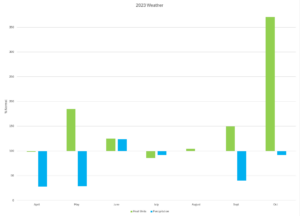
Malt Barley Protein and Nitrogen rates – Eastern

Background Information

Newer malting barley varieties have been released and are starting to account for many of the seeded acres. Understanding the new varieties fertility requirements, specifically for nitrogen is crucial to optimize these varieties for yield and malt selection.

 Results

These are preliminary results. Since 2024, enough nitrogen was supplied to the malting barley at the majority of trial sites using farmers’ normal fertility practices, as grain yields were not significantly improved with additional nitrogen fertilizer.

Grain quality analysis for malt selection was assessed by CMBTC. Four out of eight sites had grain protein levels below12.5 per cent. There was an overall trend of increased grain protein with higher nitrogen rates, but this trend was only significant at one site (2024 – BV03). At most sites (88 per cent), kernel plumpness was not significantly impacted by nitrogen rate. At one site (2024-BV01), there was a significant decrease in kernel plumpness with increased nitrogen supplied, although the reduction did not result in grain plumpness going below 85%, the threshold for malt selection.

Loading


Weather Info

Malt Barley Protein and Nitrogen rates – Western

Background Information

Newer malting barley varieties have been released and are starting to account for many of the seeded acres. Understanding the new varieties fertility requirements, specifically for nitrogen is crucial to optimize these varieties for yield and malt selection.

 Results

These are preliminary results. Since 2024, enough nitrogen was supplied to the malting barley at the majority of trial sites using farmers’ normal fertility practices, as grain yields were not significantly improved with additional nitrogen fertilizer.

Grain quality analysis for malt selection was assessed by CMBTC. Four out of eight sites had grain protein levels below12.5 per cent. There was an overall trend of increased grain protein with higher nitrogen rates, but this trend was only significant at one site (2024 – BV03). At most sites (88 per cent), kernel plumpness was not significantly impacted by nitrogen rate. At one site (2024-BV01), there was a significant decrease in kernel plumpness with increased nitrogen supplied, although the reduction did not result in grain plumpness going below 85%, the threshold for malt selection.

Loading


Weather Info

Malt Barley Protein and Nitrogen Rates – All

Background Information

Newer malting barley varieties have been released and are starting to account for many of the seeded acres.

Understanding the new varieties fertility requirements, specifically for nitrogen is crucial to optimize these varieties for yield and malt selection.

 Results

These are preliminary results. Since 2024, enough nitrogen was supplied to the malting barley at the majority of trial sites using farmers’ normal fertility practices, as grain yields were not significantly improved with additional nitrogen fertilizer.

Grain quality analysis for malt selection was assessed by CMBTC. Four out of eight sites had grain protein levels below12.5 per cent. There was an overall trend of increased grain protein with higher nitrogen rates, but this trend was only significant at one site (2024 – BV03). At most sites (88 per cent), kernel plumpness was not significantly impacted by nitrogen rate. At one site (2024-BV01), there was a significant decrease in kernel plumpness with increased nitrogen supplied, although the reduction did not result in grain plumpness going below 85%, the threshold for malt selection.

Loading


Barley Seed Treatment – Parkland

Result

No significant differences in in plant density were found between the treated and untreated plots.

Seed treatment had no significant impact on plant density or yield. As a result, treatments including a seed treatment reduced profit by $5-10/ac.

 Summary

Understanding seed source, variety disease resistance ratings, field disease history, length and diversity of crop rotations, and seeding practices will help you evaluate disease risks and the need for seed treatments. Use a similar strategy to determine if an insecticide seed treatment is also necessary.

Spring weather conditions can be variable by year, a broad-spectrum seed treatment can help mitigate disease risk.

Loading


Weather Info

Barley Seed Treatment – Western

Result

No significant differences in in plant density were found between the treated and untreated plots.

Seed treatment had no significant impact on plant density or yield. As a result, treatments including a seed treatment reduced profit by $5-10/ac.

 Summary

Understanding seed source, variety disease resistance ratings, field disease history, length and diversity of crop rotations, and seeding practices will help you evaluate disease risks and the need for seed treatments. Use a similar strategy to determine if an insecticide seed treatment is also necessary.

Spring weather conditions can be variable by year, a broad-spectrum seed treatment can help mitigate disease risk.

Loading


Weather Info

Barley Seed Treatment – Central

Result

No significant differences in in plant density were found between the treated and untreated plots.

Seed treatment had no significant impact on plant density or yield. As a result, treatments including a seed treatment reduced profit by $5-10/ac.

 Summary

Understanding seed source, variety disease resistance ratings, field disease history, length and diversity of crop rotations, and seeding practices will help you evaluate disease risks and the need for seed treatments. Use a similar strategy to determine if an insecticide seed treatment is also necessary.

Spring weather conditions can be variable by year, a broad-spectrum seed treatment can help mitigate disease risk.

Loading


Weather Info

Barley Seed Treatment-All

Result

No significant differences in in plant density were found between the treated and untreated plots.

Seed treatment had no significant impact on plant density or yield. As a result, treatments including a seed treatment reduced profit by $5-10/ac.

 Summary

Understanding seed source, variety disease resistance ratings, field disease history, length and diversity of crop rotations, and seeding practices will help you evaluate disease risks and the need for seed treatments. Use a similar strategy to determine if an insecticide seed treatment is also necessary.

Spring weather conditions can be variable by year, a broad-spectrum seed treatment can help mitigate disease risk.

Loading


Barley Seeding Rate- All

Result

At 8 of 17 sites, seeding rate had a significant effect on plant counts. In these cases, the highest seeding rates resulted in the highest plant population. At 2 of 17 trial sites there were significant differences between seeding rates, however differences were marginal and did not result in increased profit, in once case the lower seeding rate resulted in higher overall yield . Overall, at most sites, grain yield was not affected by a change in seed rate from normal practice.

 Summary

Manitoba farmers are achieving recommended plant densities of 22-25 plant/ft2. Manitoba farmer have a good idea of the appropriate seeding rate on their farm.

Additional Considerations: Lower seeding rate and plant populations can reduce crop competitiveness to field pest. Uniformity of crop maturity will be more variable with lower seeding rates, reducing crop protection product efficiencies.

Loading


Barley Seeding Rate- Interlake

Result

At 1 of 3 sites, seeding rate had a significant effect on plant counts. None of the sites showed significant difference in yield that would result in overall profit increase. Overall, at most sites, grain yield was not affected by a change in seed rate from normal practice.

 Summary

Manitoba farmers are achieving recommended plant densities of 22-25 plant/ft2. Manitoba farmer have a good idea of the appropriate seeding rate on their farm.

Additional Considerations: Lower seeding rate and plant populations can reduce crop competitiveness to field pest. Uniformity of crop maturity will be more variable with lower seeding rates, reducing crop protection product efficiencies.

Loading


Weather Info


Barley Seeding Rate- Eastern

Result

At 2 of 6 sites, seeding rate had a significant effect on plant counts. None of the sites showed significant difference in yield that would result in overall profit increase. Overall, at most sites, grain yield was not affected by a change in seed rate from normal practice.

 Summary

Manitoba farmers are achieving recommended plant densities of 22-25 plant/ft2. Manitoba farmer have a good idea of the appropriate seeding rate on their farm.

Additional Considerations: Lower seeding rate and plant populations can reduce crop competitiveness to field pest. Uniformity of crop maturity will be more variable with lower seeding rates, reducing crop protection product efficiencies.

Loading


Weather Info

Top