Blog: Meet a Researcher

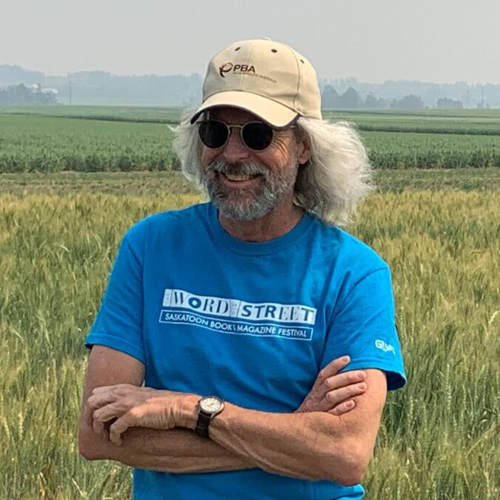
Rob Graf, winter wheat breeder, Agriculture and Agri-Food Canada

Follow @grafwheat on Twitter!

Rob Graf is a winter wheat breeder with Agriculture and Agri-Food Canada (AAFC) at the Lethbridge Research and Development Centre. Rob completed his bachelor of science in agriculture at the University of Saskatchewan (USask), specializing in agronomy, and earned his PhD under the supervision of Gordon Rowland at the USask Crop Development Centre. Rob began his career in 1987 as a wheat breeder with the Saskatchewan Wheat Pool and was there for 12 years. During that time, he was part of a team that developed three Canada Western Red Spring (CWRS) wheat varieties, including McKenzie and Prodigy. In 1999, Rob joined AAFC as a winter wheat breeder. He currently lives in Lethbridge with his wife, Linda, and is looking towards retirement in October.

Tell us a bit about what you’ve worked on at AAFC throughout your career.

Our mandate is to develop improved winter wheat varieties for Western Canada. In the AAFC breeding program, we’ve concentrated on varieties for the Canada Western Red Winter (CWRW) milling class and, to a lesser extent, feed varieties for the Canada Western Special Purpose class. In a general sense, the objectives of the breeding program are to improve agronomics, disease resistance and end-use quality. The agronomic issues we focus on are increased yields, improved winter hardiness (both prime considerations), increased lodging resistance (strong straw in a range of height options), a range in maturity and good test weight.

As for disease resistance, in Western Canada there are five priority-one diseases that must be addressed for variety registration. These include the rusts (stem, leaf and stripe), Fusarium head blight (FHB) and common bunt. Disease resistance was one of the objectives I felt really needed to be concentrated on. In 1999, disease resistance was only starting to be deployed in the winter wheat varieties being registered. Farmers had to make the choice to grow a variety with leaf and stem rust resistance (important for Manitoba), or a variety with bunt resistance (particularly important in southern Alberta). At that time, FHB wasn’t on the radar for winter wheat, but it was a major issue in spring wheat. That’s one of the reasons why winter wheat acres in Manitoba exploded in the 2000s (the escape from FHB and orange wheat blossom midge) along with the variety CDC Falcon, which had short, strong straw, early maturity and high yields; farmers liked it. Today, we have varieties that have good resistance to all five priority-one diseases and are also working on resistance to other diseases and pests. It took about 20 years, but we’ve been able to get there through some really excellent collaborations with nurseries and testing sites across Western Canada.

A key element to developing varieties that work well in Manitoba was a collaboration with Anita Brûlé-Babel at the University of Manitoba. Her team planted a large leaf-and-stem-rust screening nursery for us that I rated and made selections from every year. We don’t normally see leaf and stem rust in Alberta, so that made a huge difference for Manitoba farmers. The other critical aspect of our collaboration was the provision of an FHB screening nursery. Without that, we couldn’t have made the advances that we did. For example, Emerson, which is still a popular variety in Manitoba, was identified as an FHB-resistant line in those nurseries. Without that nursery, we wouldn’t have known. It’s collaborations like these that are so crucial to the success of any breeding program.

Quality is the third pillar of our breeding program. When I started, the major improvements CWRW needed included increased protein concentration, gluten strength and flour water absorption. Over time, we’ve gradually increased protein concentration and gluten strength, and we’re finally starting to make progress on flour water absorption. My hope is that over the next few years, we will see a substantial increase in winter wheat flour water absorption.

Upon my retirement, Harwinder Sidhu will be taking over the winter wheat breeding program. I’ve been mentoring him for the last year, getting him up to speed on the program, and I think he’ll do an excellent job. He is a recent PhD graduate from the University of Guelph, where his PhD project was focused on genomic selection for FHB resistance in winter wheat.

What got you interested in this area of work?

I grew up on a farm near Humboldt, SK. I remember when my dad changed varieties from Neepawa to Napayo and then Sinton. It was intriguing to me that Napayo had awns (most varieties at the time were awnless), as I thought only barley was awned. A couple of years later, we grew Sinton, which was interesting because it had better leaf rust resistance, which I could actually see in the field. I also remember a wet harvest period in the mid-1970s when Sinton sprouted in the swath and Napayo didn’t. It was those genetic differences in the varieties that got me intrigued, and I guess the rest is history.

What is the best part about your job?

There are a lot of things! I really enjoy seeing the genetic variability when we cross various parents. I also like the interaction with farmers and the industry to hear what their problems and concerns are, and then trying to come up with breeding solutions to address them. When I’m able to deliver a variety that addresses at least some of those concerns, and it becomes accepted and farmers like the variety, it’s a great feeling.

What can you say about the value of farmers providing funding and support to your organization?

The funding farmers provide to breeding programs is absolutely vital to their success. When an industry group approaches AAFC with issues they need to have addressed and are willing to invest, it means a lot. Governments have many priorities for funding, and that goes for farmers as well. The funds received for breeding and pathology programs, and some of the more basic research, are absolutely vital to the successes that we’ve had and to the continued success and prosperity of the industry and Canada.

How does that farmer funding and support directly benefit farmers?

The funding support has hugely impacted the number and size of populations that I can handle as a breeder. Breeding is a numbers game. You need large numbers to find those rare segregants that bring together all of the traits that are needed by the industry. It allows us to handle a lot more material, gives us the ability to put trials at important locations, and it supports disease screening nurseries and quality analysis. From a Manitoba perspective, that has been crucial in developing varieties with resistance to FHB, stem rust and leaf rust.

What is one of your major accomplishments over your career?

Within the winter wheat program, one of the major wins was the registration of Emerson. Essentially, we moved from most winter wheat varieties being quite susceptible to FHB, to the first wheat in Canada that was rated resistant. That was certainly a bit of good luck, but as breeders we need to be able to set things up to identify those advances.

What opportunities lie ahead for winter wheat breeding?

Winter wheat has a bright future. From the standpoint of climate change over the medium term, it’s likely that our winters will get milder. Winter wheat provides the opportunity to use early spring moisture that farmers are waiting to dry off prior to spring seeding. Why not use that moisture to build yield? With the possibility of hotter summers, because the crop matures earlier, it may also be able to escape some of the heat stress we get in late July and August. It certainly has an excellent opportunity to fit into our environment, perhaps somewhat better than it has in the past. Not to say that it doesn’t fit now, but I think as time goes on, farmers will see it as a more attractive option. Or at least I sure hope so!

What are you looking forward to most about retirement?

There is a number of things. I am looking forward to taking a break, visiting more with family and friends, and my wife and I enjoy camping and plan to do more of that together. Our granddaughter just turned one, so we look forward to spending more time with her, as well. We’d also like to do some travelling in Canada and the United States, and longer term in Europe and other places.

Who or what inspires you?

There are a lot of people who inspire me! My colleagues and all of the important work that they are doing inspires me every day. Young people and their optimism for the future also inspires me.

What is the best piece of advice you’ve received?

There are a couple of things, both from my dad. “Pray and live like you’ll die tomorrow; work like you’ll live forever.” The other was, “If you see something that needs doing, don’t wait for someone else to do it.” Those are gems of wisdom I can’t argue with.

Follow @grafwheat on Twitter!

To meet other researchers involved in winter wheat breeding and agronomy, check out our profiles on Curt McCartney and Brian Beres!

Eric Johnson, Research Officer, University of Saskatchewan

Raju Soolanayakanahally, Research Scientist, Agriculture and Agri-Food Canada

Follow @raju_aafc  on Twitter!

Based in Saskatoon, Raju Soolanayakanahally, Ph.D., is a Research Scientist with Agriculture and Agri-Food Canada (AAFC). Raju completed both his B.Sc. in Agriculture and M.Sc. in Crop Physiology at the University of Agricultural Sciences in Bengaluru, India. He then moved to Canada and earned his Ph.D. in Forest Sciences from the University of British Columbia (UBC). He has been working with AAFC since 2011.

Where did you work before AAFC?

I grew up in India and moved to Canada in 2005. Prior to working with AAFC, I completed my Ph.D. at UBC in Forest Sciences. During my Ph.D., I attempted to better understand adaptation to north-temperate and boreal environments in an extensive range-wide collection of balsam poplar using phenology, ecophysiology and genetic polymorphisms. After my Ph.D., I was initially hired at Indian Head, where my research focused on the development and evaluation of new poplar and willow feedstocks for bioenergy opportunities, carbon sequestration and for environmental services for use in agroforestry. Later, I relocated to Saskatoon in early 2016.

What got you interested in this area of work?

I come from a farming background. My father and mother ran our family farm back in India, and I spent my childhood with chickens running around the yard, fresh fruits and vegetables just around the corner, and fresh milk everyday. Agriculture was my upbringing and that led me to pursue a B.Sc. in agriculture. I was the first one in my family to pursue agriculture as a career.

Tell us a bit about the Adapting wheat to arid environments: mining Canadian germplasm for reduced night-time water loss and improved water productivity project you’re working on.

Water use by crops isn’t a big concern if rainfall is abundant in the growing season. But with the growing concerns of climate change and following a year like 2021 where growing season precipitation was lower than average, improving “water productivity” is a focus for the Adapting wheat to arid environments: mining Canadian germplasm for reduced night-time water loss and improved water productivity project. This project was funded in collaboration last year by Manitoba Crop Alliance, Alberta Wheat Commission, Sask Wheat Development Commission and Western Grains Research Foundation, and the purpose of this research is to look at how we can minimize unproductive water loss at nighttime in Canada Western Red Spring (CWRS) wheat.

During daytime, plants fix carbon dioxide (CO2) at the expense of water loss to the atmosphere through tiny pores (stomata) on leaf surfaces. Generally, this is defined as productive water use. However, plants also lose water at night, but in the absence of sunlight, they can’t fix CO2, so they end up losing water without producing biomass. We define this as unproductive water use.

When we look at how many millions of hectares of wheat is produced in Canada, if every plant starts to save 50 millimetres of water at nighttime, we are talking millions of litres of water becoming available during the daytime. For example, if there are 20 days with no precipitation or rainfall, due to savings of this nighttime water the plant can now extend itself for an additional five or six days without getting to terminal stress from drought.

Through this project we are investigating a heritage bread wheat panel (1842-2018) to look at the direction of trait selection over time. We’ve chosen the most popular varieties coming out of CWRS breeding programs in Swift Current (semi-arid climate) and Brandon (cool, moist climate). We want to understand how the varieties bred in two different ecozones have been selected for nighttime water-saver traits. If there are lines with low nighttime water losses, we use them in our breeding program to rapidly adapt our wheat plants for climate change.

The other aspect we are investigating is waxiness on the wheat leaves. When the sun intensity falls on the leaf surface, the wax layer deflects the light, and if there is no wax layer the leaf gets stressed rapidly, thus affecting their photosynthetic carbon gain. In order to keep the canopy cooler, the plant starts to lose water at rapid speed. We are looking at wheat varieties that have optimized wax profiles, so not only will they help with cooling during daytime, but they will also help with non-stomatal water loss by having wax barriers.

What can you say about the value of farmers providing funding and support to your organization?

Coming from India, we don’t have similar mechanisms where farmers contribute research dollars through the checks-offs when they sell their grain. I personally appreciate the funding and support provided by wheat producers in the area of stress physiology. It is an excellent, strategic investment. In my role as a plant physiologist, I work closely with wheat breeders to identify wheat lines with climate-resilience traits (heat tolerance, drought tolerance, etc.), allowing breeders to make them available to producers on an ongoing basis.

How does that farmer funding and support directly benefit farmers?

Wheat breeders are at the forefront of adapting wheat genetics to future climates and as a plant physiologist, I am actively involved in screening wheat lines that impart yield-stability traits. Climate-adapted, superior genetic material may then be used as a donor for introgression in order to improve breeder-defined elite wheat germplasm. Consequently, farmers have access to new climate-resilient wheat genetics for adopting to future climates.

How do you spend your time outside of work?

I enjoy walking around Saskatoon’s neighbourhoods and observing trees, especially when the leaves come out in spring and change color in the autumn. Events such as these reflect changes in the climate and adjustments by city trees.

What is the best piece of advice you’ve received?

In the early days at AAFC, I was full of great ideas but my mentor said “You need to learn to observe and listen, and then you will realize the problems that need solving.” To put it another way, get out of your lab, walk around, observe, then bring the problems back to the lab.

What is your favourite crop?

From a Canadian perspective, canola and wheat are my two favorite crops. Each of them is very resilient in its own way. But poplars are a lot of fun to work with, and I am passionate about them!

Follow @raju_aafc on Twitter!

Sean Walkowiak, Research Scientist, Canadian Grain Commission

Follow @seanwalkowiak on Twitter!

Sean Walkowiak, Ph.D., is a Research Scientist at the Canadian Grain Commission (CGC), Grain Research Laboratory. The CGC is a science-based department in the Federal Government of Canada that provides support for the grain industry. Sean earned his Bachelor of Education from the University of Ottawa, his Bachelor of Science and his Master of Science both in biology, from Carleton University, and his Ph.D. in biology from Carleton University. Sean now lives in Winnipeg with his wife and two daughters.

Where did you work before the CGC?

I started with the CGC in 2019. Before that I worked at the University of Saskatchewan (U of S) Crop Development Centre with the durum and elite wheat breeding program run by Dr. Curtis Pozniak where I was helping manage some of the research projects. Prior to the U of S, I was at Agriculture and Agri-Food Canada (AAFC) in Ottawa working on wheat diseases.

What got you interested in this area of work?

Good mentors! When I was at AAFC in Ottawa I was supervised by Dr. Gopal Subramaniam. He was an excellent mentor. I guess I could say he gave me the research bug. And then I moved to Saskatoon and I worked with Dr. Pozniak, who is also a very passionate, hardworking scientist, and he kept that bug alive. Now I am running my program at the CGC, work that I find fun and impactful; I love science. When you’re developing new tests or generating new results that impact the industry, there is a clear connection and benefit to it you can see yourself. That’s partly what makes it a lot of fun.

Tell us a bit about the Generating a rapid a low-cost diagnosis of fungi on wheat project and what you’re working on at the CGC.

I am the lead researcher on the Generating a rapid and low-cost diagnosis of fungi on wheat project, part of the collaborative Research & Development Agreement between the Manitoba Crop Alliance (MCA), SaskWheat and the Western Grains Research Foundation (WGRF). This project began in April 2021 and it builds off of the surveillance and monitoring work done by the CGC and collaborators at the University of Manitoba (UM), AAFC, U of S and University of British Columbia.

The project looks at diseases that impact wheat production with the focus on Fusarium head blight (FHB), one of the most important wheat diseases in Canada, and the different rust diseases. Every year, we run a survey for Fusarium species that cause FHB using DNA tests. There are other methods of looking at the species or different toxins they produce, such as chemical assays and inspection under a microscope, and these give researchers a better idea of what type of Fusarium is impacting producers. The differences between the species and toxins are important because they can cause different levels of disease in your fields.

This project is trying to develop new methods to be able to identify the species and other differences that might happen between the different Fusarium that cause FHB. The method is a rapid bio typing machine called MALDI-TOF, a mass spectrometry machine. This machine is mostly used in hospitals to identify different bacteria if people have infections. It is a very high throughput low-cost way of gathering important information about microbes that are potentially on the grain. Before now this machine hadn’t been applied to agriculture in a Canadian context before.

At CGC we have access to this machine and want to use it to test wheat and Fusarium, and to look at the different leaf, stripe and stem rusts as they also have different races. In order to determine the different races of rust, you usually have to do infection assays that are expensive, laborious and take a long time. If we can identify these races quickly using one of these methods, for maybe $0.30 and 10 mins of our time, and we can tell you what the race is, we’re saving weeks of time trying to identify the races using an infection assay. That is the major focus of this project.

I also collaborate on a number of projects that are led by other scientists, and supported by MCA and other producer groups within Canada. It is important to support research that benefits all crops in Canada, and at the CGC we try to provide as much support as we can.

What can you say about the value of farmers providing funding and support to your organization?

The CGC provides broad support to the agricultural industry through research. The research we do is collaborative in nature to support other government departments, universities, and private industry. Having the funds to do that research is important because it trickles down to all of the other organizations, and then it trickles down further to producers. A lot of the funding is important to provide the framework to enable us to collaborate with all of these other organizations so we have a unified approach to tackling the issues that are important to producers.

How does that farmer funding and support directly benefit farmers?

The work we do is really in the name of farmers. We really appreciate the support they give and the partnership we have with them to make sure we are addressing issues that are important to them in our research, and helping them be successful on their farms. The surveillance work is important to know what races and species are in fields causing disease and yield losses, or contaminating with toxins that might cause farmers to get less money when they go to sell their grain. By observing the pathogens, we can make better mitigation strategies to be able to stay one step ahead. It informs the breeders and variety registration system ensuring producers are getting the most up-to-date information about the crops they grow. It also helps the breeders know which races and species are important to target in their programs so they can develop new cultivars that produce optimal results in the fields.

How do you spend your time outside of work?

I play recreational hockey in Winnipeg and I also coach my kids’ hockey team.

What gets you excited about the work you do?

Everything. I love the students and the teaching component of it, raising the next generation of scientists. I like seeing the work we finish come with real world results that can be translated to something that is meaningful.

What inspires you?

The science inspires me. It’s always a challenge, and nothing stays the same. The challenges that producers face and scientists face are always changing, and the technologies are always changing. There are lots of ways that as researchers we can apply ourselves to come up with new and creative solutions that can help keep our agriculture sector flourishing.

Follow @seanwalkowiak on Twitter!

Brian Beres, Senior Research Scientist, Lethbridge Research and Development Centre

Follow @agronomydoc on Twitter!

Brian Beres, Ph.D., P.Ag., is a Senior Research Scientist in Agronomy at Agriculture and Agri-Food Canada’s (AAFC) Lethbridge Research and Development Centre (Lethbridge RDC) and Adjunct Professor at the University of Alberta. He is also Editor-In-Chief of the Canadian Journal of Plant Science, and Chair of the Wheat Initiative Expert Working Group for Agronomy. Brian earned his B.A. and B.Ed. from the University of Lethbridge and his M.Ag. and Ph.D. from the University of Alberta. Brian and his wife Suneeta live in Lethbridge with their 16-year-old-son, Kiran.

Where did you work before Lethbridge RDC?

Well, I originally wanted to be a teacher, but after I completed my B.A./B.Ed, I found my way into a technical role with AAFC. When I was in this role, I saw some professional opportunities so I decided to go back to university and get my M.Ag. and then eventually my Ph.D. Since then, I have worked my entire 31-year career at the Lethbridge RDC.

What got you interested in this area of work?

I grew up on a farm and during university I worked at the research station as a summer student. After graduation and while I was trying to get my foot in the door with teaching, I worked at the research station in various term roles. I really enjoyed the work. I thought it was pretty interesting to see another side to agriculture that I’d never been exposed to before. For example, I had experience with wheat production on the farming side, but it was interesting to then see the process involved in developing those same varieties as a technician. What really drew me into agronomy was the direct connection back to the farm where you’re essentially the interface between transferring potential innovations in a meaningful way so they can be adopted on farm.

Tell us a bit about the Wheat yield gaps: Magnitude and opportunities to sustainably improve yield project you’re working on.

The Wheat yield gap project spawned from interactions I had with an international organization called The Wheat Initiative (www.wheatinitiative.org). One goal of The Wheat Initiative is to consolidate as much research as possible internationally so there is less overlap and more collaboration. From that interaction there were some exercises around developing expert working groups and within those groups, setting research priorities. I was asked to chair the expert working group for agronomy.

Within that group of international peers, we were discussing and developing research priorities when we acknowledged that globally there is an emphasis on wheat yield potential (especially on the breeding and genomics side) but less discussion about what a farmer might realize on the agronomic side (depending on their practices). There had yet to be a coordinated study across Canada and the US of the disparity between full yield potential and what’s realized on the farm level. This had never been addressed or mapped out in North America. There is a group based out of the University of Nebraska that does this type of mapping in collaboration with Wageningen University in Europe, but they too had never mapped out North America for wheat.

This presented an opportunity so I connected with (Dr. Patricio Grassini) who heads up the group from the University of Nebraska, a colleague from Kansas State University (Dr. Romulo Lollato) and we started strategizing a way to map out the US and Canada for wheat yield gaps.

We were lucky to acquire funding partners including Alberta Wheat Commission, Alberta Innovates, SaskWheat and Manitoba Crop Alliance. This information will ultimately benefit the whole wheat value chain from farmers, to funders, to stakeholders and to policy-makers. The reason is that once we map out the yield gap for the Prairies – essentially the difference between what is possible and what is being observed or realized – then we can start drilling down into what is causing the gap at each location. For example, what is creating a gap in northern Alberta might not be the same as what is creating a gap in southern Manitoba. If we can determine the cause, then we can have conversations about what kind of research priorities would be required to help us address closing these yield gaps. It lays down a map which provides intelligence back that has the possibility to change the research landscape around wheat.

Rather than reinventing the wheel, or worse yet going down a rabbit hole that leads to a flawed outcome, we have teamed up with the Global Yield Gap Atlas – https://www.yieldgap.org/ – to incorporate their established modelling methodology and protocols. This group has collaborated with European colleagues and have successfully mapped 15 different crops around the world.

What can you say about the value of farmers providing funding and support to your work on projects like this?

Farmer funding is the ultimate validation that the science we are conducting has relevance to the agriculture sector and has the potential to provide meaningful impact at the farm gate. The relationship between research scientists that are doing systems type agronomy, and producer associations and producers is very important. The synergy between what we can offer as scientists and the feedback loop we get from the farming community is crucial in answering questions like, ‘is this relevant to farmers? Is there an opportunity here? Is this an issue on the farm?’ Farmers are the ones who are going to take and use what we develop, so it needs to be relevant to them.

I really value working directly with the commissions and farmers who are going to be impacted by what we do. I don’t take the responsibility lightly when producers are willing to fund research.

How does that farmer funding and support directly benefit farmers?

Working groups from the entire value chain of a commodity work together to establish research priorities, which ensures that those priorities meet the issues and opportunities identified by farmers. This process not only aligns to regional, national and international research priorities, but it will also directly benefit farmers and optimize precious and scarce research funds. Leveraging power is when you can make a rapid pace of innovation.

How do you spend your time outside of work?

I enjoy sports like hockey, water-skiing, snow-skiing and tennis, and I’m into vehicle restoration – my current project is a 1972 Ford Bronco.

What gets you excited about the work you do?

When you have success along the entire research continuum. Starting with a concept you may have developed with input from farmers, acquisition of research funds and development of a team, and field experimentation to test hypothesis and then sharing what you learned with farmers, academia, and the public… It doesn’t always work out, so when it does it is pretty rewarding.

What is your favourite piece of technology? Why?

We have quite the range that we work with but I do enjoy the technologies we have developed or acquired that allow us to conduct field research that directly simulates on-farm equipment and environments. We have recently designed and built our own plot seeder, so I’m quite proud of that and my staff who made it happen.

Follow @agronomydoc on Twitter!

Mike Hagen, Independent Contractor with CanSun LLC

Randy Kutcher, Chair in Cereal and Flax Crop Pathology, University of Saskatchewan

Randy Kutcher is the Ministry of Agriculture Strategic Research Program (SRP) Chair in Cereal and Flax Crop Pathology at the University of Saskatchewan (U of S). Kutcher completed both his BSc and MSc degrees in Agriculture at the University of Manitoba (UM). His master’s degree focused on blackleg of canola. Kutcher then moved west to complete his PhD at the University of Saskatchewan on barley diseases, followed by a post-doctoral fellowship at Agriculture and Agri-Food Canada, between Regina and Saskatoon, focusing on biological control of weeds using plant pathogens.

Where did you work before U of S?

Before joining the U of S, I worked in private industry for four years at Northern Sales Co. in Winnipeg and then after my PhD, as a Federal Government Research Scientist with Agriculture and Agri-Food Canada for approximately 15 years. I joined the Crop Development Centre (CDC) in the Department of Plant Sciences at the U of S in 2011.

What got you interested in this area of work?

I grew up in rural Manitoba (my grandparents and relatives farmed) surrounded by crops, where agriculture is top of mind. I always liked science, and having that interest, it was logical to get into agriculture.

When I went back to graduate school, I wasn’t sure I wanted to be a plant breeder, but I enjoyed working with fungi, bacteria and viruses (to a degree). I like fungi because you can see them growing in plates and you can trap the spores; they’re really neat organisms to work with. Once I started shopping around for a masters program I got along really well with Roger Rimmer (UM) and I’ve been enthusiastic ever since.

Tell us a bit about what you’re working on at the U of S.

My mandate is cereal and flax pathology, with a cereal focus on Fusarium head blight (FHB) in wheat and barley. Our priority at the CDC is to develop new varieties. In terms of FHB, my crew and I support the breeding program by managing the disease nurseries and evaluating the material in order to provide information to breeders, allowing them to make informed decisions on which lines should go forward. For any disease, relying on one strategy is probably not going to last in the long term so an integrated management plan is needed. The Manitoba Crop Alliance has contributed towards our Canadian Agricultural Partners program where we are looking at the impact of the crop sequences grown prior to wheat or barley on diseases such as FHB and the leaf spotters.

We do a lot of applied plant pathology work in terms of crop rotation, fungicide timing, and use of clean seed; in addition, we look at agronomic aspects of disease mitigation, for example, the impact of seeding date. Recently we have looked optimizing fungicide timing to improve FHB mitigation, and how that fits into an integrated pest management program. Things like trying to decide if and when fungicide will be of benefit, and determining the response to a fungicide application.

Another disease we are looking at (one which I like working on but we have not had severe problems with in the last few years, in Saskatchewan at least) is stripe rust. In 2011 we had a stripe rust epidemic in Saskatchewan. It was the first time a lot of people had seen it so there were a lot of questions about what varieties might be less susceptible and should we spray a fungicide? When should we spray? Is it too late to spray? Should we spray next year? We support the breeding program by looking for new sources of resistance for stripe rust and other management strategies. Unfortunately, because the rusts generally blow in from further south, rotation is not effective so that is why we have looked at fungicide control as another option when resistant varieties are not available.

One other disease we’re working on is bacterial leaf streak in barley. Over the last few years, we’re seeing it pop up across the prairies more and more, with some growers in Manitoba having issues with it last year.

What can you say about the value of farmers providing funding and support to your organization?

Farmer funding is critical. The Ministry of Agriculture provides a set amount of funding for the CDC, but to expand our research endeavors it is critical we have outside funding. Most of the funding for the applied plant pathology work comes from the grower groups to deal with issues on the farm. We’re very grateful for the funding and support we receive from them. We’re doing the best we can to provide the results as fast as we can to help improve farming operations.

How does that farmer funding and support directly benefit farmers?

The benefits to growers might be quickly applied, such as improved manage of diseases from fungicide timing studies (stripe rust epidemic in 2011, and FHB more recently), to delayed benefits, where we’re looking for new sources of resistance that won’t be available to growers for another ten years when the new varieties become available. Therefore, there are a wide variety of benefits that growers can use almost immediately to results that are going to take some time down the road before they see the benefits.

Breeding for genetic resistance to diseases is perhaps a little behind the scenes and longer term, but very important, while sometimes results from integrated disease management research can be given to growers within a year or two of starting the research. After three years of research, we usually have a pretty good idea how to improve management of a disease with fungicides, or possibly even the impacts of crop sequence, as opposed to fundamental knowledge, which usually takes longer to develop. It may take time to diagnose a new or uncommon disease and determine if it is due to a new pathogen or new race of an existing pathogen, or if a previously uncommon disease has become more of an issue due to changes in weather or agronomic practices. We need resources to develop an understanding of the pathogen and the disease, what conditions they need to become a problem, figure out why a disease has suddenly become a problem, and then figure out how to deal with it.

How do you spend your time outside of work?

I have too many hobbies! I really enjoy music, I recently volunteered at the Jazz Festival, and travelling – previously as a student and occasionally through my research collaborations.

What gets you excited about the work you do?

The very nature of the job. Every morning when I come in there is always something to do and it is often very different from the previous day. At the University, I get to work with young, enthusiastic students and I often get phone calls from growers to hear what issues they are facing. These are the kind of things that really make my job interesting. There are some routine aspects to science, but generally there is always something new happening.

What is the best piece of advice you’ve received?

Tenacity. Not everything is going to work out, but if you give it a good try and if you stick with it, things will work out in the end. Really, that is what research is all about, looking at the problems from different angles and talking to many people; there’s always some aspect of plant disease control you can improve to make a difference.

Yvonne Lawley, Assistant Professor of Agronomy and Cropping Systems at the University of Manitoba

Jocelyn Smith, Research Scientist at the University of Guelph

Brent McCallum, Plant Pathologist at AAFC Morden

Specializing in wheat leaf rust disease, Brent McCallum is a Plant Pathologist at the Morden Research and Development Centre (Morden RDC) for Agriculture and Agri-Food Canada (AAFC). McCallum earned his Bachelor Degree in Agriculture at the University of Manitoba (UM) before completing his Masters Degree in the Department of Plant Science at UM. Next, he earned his PhD focusing on bean rust, wheat stem rust and the genetics of rust and rust resistance at the University of Minnesota. McCallum spends half his time living in Morden for work and half his time living in Winnipeg with his family.

Where did you work before AAFC Morden?

After my PhD I returned to Canada to continue my research at UM focusing on a disease of lentils. One year later I moved over to AAFC in a postdoc position where my research was focused on fusarium head blight (FHB) in barley until I got my current position in rust pathology.

What got you interested in this area of work?

I was really interested in genetics but I had the practical interest in farming and farm production from growing up with parents who farmed. The two areas kind of went together because you can apply genetics directly through plant breeding or genetic analysis of pathogen populations. It seemed like an area where I could combine my two strong interests. I really find it enjoyable because I get to see the varieties we work on with breeders go through the registration process and eventually see them in production in the fields.

Tell us a bit about what you’re working on at Morden RDC.

Our research is focused on developing genetic resistance to leaf rust and other wheat diseases like FHB. We work with plant breeders and geneticists to incorporate this resistance into Canadian wheat cultivars. We do surveillance within Manitoba to figure out where the diseases are and how severe they are. Sometimes we access farmers fields but we also take advantage of the Manitoba Crop Variety Evaluation Trials (MCVET). This collaboration is great because MCVET doesn’t apply fungicides so we are able to find all of the diseases in each area and the levels of each.

We do an annual survey where we collect pathogens throughout areas of western Canada (areas we can access) and we have collaborators that send us samples from all over the country. We then do a detailed analysis of the pathogens variance profile so we can see which genes are effective/ineffective against the pathogen and compare those results with previous years to see how the pathogens have acted over time.

In addition, we do a lot of screening for disease resistance cultivars that are in development. We screen all the wheat lines being proposed for registration for their level of resistance and publish our ratings in the provincial seed guides. We screen diseases like wheat leaf rust, fusarium, stem rust and stripe rust so farmers can get a good idea how the crop lines will perform in their fields.

What can you say about the value of farmers providing funding and support to your organization?

Farmer funding and support is really important because farmers are the ones who have a grasp on what is valuable to them and what is going to pay off in their production practices. They are the ones who find new or emerging problems so we value any feedback that goes into the research we can do to help reduce the disease or problems they are facing. I also think most of the farmers are very patient and understand the research they invest in won’t produce results for one to two years.

How does that farmer funding and support directly benefit farmers?

It’s a good feedback loop – they can direct us to the important issues and they can also help us apply the solutions. There is no point developing disease resistant varieties if nobody is going to grow them. The cultivars have to be in good backgrounds, high yielding, high quality germplasms so producers will grow them without taking a big hit by growing something that’s resistant to wheat midge, fusarium, or leaf rust. They can grow high quality varieties or adapt a new management technique or something that works for them. Its more the fact that they have valuable input on what problems to tackle, but then also in supplying the funding to tackle those problems and the implementation of solutions. They are really critical in all three of those phases.

I (with additional collaborators) just finished an interesting article titled, We stand on guard for thee: A brief history of pest surveillance on the Canadian Prairies, with an interesting message; we’re all specialists, for example I work on one disease on one crop. Farmers are generalists, they have to work with multiple problems on multiple crops. Fertility, insects, diseases, weeds, resistance, whatever the case may be. This paper helped us think more broadly because we looked at how all pest surveillance across western Canada has developed over time. Click here for more information or to read the review article.

How do you spend your time outside of work?

I enjoy being active and being outside. I like to curl and play hockey in the winter and I enjoy outdoor activities like cycling and golf in the summer.

What gets you excited about the work you do?

Agriculture is a very diverse field and you get to meet a lot of good people. The people are my favourite thing. The group I work with is a very dedicated group of individuals. They are very skilled, highly trained, hard workers who are conscientious and really good to get along with. In addition, we collaborate with so many good people across agriculture Canada, the universities, industry and private industry.

What is the best piece of advice you’ve received?

Try to understand the basics of things. Some things can seem quite confusing on the surface until you drill down and get to the root of the situation. Try to understand it step by step. That’s kind of what your graduate training teaches you to do. Not to skim long the surface, but to try to get a deep understanding of what is going on.

Top