Blog: Meet a Delegate

Amanda Ellis, flax crop committee

WEB_Amanda-Ellis-2

Amanda Ellis farms near Wawanesa, MB, with her husband Simon and his family at Ellis Seeds. The Ellis family has farmed the homestead where Amanda and Simon now live since 1919, and the operation continues to run with support from both sides of the family and close friends. They grow wheat, oats, soybeans, peas, flax and canola.

What motivated you to get into farming?

I fell into farming with my husband’s family to fill a need. I came from a business and finance background and started by taking on some casual bookkeeping for the farm. I enjoyed being part of the farming work and, over time, became more involved in the day-to-day operations.

I’ve always enjoyed working with numbers, being outdoors and being part of something that contributes to our communities. This role allows me to do all those things. One of my favourite parts of farming is the constant learning.

What motivated you to get involved with Manitoba Crop Alliance (MCA)?

I wanted to better understand the research, market development and advocacy work that supports our industry. I was encouraged by a previous delegate to get involved, and there’s a great opportunity to learn from the people you work with on the committees.

What does your role on the flax crop committee involve?

We review research priorities, explore challenges and opportunities facing the flax sector, and help recommend how funding is invested to support farmers.

How has being a delegate benefited you?

Being a delegate has given me a broader perspective on the industry. I’ve learned more about the challenges and opportunities facing farmers through the people involved, including both farmers and staff. One of the best parts is working with other farmers and industry representatives who are passionate about agriculture.

Is there a project or area of work you’re especially proud of being part of as a delegate?

I enjoyed attending the 2025 Flax Forum, where stakeholders from across the flax industry gathered to discuss opportunities, challenges and the sector’s economic impact on the Canadian economy.

Is there anything you’d like farmer members to know about the work MCA is doing?

From my perspective, MCA has created real value for individual farmers and the industry. It has been a strong advocate, pushing for research and market development that directly benefit farmers. For individual farmers, that means better resources, learning opportunities and a stronger voice. For the industry, it helps keep us competitive and innovative.

Why do you think other people should get involved with MCA?

Getting involved is a great way to contribute to the future of agriculture, learn more about the industry and ensure farmers’ perspectives are represented in decision-making.

What are you most excited about when it comes to the future of your farm?

I’m excited about how the farm brings our team together and about watching the business continue to evolve.

Do you have any hobbies outside of farming?

I like hiking, paddleboarding, kayaking, camping, gardening, cross-country skiing, curling, knitting, reading and playing games with my family: cards, board games, video games, you name it.

What is a good piece of advice you’ve received that’s stuck with you?

Be present whenever possible and tell yourself every morning, “I will make today a good day.” The day might not go as planned, but you tried.

If you weren’t farming, what do you think you’d be doing?

I’d likely still be in the finance industry, with a focus on ag finance and merging the two fields. That’s a world I enjoy, listening to people’s dreams for their future and coming up with a plan to help make that a reality.

Who or what inspires you?

There have been many people throughout my life who have inspired me. A college teacher with a broad range of experience and knowledge who was clearly teaching because he genuinely loved it. My manager in lending at the credit union, who showed me what leadership with compassion and trust looks like. My husband and his ability to see everything as a challenge with a solution, to work tirelessly when needed and to recognize when it’s time to rest. My kids, who see the world through a lens of curiosity and creativity. My parents, who devoted themselves to their community and family and showed me the value of giving time to others. And the people I meet in the ag industry, who are pushing through challenges to make things happen every day. 

Learn more about Amanda or connect with her at ellisseeds.com.

Korey Peters, sunflower crop committee

WEB_Korey-Peters

Korey Peters farms near Randolph, MB, with his family at Herbsigwil Farms. Herb is his grandpa, Sig is his uncle and Will is his dad. Korey is a third-generation farmer, and the fourth generation is already on the farm full-time. Herbsigwil Farms grows wheat, canola, soybeans, corn and sunflowers.

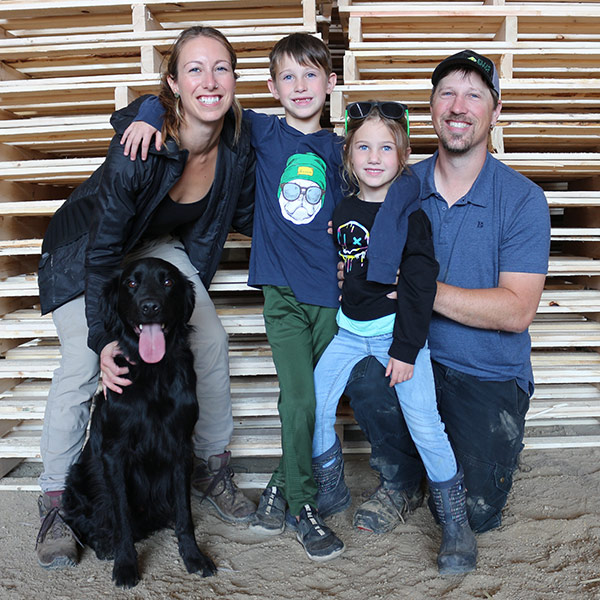
Korey lives on the farm with his wife and their two children, who enjoy spending lots of time in the yard.

What motivated you to get into farming?

I was always working on the farm in the summers. I came back full time in 2011 when my uncle had slowed down a little, and I just never left.

What motivated you to get involved with Manitoba Crop Alliance (MCA)?

We started growing sunflowers when we were looking to add another crop in our rotation, and someone I know approached me because MCA was looking for committee members after some delegates had termed out.

We chatted about it. It’s not a huge time commitment to be on a crop committee. I had been on a few boards not related to ag, so I had an idea how they run. I thought I’d get involved, and that’s how it started.

It’s been great to meet other farmers. Most farmers love talking farming, especially with other farmers from Manitoba. There are differences depending on where you farm and the weather from east to west, so it’s interesting to talk about what varieties we’re growing, diseases and pests and how others are managing them, and the differences we can apply to our own farm.

What does your role on the sunflower crop committee involve?

We meet quarterly. MCA is a research-oriented organization, so we make decisions about whether we think research dollars should be used on certain proposals. We review proposals from graduate students and researchers related to sunflowers, whether that involves disease, genetics, insects or other issues. Projects can range from one- to five-year timelines. Before I joined, the committee had started the process of bringing a sunflower confection variety to Manitoba, which is now in trials here.

How has being a sunflower crop committee delegate benefitted you?

It’s helped me realize how much work goes on behind the scenes by boards and committees like this. Since MCA amalgamated, I feel like it has been very purposefully driven. MCA has really figured out its purpose and focused on it, and the subcommittees feel the effects of that. We come up with ideas and continue to do the work in the background, then pass it to the board of directors, which makes the final decisions on where things are heading.

Is there a project or area of work you’re especially proud of being part of as a delegate?

The confectionary sunflower variety. MCA has brought a confectionary seed variety almost to market. It’s very close. One of our board members is growing quite a bit of it this year. It was grown in 2025, and there’s a larger acreage planned for 2026. We have a few companies looking at purchasing it, and we’re starting the process of figuring out the best way to market it going forward.

Is there anything you’d like farmer members to know about the work MCA is doing?

MCA is really pushing to reach all its members through newsletters, social media, emails and outreach. They’re trying to let everybody know all this amazing research is happening. Farmers are always looking for answers. We like to talk to each other for real-life experience on the farm. This is research done by farmers, for farmers. Getting that information out there and working hard to spread the word is very important.

Why do you think other people should get involved with MCA?

I think being involved is great for farmers. It’s important to be involved in a committee of some kind, whether it’s research like MCA or something else, and to find a way to give back to the farming community. We all use the resources that come from it. A lot of people wonder where their check-off dollars go but don’t always look into it. When you get involved, you realize the value of those dollars going to organizations like MCA.

What are you most excited about when it comes to the future of your farm?

Since I’ve been farming full-time, our farm has gone through quite a growth spurt. The third generation has grown the farm and worked really hard at it. We’re now in a position to maintain and improve our land going forward. Rather than focusing on expansion, we’re looking at refining and improving what we have. We’re in a comfortable spot to support our families living here while improving efficiencies.

Do you have any hobbies outside of farming?

I enjoy golf in the summer and beer league hockey in the winter. I also help coach my kids’ hockey and baseball teams.

What’s your go-to field meal during busy seasons?

I’m obviously a child of the ’80s. I love a good pizza pop, even if it’s cold. Wrap it in tin foil, put it on the exhaust of the tractor and it warms right back up!

What’s one thing people might be surprised to learn about you?

I was a high school music teacher for five years before coming back to farming full-time. My family is musical. My sister is a music teacher, and my brother was involved in music growing up. That’s what happens when your dad’s a farmer and your mom’s a voice and music teacher: you get both worlds.

Follow Korey on X @koreypeters.

Top