Kelly Turkington, Plant Pathologist, Agriculture and Agri-Food Canada
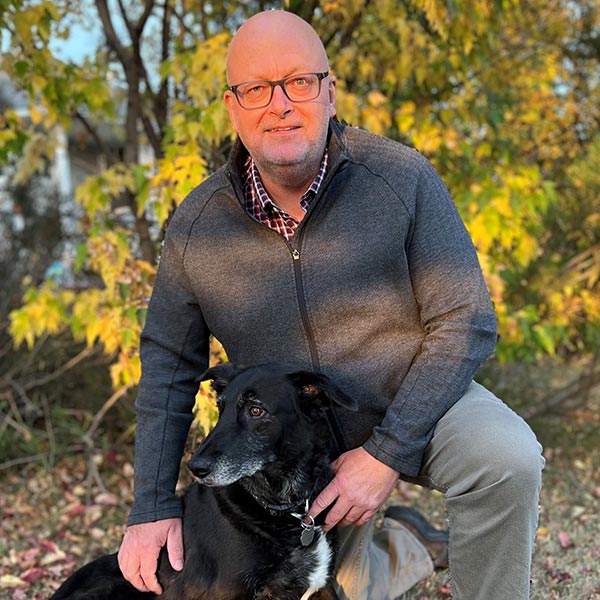
(Thomas) Kelly Turkington is a research scientist in plant pathology at Agriculture and Agri-Food Canada’s (AAFC) Lacombe Research and Development Centre. He holds a bachelor of science in agriculture (honours), a master’s degree and a PhD from the University of Saskatchewan (U of S). He also spent about eight months taking classes at the University of Guelph as part of his U of S PhD program.
Turkington lives in Lacombe with his wife, Ana. Their children have grown up and moved out, and they are fortunate to have their daughter, son-in-law and granddaughter living close by, while having a son and daughter-in-law in Edmonton.
Where did you work before AAFC?
I worked with Alberta Agriculture for two years in a similar position prior to joining AAFC in 1996. Prior to joining Alberta Agriculture, I had post-doctoral fellow positions from 1991 to 1994 with AAFC Ottawa and AAFC Beaverlodge working on Fusarium head blight (FHB) of wheat and ear rot of corn, and brown girdling root rot of canola, respectively.
What got you interested in plant pathology?
I started my undergraduate program not knowing what I wanted to do. I didn’t fully comprehend the breadth of options for a career in agriculture, so I took a general introduction to crop science. In my third year, I took introductory plant pathology with professor Robin Morrall. His passion really helped shape my career and the direction I headed.
That Christmas I switched into agricultural biology so I could focus on plant pathology. After that, I worked as a pathology summer student at AAFC, which really got me into the field. Later, during my master’s and PhD, I was in close contact with farmers in northeastern and northwestern Saskatchewan. We were chasing moisture, doing petal testing for sclerotinia stem rot. That experience helped shape my interest and a practical approach to research focused on real issues farmers face. That’s been a theme throughout my career.
Tell us a bit about what you’re working on at AAFC.
I am the lead on the “Disease resistance to address environmental issues, economics, and sector resiliency” project funded through the Sustainable Canadian Agricultural Partnership (SCAP) Barley Cluster. As plant pathologists, we see the impact of diseases on crop productivity, quality and even grain grade. James Tucker from AAFC Brandon is the co-lead on the project.
Disease resistance is one of the pillars of integrated disease management. For leaf diseases, high resistance levels can help mitigate the impact and, in some cases, eliminate the need for fungicide applications, especially prior to head emergence.
FHB has been a tough nut to crack. Through years of research, we’ve reduced susceptibility but still don’t have high levels of resistance. We work with Prairie breeding programs to identify resistant breeding lines, which breeders use to make selections and end up with varieties that combine agronomic performance, quality traits and a suite of disease resistance.
This project addresses a range of barley disease issues. We help identify sources of disease resistance and collaborate with breeders and molecular biologists to incorporate that resistance into new lines. We’re also involved in marker-assisted selection, where colleagues send populations from crosses between resistant and susceptible parents, and we help identify markers linked to resistance traits.
This is our third growing season under the SCAP cluster, but it’s a long-term effort. For diseases like rusts, our collaboration with breeders goes back more than 75 years. It’s an ongoing battle, because pathogens evolve and change in terms of their virulence.
Tell us about your involvement in the Prairie Crop Disease Monitoring Network.
Along with colleagues from AAFC Saskatoon, AAFC Beaverlodge and AAFC Swift Current, we facilitated the establishment of the Prairie Crop Disease Monitoring Network (PCDMN), funded under the Integrated Crop Agronomy Cluster from 2018 to 2023. It’s modelled after the Prairie Pest Monitoring Network, a successful initiative related to insect monitoring that started in the mid-1990s.
Now into the second phase of the project, we’re working with a broader range of plant pathologists in Canada, universities and funders such as Western Grains Research Foundation, the Agriculture Development Fund in Saskatchewan and Results Driven Agriculture Research / the Agriculture Funding Consortium in Alberta, SCAP, and key producer groups and agencies in the Prairies, including Manitoba Crop Alliance.
From mid-May to early July, we issue weekly rust risk forecasts for winter wheat and spring cereals. These forecasts give farmers and consultants a heads-up, as we identify regions where rust may be emerging so they can scout in a timely fashion and decide whether a fungicide application is needed. In addition, we also develop information and guidance related to disease identification, risk assessment and key management strategies.
In 2023, we also started including soil moisture maps with a focus on sclerotinia stem rot in canola. These maps focus on soil conditions that could promote sclerotia germination and spore release. Again, it’s about giving farmers and consultants a timely warning. Learn more at prairiecropdisease.com or follow @PCDMN on X (formerly Twitter).
What can you say about the value of farmers providing funding and support to your organization?
It’s key. Without that support, it would be difficult to do the breadth of work we do. One of the most important things for our program is support for summer students working in our nurseries. Summer students play a key role, and that farmer support is what allows us to bring them on board and mentor the next generation of pathologists.
How does that farmer funding and support directly benefit farmers?
The end goal of our work is to provide farmers with improved tools to manage disease on a consistent basis – tools that are sustainable and provide prolonged management.
We want to develop barley varieties that are resistant to multiple diseases. Disease resistance is a key foundational tool, especially as pathogens continue to adapt. Having a strong network of colleagues and staying connected to farmers is essential to understanding which issues are emerging. I encourage farmers to ask questions, visit research centres, attend field days and learn more about the work we’re doing and how it can benefit their farms.
For the PCDMN, specifically, the goal is to help farmers stay ahead of emerging risks, identify issues early and implement timely, appropriate management strategies. That leads to better crop production and quality, reduced input costs and improved returns.
How do you spend your time outside of work?
I’m our family’s genealogist, so I’m really interested in family history. Grandparents, great-grandparents or great-great-uncles who served in the First and Second World Wars, I like learning about where our family came from and their stories.
I also have a motorcycle. I’m not sure I’d call it a hobby, my wife would say it’s an endless money pit. It’s an older bike, so I’m constantly fiddling with it, but I find it cathartic when things work out.
What is the best part about your job?
The people and the ability to interact with a broad range of individuals. Not only scientific colleagues, but technical and extension staff, producer groups, farmers and industry. That camaraderie and networking is what I enjoy most, especially interacting with farmers and consultants.
Follow Kelly on X (formerly Twitter) @FungusAmungus3