
Connecting the Farm Gate to Parliament Hill
By Kyle Larkin, Executive Director of Grain Growers of Canada
The parliamentary summer recess left many questions unresolved as issues of trade, taxation and economic competitiveness took centre stage. While Ottawa was quiet, Grain Growers of Canada (GGC) was active in the field, using the summer months to connect directly with producers and show policymakers the real-world impact of federal decisions on grain farming.
In August, we travelled from Manitoba through Saskatchewan and into Alberta on the annual GGC Summer Tour. Over five days and over 2,000 kilometres, the tour provided an opportunity to walk fields, see crop conditions firsthand and visit the operations of directors and members. Each stop highlighted both the diversity and the shared challenges of grain farming, from crop rotations and new varieties to high input costs, weather extremes and market volatility.
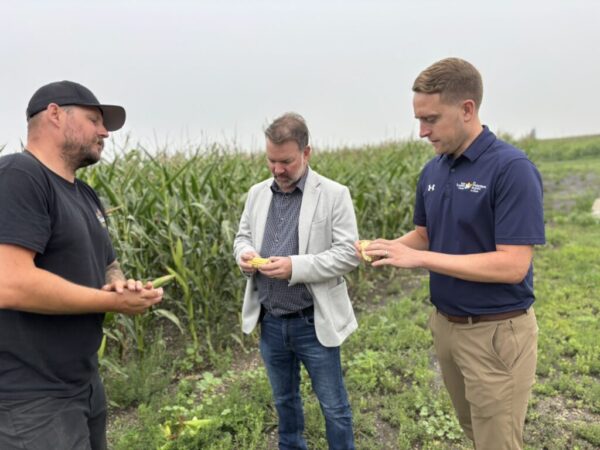
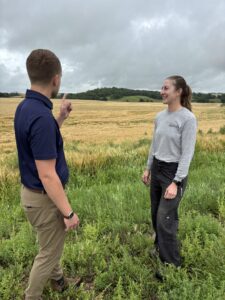 The tour also created a platform to connect with local Members of Parliament and the media. MP Colin Reynolds joined us near Steinbach. MB, for a tour of Manitoba Crop Alliance (MCA) delegate Korey Peters’ farm. This was followed by a tour of MCA and GGC vice-chair Sally Parsonage’s operation with a reporter from Reuters. In Saskatchewan, MP Cathay Wagantall met producers near Churchbridge, while MP Fraser Tolmie toured a farm near Davidson. In Alberta, additional tours were hosted in Killam and Smoky Lake. These conversations reinforced the importance of grounding policy debates in the realities faced by farmers.
The tour brought into focus the issues that will shape the fall: current volatility in Canada’s key trade relationships, trade-enabling infrastructure at capacity and taxation uncertainty. These challenges mirror the concerns producers have been raising for months and will define the policy debates as Parliament reconvenes.
Trade remains central to Canadian agriculture. More than 70 per cent of Canadian grain is exported, making access to markets essential for farm incomes and rural communities. Yet, access to certain markets is getting increasingly difficult. The 2026 CUSMA review raises questions about the future of tariff-free trade with the United States, while tensions with China continue to restrict opportunities for Canadian products. With $45 billion in exports at stake, we will continue to push for policies that defend existing access and open new markets.
Market access, however, is only as strong as the infrastructure that delivers it internationally. Canada’s railways and ports are already stretched, leading to delays that raise costs and undermine Canada’s reliability as a supplier. Bottlenecks threaten contracts, international relationships and competitiveness. As government prioritizes economic growth, we will advocate for trade-enabling infrastructure to be a central part of that plan.
Inside the farm gate, taxation uncertainty remains a major concern. Proposed increases to the capital gains tax risk placing additional burdens on succession and retirement, threatening the viability of family farms already under financial pressure. While government has signaled the increase will not proceed, no formal withdrawal has been made, leaving the change deferred to January 2026. With hundreds of family farms lost each year, we continue to call for permanent removal of the tax increase.
Carbon pricing is another file where clarity is needed. Although the tax on propane and natural gas used on-farm is currently set to zero, the legislation remains in place, leaving farmers exposed to future increases. These fuels are essential for grain drying and barn heating, with no viable alternatives available. A permanent exemption is needed to provide farmers with the certainty to plan, invest and innovate.
The summer provided an opportunity to listen, reflect and prepare. Now, as Parliament reconvenes, we will carry those conversations into Ottawa. The focus this fall will be on securing investment in infrastructure, defending trade access, protecting farm succession and ensuring fairness on carbon pricing. The voices of Canada’s grain farmers will be brought to Parliament Hill with one goal: to strengthen the sector, enhance competitiveness and secure the future of Canadian farming.