Section Title
Flax Preharvest FAQs
- Flax
What is the staging for a preharvest or desiccation in flax?
Flax is considered physiologically mature when 75% of the bolls (in the field or on a plant) are brown and the boll segments have begun to separate. This is a visual rating that corresponds to a grain moisture content of around 30% and is known as the 75% boll turn or 75% brown boll stage.
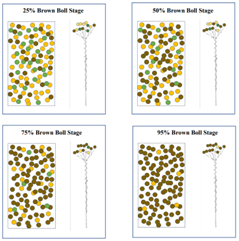
Figure 1: Flax Maturity Ratings. Credit: SaskFlax
What is the difference between a preharvest aid and a desiccant?
Two types of chemicals are available to assist with flax harvest management: pre-harvest herbicides (sometimes called harvest-aids) and desiccants.
- Pre-harvest herbicides are non-selective systemic herbicides that provide late season perennial weed control and may improve the harvestability of the crop by reducing the amount of green material in the field.
- Desiccants are non-selective herbicides that rapidly dry down the crop and weeds to allow for an earlier harvest.
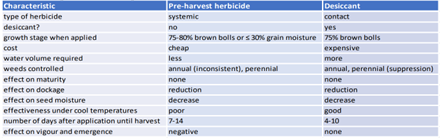
Figure 2: Comparison between preharvest herbicide and desiccant characteristics. Credit: SaskFlax
How quickly can you expect results from a preharvest aid or desiccant on flax?
Research conducted by Indian Head Agricultural Research Foundation (IHARF) in 2021 and 2022 shows a visual difference in three treatments: untreated, glyhposate and diquat at registered amounts. The untreated check does not appear visually different 21 days after application (21 DAA) of the other treatments. Glyphosate and diquat applications look similar after 21 days, though progression of dry-down appears differently throughout the three weeks between the two treatments. Diquat shows significant dry-down effects just 4 DAA and improves throughout the following weeks, while glyphosate seems to take 14 - 21 days to appear ready for harvest.

Change in appearance of CDC Glas (Indian Head, 2021) after treatment with glyphosate and diquat.
The situation shown above is an example of one scenario and the result of great drying conditions, environmentally.
Can we use glyphosate as a preharvest aid?
Preharvest glyphosate applications will alter the crop, assisting with stalk dry-down and harvestability, however it is commonly expected that the effects of glyphosate applied alone on flax dry-down can be slow and inconsistent, depending on environmental conditions. This all being said, at this time, it is not a recommendation of Manitoba Crop Alliance to apply glyphosate as a preharvest aid due to inconsistent results with maximum residue limit (MRL) testing. If a producer must use glyphosate, it is strongly recommended to speak with their grain buyer to determine if a glyphosate application to their flax will be a marketing concern.
What are the current registered preharvest aids and desiccants for flax in Manitoba?
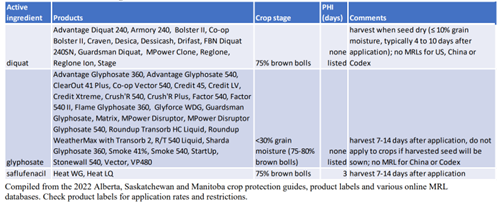
Figure 3: Preharvest chemicals registered for use on flax. Credit: SaskFlax
References:
SaskFlax: Preparing for Harvest, July 2018. https://www.saskflax.com/quadrant/media/Pdfs/Flax%20on%20the%20Farm/180724_July_Flax_on_the_Farm_Final.pdf
Indian Head Agricultural Research Foundation: Pre-harvest Weed Control and Desiccation Options for Flax, 2019. https://iharf.ca/wp-content/uploads/2021/04/Pre-harvest-weed-control-and-desiccation-options-for-flax.pdf
SaskFlax: Flax Markets and Maximum Residue Limits, April 2022. https://www.saskflax.com/quadrant/media/Pdfs/Flax%20on%20the%20Farm/2022/220425%20MRL%20Information-April.pdf


-
June 2, 2025
Research has shown that flax performs poorly specifically after canola and/or mustard, and not only because of disease issues. The… Read More


Seed treatments in wheat, barley and flax: what they are, how they work and when they should be used
-
February 6, 2024
Seed treatments are commonly used across Manitoba on numerous crop types. Here is more information about how they work and… Read More
-
May 25, 2023
Recropping restrictions are implemented to prevent crop damage following applications of residual herbicides. The following table is a guide for… Read More

-
May 25, 2023
This edition of the Growing Flax Guide has been thoroughly reviewed and updated. Chapter Leads with subject matter expertise were… Read More
-
May 25, 2023
Flax growth stages (Turner 1987; adapted from Chapter 4 of Flax Council of Canada ’s Growing Flax Production, Management &… Read More
-
March 21, 2023
Flax grows well on most soils, except those that are poorly drained, and very sandy soils with poor water retention.… Read More
-
March 21, 2023
This factsheet represents herbicides registered on flax and available as of April 2024. This list is prone to changes and… Read More
-
March 21, 2023
Weeds reduce yield and the quality of flax seed and flax straw. Weed control in flax is very important because… Read More
-
March 21, 2023
Manitoba Flax Growers Association, Flax Council of Canada Read More