Background & Info
Research from Johnston et al. (2006) determined that 25% of fields are rated low to very low in soil P and cannot supply adequate phosphorus for a corn crop. Starter P is typically applied generously as a result of this data.
This project looks at the yield benefit vs. yield draw of starter P applied on high-P testing soils
Corn has high phosphorus requirements for plant development, beginning at germination. It is a favourable practice to seed-place a portion of the phosphorus blend, resulting in vigorous seedling growth and development. The remainder of the blend can be placed in a band near the seed row, though some grain corn farmers have adopted a split application process in-crop.
Starter phosphorus increases early-season biomass and plant height when measured at V4 and V7, respectively (Rogalsky, 2016). In the same research, silking date was 2–7 days earlier in starter-P treatments than untreated checks.
Result
In 2025, two sites (CRNSP03 and CRNSP07) remained unharvested at the time of publication, which leaves 16 site years of data to build a conclusion from. Three in 16, or 19 per cent, of site years showed yield results of statistical significance. These three sites consistently exhibited a yield bump in the same treatment across four replicates. However, 2024-CRNSP02 had a yield improvement in the additional phosphorus treatment and the reverse was demonstrated in
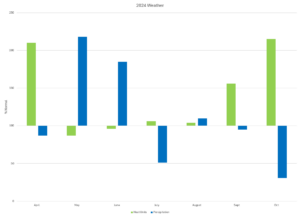
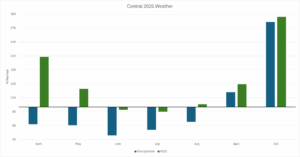
both 2025-CRNSP04 and 09. There was more precipitation in spring 2024 than in 2025, so that could be a factor in the yield increase with the added phosphorus treatment and soil-P mobility, especially in a lower soil-P scenario. There are many factors that cannot provide an exact explanation to each circumstance. More data is needed to come to a conclusion.
Weather Info