Assessing seed to seedling transmission of Xanthomonas translucens causing BLS of cereals to establish inoculum thresholds

Recently, an emerging disease of cereals caused by pathogenic Xanthomonas translucens (Xt) known as bacterial leaf streak (BLS) has been reported in many fields in western Canada heightening concern among cereal growers. Large-scale transmission of the organism is ascribed to its seed-borne nature. Currently, no effective chemical in-crop management strategies are available. Preliminary results obtained this year from BLS field nurseries established in Canada in one on-going project indicates that most Canadian commercially available wheat and barley cultivars are susceptible to the disease; hence, the risk of infection might escalate in Canada in the next decades.

Objectives

  1. Determine seed to seedling transmission rate of Xt under field conditions to establish risk threshold levels.
  2. Effect of temperature and seed treatments on multiplication of Xt and symptom expression in seed with varying infection levels.

Improve uniform maturity in barley- Opportunities for nitrification inhibition

High tiller numbers may not be preferable for malt barley producers because it increases the likelihood of uneven maturity, resulting in a high risk of rejection for malting (O’Donovan et al., 2011). Generally, tiller formation proceeds more effectively under a balanced combination of ammonium- and nitrate-N compared to the same amount of either N form alone. Manipulating dominant N forms and supply using nitrification inhibitors could alter the architecture of barley including tiller numbers, while improving NUE. A plant trait called “biological nitrification inhibition” (BNI) has attracted attention as a possible approach to improve agronomic nitrogen use efficiency (NUE) while reducing nitrous oxide emissions from agricultural soils (G. V. Subbarao et al., 2021). BNI is a plant root function by which plants recruit beneficial microbes in the soil to slow the rate of soil nitrate-N accumulation (G. V. Subbarao et al., 2021). This results in accumulation of ammonium-N and gives more time for plants roots to obtain ammonium-N, leading to the similar effect as nitrification inhibitors, but more extended time compared to synthetic inhibitors. Recently variations of BNI ability in barley varieties are identified (Morton et al., 2011), but there is no information of BNI expression in Canadian malting barley.

Objectives

  1. To compare the performance of barley varieties with contrasting BNI activities to Canadian malting barley on tillering and NUE
  2. To assess the potential of N fertilizer with nitrification inhibitors as a tool to modulate the number of tillers in barley
  3. To screen diverse genotypes of barley, including Canadian cultivars, for the expression of BNI
  4. To assess the interactive effects of barley varieties and N fertilizer forms on NUE, tillering, and pre-malting quality

Enhancing genetic gain for yield, biotic and biotic stress tolerance in flax

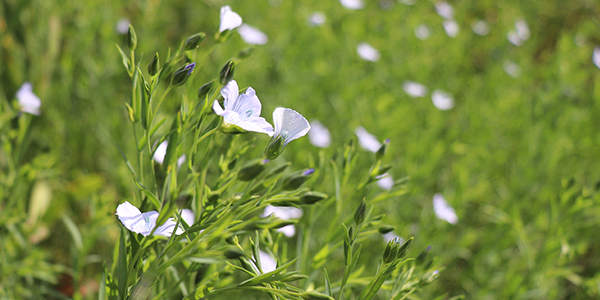
Flax (Linum usitatissimum L.) plays an important role in the Canadian economy. Annually flax is grown on over 900 thousand acres in Canada (StatCan 2021). In 2020, Canada produced 578,000 tonnes of flax with farm cash receipts of $306 million (StatCan, 2021). The Canadian seeded area and production of flax is expected to increase in the next decades due to the increasing interest in omega-3 fatty acids for their health benefits for humans and animals, and the demand for industrial oil uses. The growth in flax production will depend on the availability of new lines with high yield potential, improved agronomic characteristics, and with acceptable seed nutritional quality. This project proposes to introduce the variability from Linum bienne to improve the yield and other agronomic traits in cultivated flax. Previous work done resulted in the observation that L. bienne accessions have higher resistance to pasmo and better tolerance to abiotic stresses such as heat and drought.

Objectives

  1. Enhance flax yield potential by increasing additive genetic variance, increasing selection intensity, and reducing time interval
  2. Develop screening protocol for tolerance to high temperatures.
  3. Identifying interspecific flax genotypes with tolerance to a) heat stress and b) resistance to pasmo
  4. Identify genetic components associated with a) heat tolerance and b) resistance to pasmo in interspecific population of flax.
  5. Development of breeding lines with improved yield potential and tolerance to high temperature and improved resistance to pasmo.

Innovations to control troublesome weeds

Effective weed management is critical to maximizing harvest efficiency and yield potential for producers and this is achieved by the application of efficacious herbicides (Geddes & Sharpe 2022). These herbicides have become a victim of their own success, as the selection pressure they apply to control weed populations inevitably leads to the evolution of herbicide resistance within those populations. This process is exacerbated by repeated application of the same herbicide group to the same field (Beckie et al., 2019). In addition to the evolution of resistance, there are growing concerns that the number of tools available to producers for effective weed management is dwindling, due to restrictions applied by regulatory bodies to meet safety and marketing constraints. Regulatory constraints are anticipated to tighten as governments respond to environmental concerns and increased public demand for sustainable production practices. There is clearly a need to develop alternative herbicides to support the agriculture sector. This project will evaluate the potential of targeted gene silencing using dsRNA for weed control, specifically targeting the problematic weed kochia, an annual weed that is endemic throughout North America.

Objectives

  1. Generate Kochia gene sequences from prairie isolates
  2. Generate dsRNA to selected genes incorporating necessary safety design protocols.
  3. Generate new RNAi-based herbicides to control troublesome kochia weeds.
  4. Develop application strategies that are practical for the field.

ROCET- Rapid, On-Farm, Cost-efficient Electrochemical Testing for Mycotoxins in feed

This project aims to develop a user-friendly, rapid, and cost-effective portable handheld test that can detect the most threatening mycotoxins in livestock feed in Manitoba – including deoxynivalenol and aflatoxins. The ROCET multi-plex test uses electrochemical properties to simultaneously analyze the mycotoxins of interest within minutes. This technology reduces costs and allows testing outside of a laboratory environment, such as on-farm, on elevator driveways, and at processing facilities.

Objectives

  1. Electrochemical Detection of Relevant Feed Contaminants.
  2. Validation of Optimized Electrochemical Methods.
  3. Development of a Prototype Sensor Device.

Spring Cereals Intercropping

Establishing legume cover crops as an intercrop with an annual crop may allow for greater benefits from the cover crop in Manitoba’s short growing season. This research will investigate the establishment, persistence, and N dynamics of over-wintering legume cover crops (alfalfa, red clover, white clover, sweetclover) in a wheat-canola crop sequence at four sites in Manitoba. The information generated from this research will provide practical guidance for Manitoba farmers on the performance of different legume cover crop species and the potential N benefit to the main crops.

Objectives

  1. To evaluate the establishment and dry matter production of legume cover crops in spring wheat
  2. To assess the effect of these cover crops on grain yield and N uptake of the spring wheat
  3. To assess the N fixation potential of the legume cover crops
  4. To assess the effect of legume cover crops on performance of canola in the following year.

Marker-assisted Pre-breeding for Alternative Semi-dwarfing Genes and Anther Extrusion in Durum and Bread Wheat

More than 20 reduced height (Rht) genes have been reported in wheat (McIntosh et al., 2017), but the two semi-dwarfing Rht-1 homoeoloci, Rht-B1 and Rht-D1, have been widely employed in wheat breeding worldwide since the Green Revolution. Semi-dwarf cultivars are generally less prone to lodging, especially under high water and nitrogen conditions that are conductive to increased harvest index. Unfortunately, it has been well documented that the two genes are associated with Type I susceptibility to FHB (Lu et al., 2013). This may be related to the pleiotropic effects of the Rht-B1 and Rht-D1 alleles, or there association with other traits such as reduced anther extrusion (Wurschum et al., 2017). Anther extrusion has been related to increased susceptibility to initial FHB infection (Lu et al., 2013; Buerstmayr and Buerstmayr, 2015; He et al., 2016) because a higher proportion of retained anthers support Fusarium colonization of the floral cavity and initial hyphal growth (Buerstmayr and Buerstmary 2015; Steiner et al. 2019). Several studies have collected data on anther retention (AR) or anther extrusion (AE), plant height and FHB resistance, and 60% and 40% of the QTL for AR/AE and plant height, respectively coincided with FHB resistance QTL (Buerstmayr et al. 2020). Therefore, breeding for reduced FHB susceptibility conditioned by morphological and developmental characters such as high AE and alternative dwarfing genes can be an effective strategy to reduce FHB infection in wheat.

Objectives

  1. To generate elite CWAD and CPSR lines with Rht24 and high anther extrusion (AE) sources using marker assisted selection
  2. To improve and deploy breeder friendly, efficient markers for Rht24 and AE to support marker assisted selection (MAS)
  3.  Investigate associations between Rht24 and AE with Fusarium head blight (FHB) resistance traits.
  4. Localize alternative dwarfing gene(s) from Tetraploid FHB resistance sources

Identifying microbial inocula to increase salt tolerance in barley

The study group have identified several microbial inocula that improve barley growth at moderate salinity. This project will evaluate the effects of these inocula at a range of salinities in the greenhouse and then test whether these results are repeatable in the field. This will determine whether the new inocula should be developed into a commercial inoculant. While current work focuses on a single barley variety and only partially characterizes the microbes in the inocula. This research will expand testing to three varieties and better characterize the microbes in the inoculant. By also characterizing the microbes found on the plant roots in the greenhouse and field trials, they can determine which microbes actually colonize the plants and whether differences in this colonization are reflected in how the barley varieties respond to inoculation. If the varieties do differ in their responses, this will allow them to determine which soil microbes are required in an inocula that is effective for most barley varieties, thus reducing the likelihood that inoculation will fail and thus reducing risk. In the field trial, they will monitor soil conditions at the plot level at two different salinities at two sites in two different years. By identifying the conditions under which different inocula successfully establish, this will allow them to make recommendations on when inoculation may be successful and how this might vary among inoculants. This will let producers avoid wasting money on inoculation when it is unlikely to be successful.

Objectives

  1. Identification and characterization of microbial inocula that enhance barley production in saline soils.
  2. Knowledge of how barley varieties differ in their response to soil microbiota present in soil inocula.
  3. Determination of the conditions favorable or inhibiting to the establishment of microbial inocula in the field.

Characterization of a genomic region controlling spikelet number and improved fertility under drought stress in wheat

Yield resilience in the face of adverse climatic conditions is a desirable cultivar trait; climate predictions continue to forecast harsher and more unpredictable environments and Canadian prairies are not an exception. High yields are not as valuable if they come unpredictably and irregularly. Spikelet number is a component of yield. Yield can be given as a function of grain heads per m, grains per head, and thousand kernel weight (TKW). Components of yield often have antagonistic effects, and a rise in one function correlates with a relative drop in another. To increase yield, an increased spikelet number must not come at a larger cost to another yield component. This project is focused on answering some of these questions by characterization of the genomic region carrying Trehalose-6-phosphate (T6P) phosphatase (TPP) and Sucrase genes.

Objectives

  1. Identify downstream regulatory effect of Trehalose-6-phosphate (T6P) phosphatase (TPP) gene in wild wheat (Ae. tauschii).
  2. Determine the dosage effect of TPP gene in bread wheat as it relates to spikelet number and other agronomic traits.
  3.  Determine TPP effectiveness in increased spikelet number & improved floret fertility in wheat cvs. CDC Stanley & CDC Landmark

Residue Management Practices to optimize corn production

Residue management has the potential to influence soil temperature and/or moisture conditions at time of planting, and therefore may provide a means to create a set of conditions that are more favourable for early season corn establishment and growth. Further, P availability may also play an important role in early-season corn growth, and may be influenced both by P fertilizer management and the mycorrhizal colonization of corn (which may, in turn, be influenced tillage, growing a mycorrhizal crop prior to corn, etc.).
Limited information is available regarding the effect of preceding residue management practices on corn establishment, yield and quality under Manitoba conditions. The aim of the proposed research is to address this research gap by generating information regarding the effect of three aspects of residue management – choice of previous crop, tillage management (no-till, strip till, conventional till), and straw management within a no-till system (straw removed vs straw chopped and returned) – on corn performance.

Objectives

  1. Determine the effect of residue management practices applied prior to corn on the establishment, maturity, yield and quality of the corn crop including;
    a. Preceding crop choice (soy, canola, wheat)
    b. Tillage management (no-till, fall till, fall conventional till)
    c. straw management under no-till (chopped and returned vs straw removed with direct seeded corn).
Top