Spring Wheat FHB Fungicide Timing – Central

Background Information

  • Fusarium head blight (FHB) is a serious fungal disease that mainly affects wheat (including durum), barley, oats and corn
  • One key FHB management practice as part of an integrated management approach is timely fungicide application when the risks are high. Application timing of crop protection agents can strongly influence product effectiveness.
  • Trial compared producers normal timing of fungicide application to 3-5 days after the recommended timing.

Summary

Trials were conducted from 2018-2021. Of the 10 sites conducted in central Manitoba 4 showed significant differences among treatments. Only one of these trials showed significant differences when comparing the recommended timing and 3-5 days later.

Loading


Superscript letters indicate significant differences

Weather

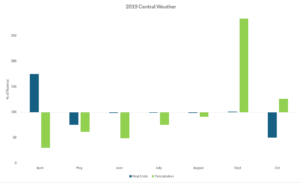
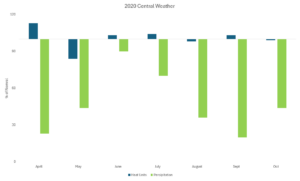
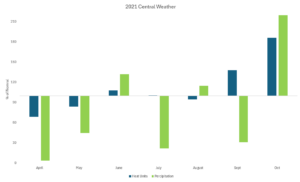
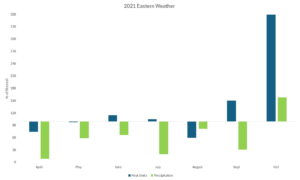
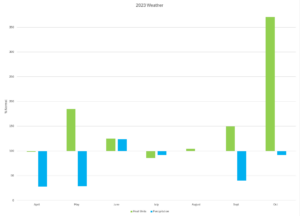
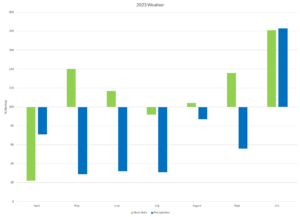
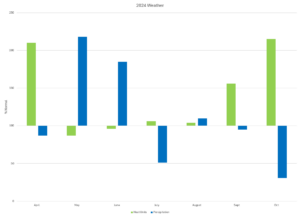
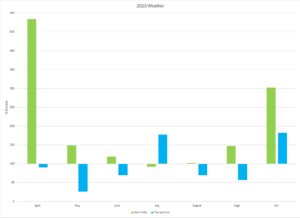
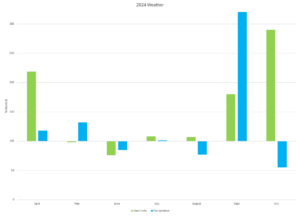
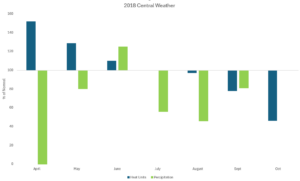
Weather data based on Manitoba Agriculture weather information. % normal based on 30 year averages. Beginning April 15. 


Spring Wheat FHB Fungicide Timing – Western

Background Information

  • Fusarium head blight (FHB) is a serious fungal disease that mainly affects wheat (including durum), barley, oats and corn
  • One key FHB management practice as part of an integrated management approach is timely fungicide application when the risks are high. Application timing of crop protection agents can strongly influence product effectiveness.
  • Trial compared producers normal timing of fungicide application to 3-5 days after the recommended timing.

Summary

Trials were conducted from 2018-2021. Of the 3 sites conducted in the western region, none showed significant differences from treated to untreated.

Loading


Superscript letters indicate significant differences

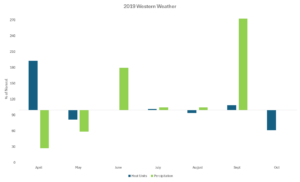
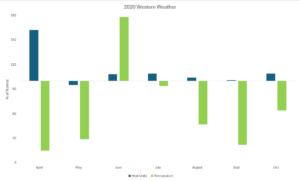
Weather

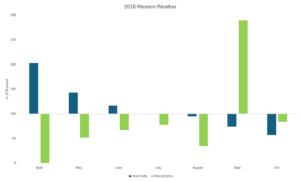
Weather data based on Manitoba Agriculture weather information. % normal based on 30 year averages. Beginning April 15. 

Spring Wheat FHB Fungicide Timing – Eastern

Background Information

  • Fusarium head blight (FHB) is a serious fungal disease that mainly affects wheat (including durum), barley, oats and corn
  • One key FHB management practice as part of an integrated management approach is timely fungicide application when the risks are high. Application timing of crop protection agents can strongly influence product effectiveness.
  • Trial compared producers normal timing of fungicide application to 3-5 days after the recommended timing.

Summary

Trials were conducted from 2018-2021. Of the 4 sites conducted in the eastern region only 1 showed statistically significant differences among treatments, there was no difference between recommended timing and 3-5 days later. Both treatments showed significant differences compared to the untreated.

Loading


Superscript letters indicate significant differences

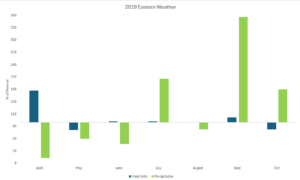
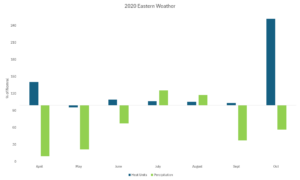
Weather

Weather data based on Manitoba Agriculture weather information. % normal based on 30 year averages. Beginning April 15. 

Flax Fungicide Treatment- All

Background Information

  • Pasmo is the most influential disease of flax. It can begin as early as the vegetative stages, but more commonly occurs during seed fill.
  • Losses are most often a result of early-onset and disrupt seed fill. Infections occurring after seed filling is complete do not affect yield, but losses can still occur due to weakened bolls.
  • Application of fungicide was done at stage 8.

Summary

Fungicides registered in Manitoba for pasmo in flax are Acapela, Dyax, pyraclostrobin products (Headline/Preach/ Raclos only), and Priaxor (while available).
There is no statistically significant yield improvement in any of the treatments at each site. The one site year that does have data that can be viewed with statistical influence is 2025-FF03, which was planted about two weeks after the other sites in 2025. At this one site, harvest moisture of the grain is greater in the fungicide treatment than the untreated check by 1.4 per cent, which is a factor we tend to accept with fungicide applications in many crops.

Loading


Spring Wheat FHB Fungicide Timing – All

Background Information

  • Fusarium head blight (FHB) is a serious fungal disease that mainly affects wheat (including durum), barley, oats and corn
  • One key FHB management practice as part of an integrated management approach is timely fungicide application when the risks are high. Application timing of crop protection agents can strongly influence product effectiveness.
  • Trial compared producers normal timing of fungicide application to 3-5 days after the recommended timing.

Summary

Trials were conducted from 2018-2021. Of the 19 sites conducted only 4 showed statistically significant differences among treatments, only one of these show significant differences between recommended timing and 3-5 days later.

Loading


Superscript letters indicate significant differences


Sunflower Fungicide Treatment- All

Background Information

  • Sclerotinia is a major disease pest affecting many crops, and farmers rely on genetics and fungicides for control.
  • Sclerotinia head and stem infections occur when apothecia release ascospores, which land on plant tissue.
  • There is concern about timing and efficacy of fungicide applications to control sclerotinia head rot in sunflower, specifically.
  • All fungicides were aerial-applied at R5 stage.

Summary

Fungicides registered in Manitoba for sclerotinia head rot in Sunflower are Acapela, boscalid products (Lance, used in 2024), prothioconazole products (Proline, used in 2024), and Quash. Also available for soil-applied applications is LALSTOP Contans WG.

Zero out of 10 site years have shown statistically significant yield differences between treatments in the Sunflower Fungicide Treatment trial. Test weights in all 10 site years were extremely consistent, so fungicide treatments appeared to have no effect on seed fill.
Disease assessments were performed for sclerotinia head rot, head and stalk rot combined, and sunflower rust. Assessments were done on 100 plants per replicate in each treatment for every site. Across the 10 site years, no disease patterns were observed between treatments. Six sites had lower or the same number of head rot infections in the untreated check versus the fungicide treatment. Three sites had more head rot infections in the treated replicates, and one location was not assessed. Full plant infections were assessed as well to determine if fungicide treatments were impacting the movement of sclerotinia, but results were inconclusive and varied from site to site.
Sunflower rust was also assessed in 2024 and 2025. At the time of assessments (R9), very minor rust infections were observed on the top four leaves of each plant and these were inconsistent among treatments. Proline 480 SC and Quash SC fungicides were used in several treatments and do claim to have strong effects on rust infections, but no promising results were viewed in these trials.

Loading


Corn Biological Fixing Nitrogen Products-Interlake

Background Information

  • Envita features the bacteria Gluconacetobacter diazotrophicus (Gd) that enables a unique mode of nitrogen fixation in corn and other crops.
  • After application, the bacteria start replicating and spreading through plant foliage and roots, forming a relationship with the host plant. The bacteria
    fix nitrogen from the air inside the plant cells.
  • This provides plants with an additional source of nitrogen where and when it’s needed, supplementing the supply of nitrogen available from fertilizer treatments.

Summary

In 2023, application of Envita did not significantly improve corn yields or quality over the standard or reduced nitrogen rates in these trials. The resulting eight site years suggest that the approximate $14/ac cost of Envita is not consistently made up by an increase in grain corn yield or quality.

Loading


Weather


Corn Biological Fixing Nitrogen Products-Central

Background Information

  • Envita features the bacteria Gluconacetobacter diazotrophicus (Gd) that enables a unique mode of nitrogen fixation in corn and other crops.
  • After application, the bacteria start replicating and spreading through plant foliage and roots, forming a relationship with the host plant. The bacteria
    fix nitrogen from the air inside the plant cells.
  • This provides plants with an additional source of nitrogen where and when it’s needed, supplementing the supply of nitrogen available from fertilizer treatments.

Summary

In 2023 and 2024, application of Envita did not significantly improve corn yields or quality over the standard or reduced nitrogen rates in these trials. The resulting eight site years suggest that the approximate $14/ac cost of Envita is not consistently made up by an increase in grain corn yield or quality.

Loading


Weather


Corn Biological Fixing Nitrogen Products-All

Background Information

  • Envita features the bacteria Gluconacetobacter diazotrophicus (Gd) that enables a unique mode of nitrogen fixation in corn and other crops.
  • After application, the bacteria start replicating and spreading through plant foliage and roots, forming a relationship with the host plant. The bacteria
    fix nitrogen from the air inside the plant cells.
  • This provides plants with an additional source of nitrogen where and when it’s needed, supplementing the supply of nitrogen available from fertilizer treatments.

Summary

In 2024, application of Envita did not significantly improve corn yields or quality over the standard or reduced nitrogen rates in this year’s trials. There was
one out of six locations in 2023 that produced data with statistical yield differences. The treatment that was “Full Nitrogen” yielded significantly better than the remaining treatments. The resulting eight site years suggest that the approximate $14/ac cost of Envita is not consistently made up by an increase in grain corn yield or quality.

Loading


Corn Biological Fixing Nitrogen Products-Eastern

Background Information

  • Envita features the bacteria Gluconacetobacter diazotrophicus (Gd) that enables a unique mode of nitrogen fixation in corn and other crops.
  • After application, the bacteria start replicating and spreading through plant foliage and roots, forming a relationship with the host plant. The bacteria
    fix nitrogen from the air inside the plant cells.
  • This provides plants with an additional source of nitrogen where and when it’s needed, supplementing the supply of nitrogen available from fertilizer treatments.

Summary

In 2024, application of Envita did not significantly improve corn yields or quality over the standard or reduced nitrogen rates in this year’s trials. There was
one location in 2023 that produced data with statistical yield differences. The treatment that was “Full Nitrogen” yielded significantly better than the remaining treatments. The resulting eight site years suggest that the approximate $14/ac cost of Envita is not consistently made up by an increase in grain corn yield or quality.

Loading


Weather


Top